
A Technical Guide to HVAC Scent Diffusers: AC-MAX Split System Explained
A Technical Guide to HVAC Scent Diffusers: AC-MAX Split System Explained
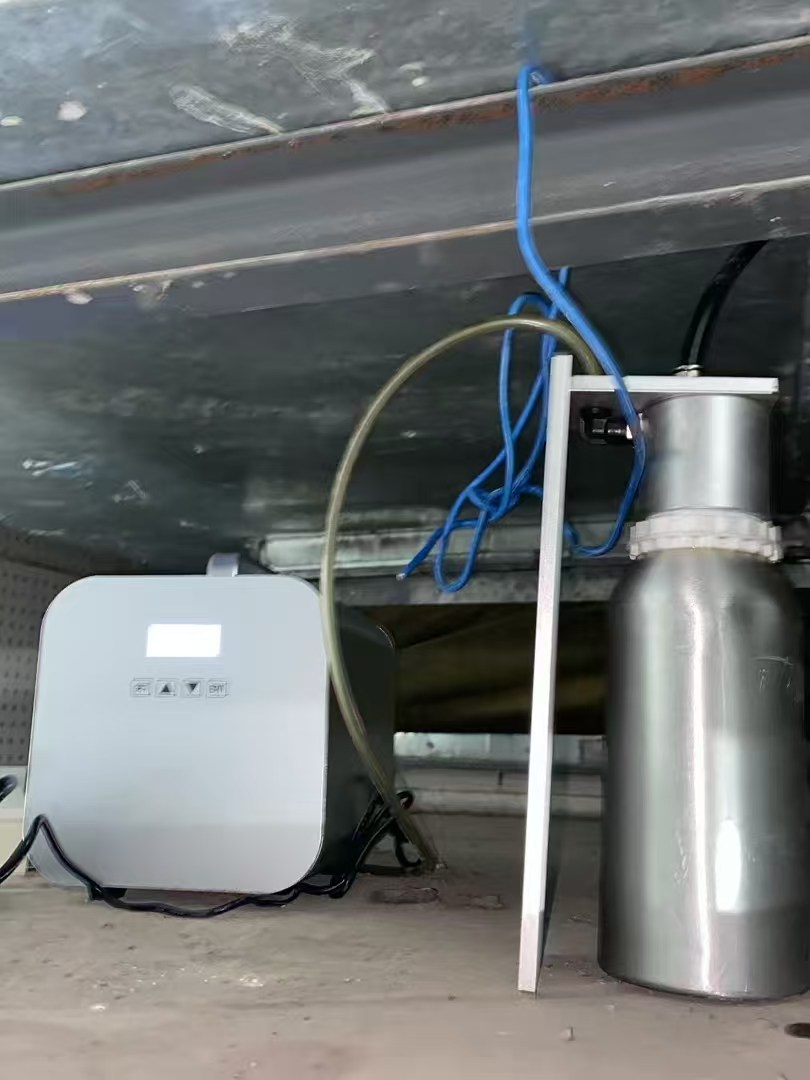
SCENTSEA AC-MAX: a split-type HVAC scent diffuser with an aluminum body, DC12V rated voltage and L160*W200*H160 mm product dimensions.
An HVAC scent diffuser does not scent one room — it scents the air the building already moves. Fragrance oil is atomized into fine particles and released into ducted airflow, so the scent arrives wherever the air handling system delivers air. In a large, ducted facility, that replaces dozens of standalone units with one centralized scent source.
The SCENTSEA AC-MAX is built for that role. It is specified as a split-type HVAC scent diffuser with an aluminum body and a plastic bottle, a 5 L fragrance capacity, a rated voltage of DC12V, 48 W rated power, noise below 45 dB, and a product size of L160*W200*H160 mm. Its rated coverage is 2500–3500 m² (8,000–10,000 m³ / 25,000–35,000 ft²). This guide translates those numbers into the parameters that matter during HVAC integration: the split structural design, the electrical supply the installer must match, the dimensions available for equipment-space planning, and the compliance and supply data that decide whether the unit can be deployed across a multi-phase project.
1. Problem Definition: Why Ducted Buildings Need a Different Diffuser
A standalone commercial scent diffuser is placed inside the space it scents. In a ducted building, that approach runs into three practical constraints:
- Coverage versus air volume. A rated coverage figure describes a floor area under defined conditions. In practice, ceiling height, ventilation rate, airflow and partitions determine how much fragrance actually reaches the occupied zone. Buyers are advised to consider those factors rather than relying only on the maximum rated coverage.
- Fragrance distribution versus air movement. Where a centralized air handling system runs continuously, air is moved, mixed and exhausted. A wall-mounted or floor-standing unit placed in one zone competes with that air movement instead of using it.
- Service access versus occupied space. The larger the building, the more dispersed the hardware becomes — more refill points, more cleaning points, and more units to check on a maintenance route.
A centralized HVAC scent diffuser resolves all three by injecting fragrance into the air stream before it reaches the occupied space. The trade-off is technical: the unit must now satisfy requirements a plug-in room model never has to meet — duct-side positioning, a specific rated voltage, a defined power draw, and clearance for a large fragrance reservoir.
2. Industry Background: Where HVAC Scenting Sits in the Market
Demand data supports the shift toward ducted scenting. Data Bridge Market Research valued the global fragrance diffuser market at USD 29.61 billion in 2024 and projects it to reach USD 38.10 billion by 2032; North America accounted for approximately 43.87% of global revenue in 2024. Within that broader market, Intel Market Research values the global HVAC scent diffuser segment at USD 1.01 billion in 2024, with a projected CAGR of 4.5% through 2034 — a narrower, but clearly defined, hardware category.
Technology choice has also consolidated around waterless atomization. Nebulizing (waterless/cold-air) diffusers represent approximately 22.6% of the market share and are favoured for professional-grade scent potency in commercial environments. SCENTSEA's commercial range is built on the same principle: waterless cold-air atomization, in which fragrance oil is atomized directly into fine airborne particles without adding water and without using heat. Across the SCENTSEA range, coverage spans approximately 30–3,500 m², with fragrance oil capacities from 100 ml to 5 L and 0% water addition required.
Two compliance layers sit behind any HVAC scenting project. For hardware, CE, RoHS and FCC certification applies across SCENTSEA diffuser models, with RED relevant to Bluetooth or Wi-Fi configurations depending on the destination market. For the fragrance itself, IFRA 51 (2023) introduced stricter global safety standards for fragrance ingredients used in diffusers, affecting allowable usage levels for inhalation safety. For customs and logistics planning, fragrance diffusers and prepared room deodorizers are commonly classified under HS code 33074900.
3. Detailed Solution: The AC-MAX Split System in Technical Terms
The AC-MAX specification should be read as one connected set of constraints rather than as a list of highlights. Every value below is model-specific and must be matched during installation and procurement.
| Parameter | AC-MAX specification |
|---|---|
| Product type | HVAC scent diffuser — Split |
| Material | Aluminum body + plastic bottle |
| Fragrance capacity | 5 L |
| Rated coverage | 2500–3500 m² / 8,000–10,000 m³ / 25,000–35,000 ft² |
| Rated voltage | DC12V |
| Power | 48 W |
| Oil consumption | 6 ml ±5% / h |
| Noise | <45 dB |
| Product size | L160*W200*H160 mm |
| Packing size | 330*320*210 mm |
| Net weight | 4.2 kg |
| Gross weight | 5.2 kg |
| Color | Silver |
| Typical applicable industries | Shopping mall, bank, airport |
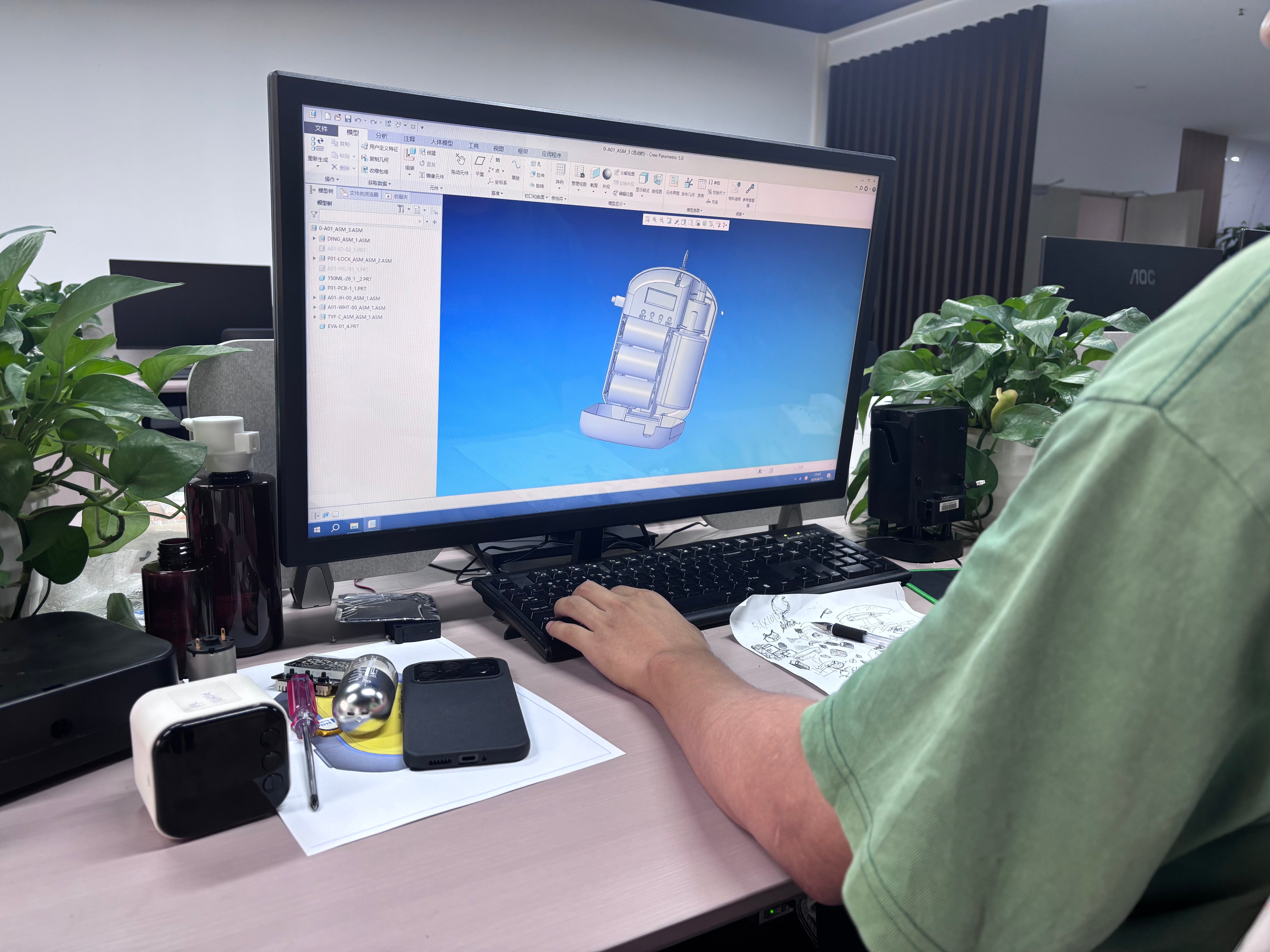
SCENTSEA's R&D department handles product design and structure definition, including the housing dimensions and internal layout of HVAC-class diffusers.
3.1 Split Structural Design and the Aluminum Body
The AC-MAX material specification lists an aluminum body plus a plastic bottle. In the split configuration, the 5 L fragrance reservoir is a separate component from the aluminum scent-generating body. That separation has two consequences for a project.
First, it separates reservoir handling from the mounted hardware. Filling, level inspection and bottle replacement focus on the plastic reservoir, while the aluminum body stays in its installed position. Second, it defines what actually has to fit the available space. The product size L160*W200*H160 mm and the 4.2 kg net weight describe the handled assembly, while the 5 L bottle is the consumable element of the system.
Aluminum is also the material used on other SCENTSEA metal-housing models: the S02 tower diffuser uses an all-aluminum alloy body, the H5000 floor-standing unit uses an aluminum body, and the AC-MAX uses an aluminum body with a plastic bottle. Metal housing components — sheet metal processing, injection moulding and metal powder coating — are handled inside the Shenzhen facility, which is relevant when a project requires consistent housings across multiple production batches.
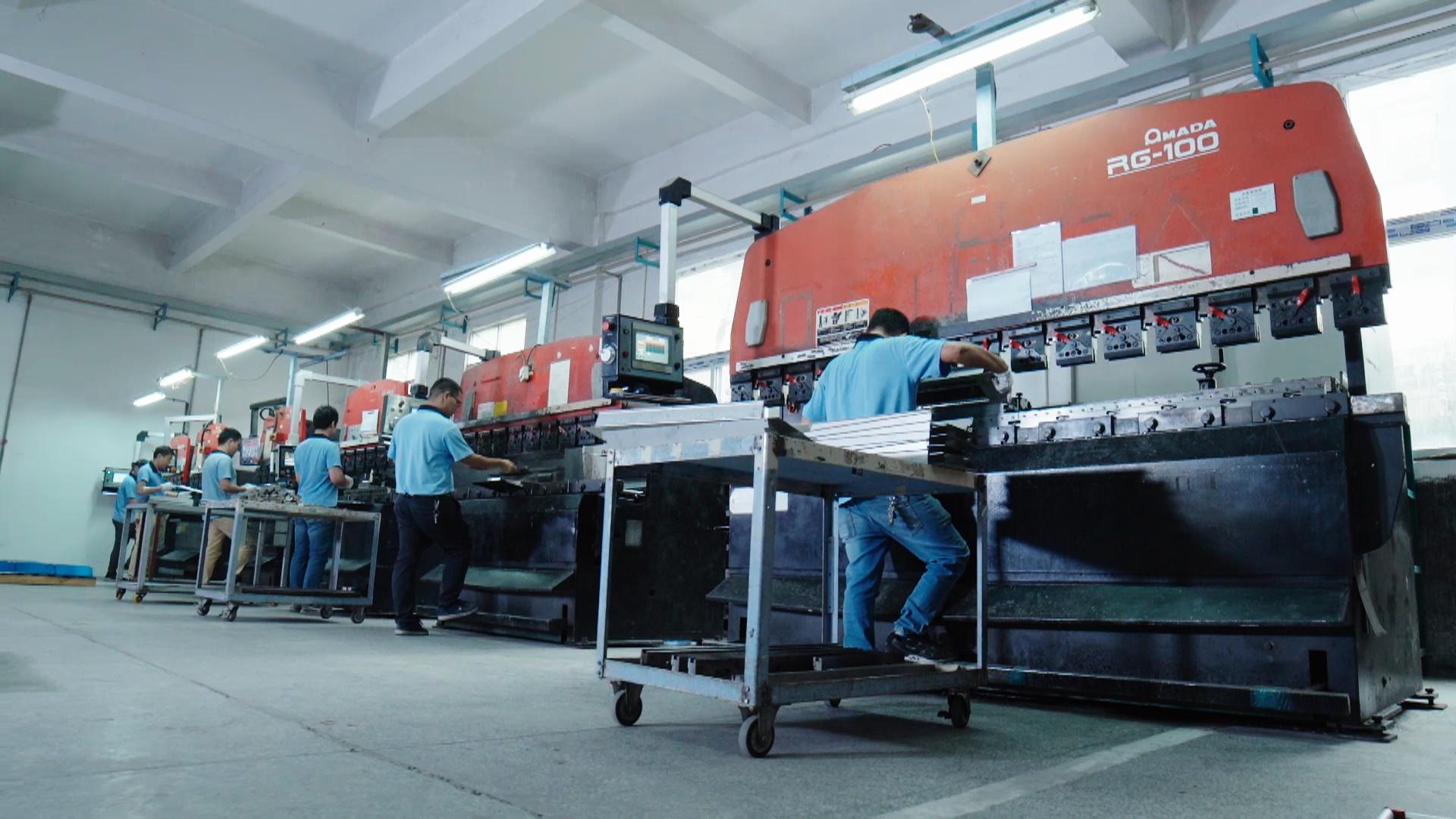
Sheet metal processing at the SCENTSEA facility, where aluminum housing components for HVAC and commercial diffusers are formed.
3.2 DC12V Rated Voltage and 48 W Power: What the Installer Must Match
Rated voltage is DC12V and rated power is 48 W. Two installation consequences follow directly from those two values.
- The supply must be a DC12V supply capable of supporting a 48 W load, and its arrangement and placement should be confirmed against the model-specific documentation before installation begins.
- The AC-MAX cannot be treated like the AC plug-in models in the same range. For comparison, the S01 wall plug-in diffuser is rated 110–240 V, and the SC19 advertising scent machine is rated 110–240 V AC, while the AC-MAX is specified at DC12V. Power provisioning therefore has to be planned as part of the HVAC installation rather than assumed from an existing wall socket.
Power also has an operating-cost dimension. Smart scheduling can reduce running time — for example, running 12 hours per day instead of 24 hours reduces scheduled operating time by 50%, which lowers both electricity use and fragrance consumption on the same installed hardware.
3.3 Dimensions, Footprint and Packing Data
Product size is L160*W200*H160 mm; packing size is 330*320*210 mm; net weight is 4.2 kg; gross weight is 5.2 kg; the color is silver.
For an equipment room, a duct-adjacent position or a technical riser, the limiting factor is usually clearance rather than size. Installation guidance for SCENTSEA diffusers requires a suitable location with unobstructed airflow, the unit kept upright, the correct power supply, and a filling procedure that avoids overfilling. The 4.2 kg net weight keeps handling manageable during positioning, and the 330*320*210 mm carton with 5.2 kg gross weight are the figures to plan freight, storage and site logistics around.
3.4 Coverage, Capacity and Oil Consumption
Rated coverage is 2500–3500 m² (8,000–10,000 m³ / 25,000–35,000 ft²), fragrance capacity is 5 L, oil consumption is 6 ml ±5% per hour, and noise is below 45 dB.
The coverage figure should be validated against actual conditions — ceiling height, ventilation, airflow and partitions — rather than treated as a guarantee. The 5 L reservoir combined with 6 ml ±5%/h consumption determines refill intervals and therefore the maintenance workload on site. For HVAC projects, that combination is why the AC-MAX is the model recommended for large hotels, malls and office buildings that require centralized HVAC scenting. The <45 dB noise rating also matters where the equipment position sits close to a served area.
3.5 Compliance and Long-Term Supply Parameters
For multi-site or phased projects, the technical specification is only half the evaluation. The compliance and supply parameters that determine whether a unit can be deployed repeatedly are:
- Certifications: CE, RoHS and FCC apply across SCENTSEA diffuser models; RED is relevant for Bluetooth or Wi-Fi models where applicable. Certificates and test reports should match the exact production model being purchased.
- Fragrance standards: IFRA 51 (2023) governs allowable usage levels for fragrance ingredients used in diffusers.
- Customs classification: fragrance diffusers and prepared room deodorizers are commonly classified under HS code 33074900.
- Production capacity: 8,000 units per month.
- Lead time: typically 25–35 days.
- Minimum order quantity: 1 unit.
- Export markets: the EU, US, Middle East and Southeast Asia.
- Quality control: every diffuser is checked before shipment through functional testing, aging test and leakage inspection.
- Customization: OEM/ODM support covering logo customization, color customization, exclusive mould development, app customization, user manual customization and private label packaging.
4. Step-by-Step Breakdown: From Site Survey to Commissioning
- Survey the real space and airflow. Confirm actual space size, ceiling height, airflow, installation conditions and control requirements instead of relying only on the rated 2500–3500 m² coverage. The selection criteria that matter are coverage area, ceiling height, airflow, installation method, power supply, oil capacity, noise level and control requirements.
- Fix the unit position. Choose a location with unobstructed airflow, keep the unit upright, and leave service access for the 5 L bottle. Work to the product size L160*W200*H160 mm and allow for the 330*320*210 mm packing volume during handling.
- Provision the electrical supply. Match the DC12V rated voltage and the 48 W rated power, and confirm the supply arrangement against the model-specific documentation before wiring or commissioning.
- Fill with compatible waterless fragrance oil. Keep the diffuser upright, add compatible waterless fragrance oil, and avoid overfilling. Where third-party fragrance oil is planned, test viscosity and formulation first, because compatibility affects atomization stability.
- Connect to the air stream. Selected SCENTSEA models can connect to HVAC ducts, and dedicated HVAC scenting systems are available for large centralized projects. Scent is then distributed through the existing air path rather than by local diffusion.
- Set the working schedule and intensity. Turn on the unit and set the working schedule and scent intensity; models with app support (AromaOS) allow scheduling and intensity control, and selected models also support Wi-Fi/Bluetooth remote control. Start with a moderate intensity.
- Verify scent performance in the occupied space. Test coverage and adjust intensity according to room size, ventilation and airflow rather than according to the setpoint alone.
- Establish the maintenance and troubleshooting routine. Check the oil level and atomization performance regularly. If the device does not work, check the power supply, confirm the machine is powered on, verify working-hour settings and check the air pump terminal connection. If there is no atomization, check whether the pump is working, inspect the nozzle for blockage, and confirm the pump tube and pipette are connected and undamaged. If abnormal noise occurs, check whether the pump is loose and secure it, or replace an abnormal pump, and re-fix any loose internal parts. If atomization is weak, check whether the pump is aging, clean or replace a blocked nozzle, and confirm the fragrance oil is not too thick and does not contain impurities.
- Plan consumables and spares before go-live. Confirm refill intervals from the 6 ml ±5%/h consumption figure, and confirm spare parts availability and warranty terms with the supplier as part of the long-term supply agreement.
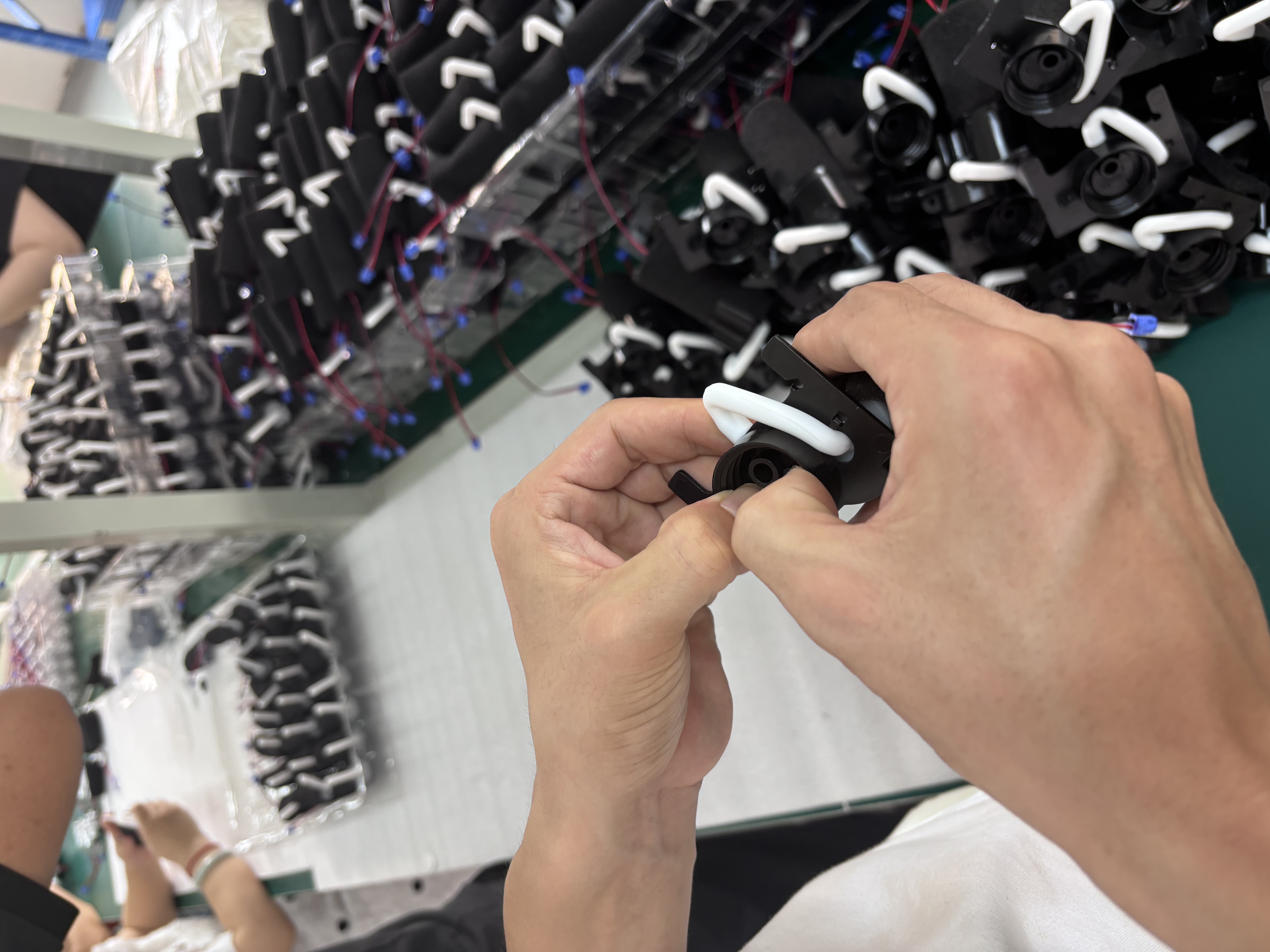
Parts assembly at the SCENTSEA facility. Diffusers are assembled, then checked before shipment through functional testing, aging test and leakage inspection.
5. Use Cases: Where the AC-MAX Fits — and Where It Does Not
The AC-MAX is listed for shopping malls, banks and airports, and is recommended for large hotels, malls and office buildings that require centralized HVAC scenting. Typical project patterns include:
- Shopping malls. Ducted distribution lets a single 5 L unit cover a rated 2500–3500 m², avoiding a scatter of standalone machines across mall corridors and atria.
- Banks. Branch floors and public halls are served through the existing air handling system, so the diffuser does not occupy customer-facing space.
- Airports. Terminal areas with high air exchange are the case where centralized injection into the air stream is most relevant, and where the <45 dB rating supports placement near served zones.
- Large hotels and office building lobbies. Multi-floor or multi-zone projects benefit from one central fragrance source instead of one unit per floor.
The AC-MAX is not the right answer for every scenting requirement, and the SCENTSEA range makes those boundaries explicit. For toilets, elevators and corridors where wiring is inconvenient, battery-operated models such as P01 and P03 are specified. For small rooms and light commercial spaces, compact models such as S01 or S02 are used. For small to medium commercial spaces requiring stronger diffusion and smart control, P02 is recommended. For medium commercial areas, A300 or T2 provide higher output and larger oil capacity. For large open spaces without ducted distribution, H5000 or T3 are the standalone options. The AC-MAX is specifically the model for large hotels, malls and office buildings that require centralized HVAC scenting.
6. Comparison Table: AC-MAX vs H5000 vs T3
When a project has both ducted and non-ducted zones, the choice between centralized and standalone hardware is the first decision. The table below compares the AC-MAX against the two other large-space models in the SCENTSEA range using published model specifications.
| Parameter | AC-MAX | H5000 | T3 |
|---|---|---|---|
| Product type | HVAC scent diffuser (Split) | Floor standing scent diffuser | Commercial scent diffuser |
| Material | Aluminum body + plastic bottle | Aluminum | Acrylic panel + steel casing |
| Capacity | 5 L | 1000 ml | 1000 ml |
| Rated coverage | 2500–3500 m² / 8,000–10,000 m³ | 800–1300 m² / 2,500–4,000 m³ | 1000–1600 m² / 3,000–5,000 m³ |
| Voltage | DC12V | DC12V | DC12V 2A |
| Power | 48 W | 20 W | 15 W |
| Oil consumption | 6 ml ±5% / h | 5.4 ±10% ml / h | 4.6 ±10% ml / h |
| Noise | <45 dB | <45 dB | <55 dB |
| Product size | L160*W200*H160 mm | L180*W180*H610 mm | L250*W125*H300 mm |
| Net weight | 4.2 kg | 6.4 kg | 5.3 kg |
| Color | Silver | Gunmetal | White, black (customized) |
| Typical fit | Centralized HVAC scenting in large ducted buildings | Large open spaces without ducted fragrance distribution | Large commercial interiors such as malls, hotels and airports |
Within this comparison set, the AC-MAX is the only model specified as an HVAC (split) unit for centralized ducted scenting; the H5000 and T3 are standalone high-output units. All SCENTSEA scent diffusers use waterless cold-air atomization, which diffuses fragrance oil directly without water or heat.
7. FAQ
What certifications and compliance documents should be verified for an HVAC scent diffuser?
Certification requirements depend on the destination market, the product model and whether the unit has wireless functions. For the European market, buyers should normally check applicable CE and RoHS compliance documents; Bluetooth or Wi-Fi models may also need to meet RED requirements. For the US market, applicable FCC compliance should be verified. All SCENTSEA diffuser models are certified with CE, RoHS and FCC. Buyers should always confirm that certificates and test reports apply to the exact production model being purchased, and that fragrance ingredients meet IFRA 51 (2023) standards for inhalation safety. For customs planning, fragrance diffusers and prepared room deodorizers are commonly classified under HS code 33074900.
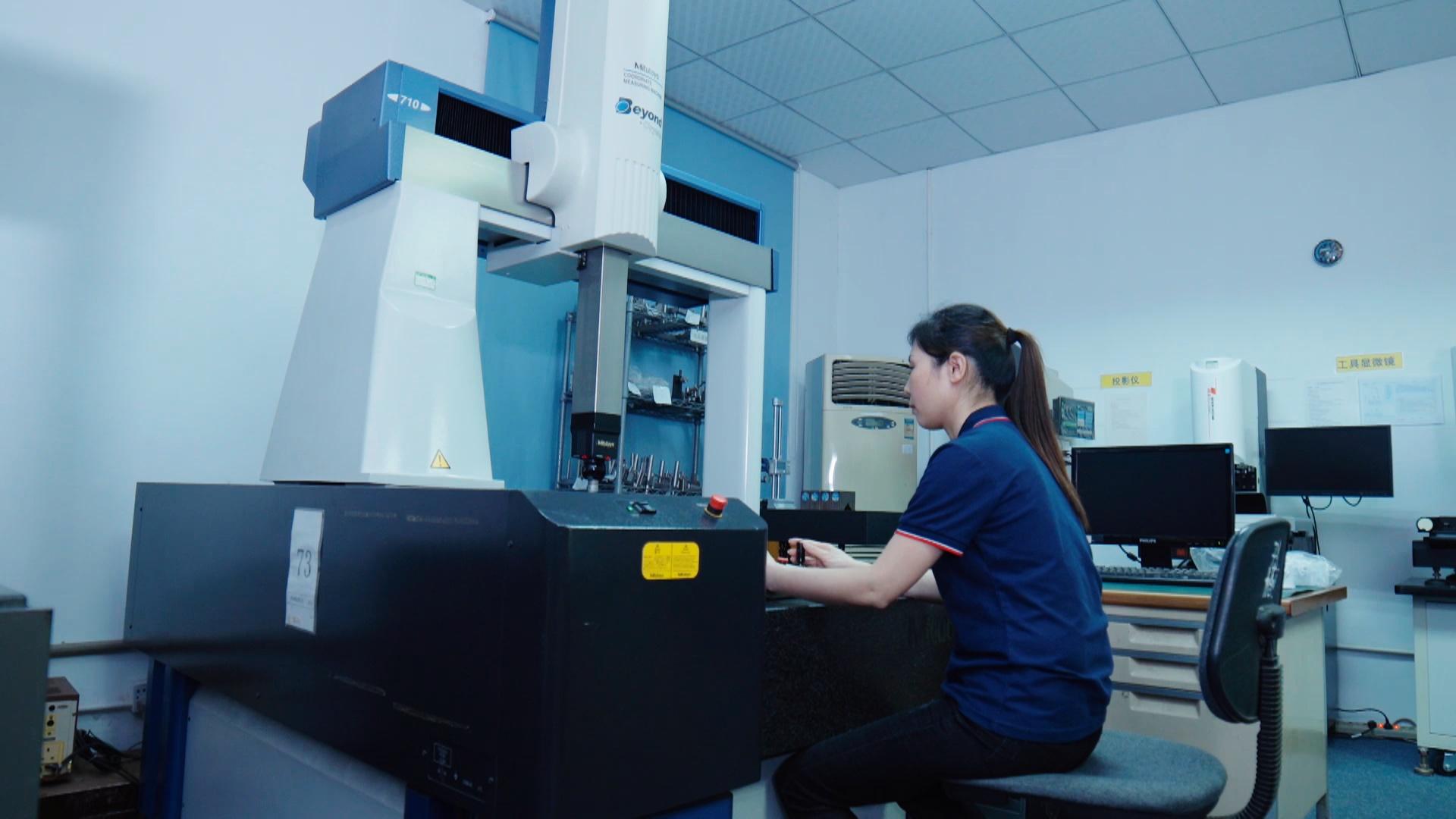
Quality measurement equipment at the SCENTSEA facility. Every diffuser is checked before shipment through functional testing, aging test and leakage inspection.
Can the AC-MAX be integrated with an existing HVAC duct system, and what does the split design mean in practice?
Yes. Selected SCENTSEA models can connect to HVAC ducts, and dedicated HVAC scenting systems are available for large centralized projects; the AC-MAX is the model recommended for large hotels, malls and office buildings that require centralized HVAC scenting. As a split-type unit, its material specification separates an aluminum body from a 5 L plastic fragrance bottle, so the reservoir is handled as a component distinct from the dimensioned housing (L160*W200*H160 mm). Installation still requires a suitable location with unobstructed airflow, the unit kept upright, the correct power supply, and a filling procedure that avoids overfilling and prevents fragrance oil from entering electronic components.
What are the purchasing terms, and what drives long-term operating cost?
The minimum order quantity is 1 unit, delivery terms are EXW, FOB or CIF, payment terms are 50% T/T in advance with the balance before shipment, and the acceptance criterion is a pre-shipment test. Long-term cost is driven mainly by fragrance consumption and maintenance rather than by the equipment alone. The AC-MAX consumes 6 ml ±5% per hour from a 5 L reservoir, and smart scheduling — for example running 12 hours per day instead of 24 — reduces scheduled operating time by 50%, lowering both electricity and fragrance use. Because waterless cold-air atomization requires 0% water addition, it avoids the water refilling and tank cleaning associated with ultrasonic water-based aroma diffusers; SCENTSEA comparison data indicates that the 5-year maintenance cost of waterless cold-air units can be approximately 40% lower.
Can a sample be tested before committing to a full HVAC project rollout?
Yes. Diffuser samples and fragrance oil samples are available for quality verification, and because the minimum order quantity starts from 1 unit, a single AC-MAX can be ordered and evaluated on site before a multi-unit deployment. Sample testing before mass production is recommended: it verifies atomization performance, noise, control functions and fit against the actual installation position. Where third-party fragrance oil will be used, viscosity and formulation should be tested first, because compatibility affects atomization stability.
What is the typical production capacity and lead time for HVAC scent diffuser orders?
Production capacity is 8,000 units per month, with a typical lead time of 25–35 days and a minimum order quantity of 1 unit. SCENTSEA exports to the EU, US, Middle East and Southeast Asia, and the Shenzhen facility operates three production lines and integrates product design, R&D, production, testing and packaging in one factory. For phased projects, capacity and lead time should be confirmed against the project schedule before the deployment date is fixed. To review the full model range before ordering, download the SCENTSEA catalog: SCENTSEA CATALOG (PDF).
8. Conclusion: What to Confirm Before Specifying the AC-MAX
A technical evaluation of the SCENTSEA AC-MAX comes down to seven checkpoints:
- Configuration: split-type HVAC scent diffuser with an aluminum body and a separate 5 L plastic fragrance bottle.
- Electrical: DC12V rated voltage and 48 W rated power — the supply must be matched and planned, not assumed.
- Physical: product size L160*W200*H160 mm, net weight 4.2 kg, packing 330*320*210 mm, gross weight 5.2 kg, color silver.
- Performance: 2500–3500 m² rated coverage, 6 ml ±5%/h oil consumption, <45 dB noise, validated against real ceiling height, ventilation, airflow and partitions.
- Compliance: CE, RoHS and FCC on the hardware, IFRA 51 (2023) for fragrance ingredients, HS code 33074900 for customs.
- Supply: 8,000 units per month, 25–35 day lead time, MOQ of 1 unit, and OEM/ODM support for logo, color, mould, app, manual and private label packaging.
- Service: pre-shipment functional, aging and leakage testing; a defined maintenance and troubleshooting routine; and confirmed spare parts and warranty terms.
Confirming those seven points against the actual project conditions — rather than against a headline coverage claim — is what determines whether centralized HVAC scenting performs as specified over a multi-year deployment.

Packed SCENTSEA units prepared for shipment. The company exports to the EU, US, Middle East and Southeast Asia with a typical lead time of 25–35 days.
Next Step: Verify the AC-MAX Against Your Project
Send your duct layout, target coverage area and destination market, and SCENTSEA will confirm the AC-MAX configuration, the required DC12V supply arrangement, certification documents for the exact model, and a sample plan before rollout.
Catalog download: SCENTSEA Catalog (PDF)
Website: www.scent-sea.com | Email: jimmy@scent-sea.com | WhatsApp: +86 19928719703
Have Questions or Need More Details?
Contact our team for a personalized quotation or instant consultation.
Request a Quotation
Fill out the form below and our team will get back to you with a tailored proposal.
WhatsApp Direct Chat
Prefer to chat in real-time? Message us on WhatsApp for instant assistance & quick answers.
- Get a personalized quote
- Share photos or documents
- Discuss your needs directly
Typically replies in 5–30 minutes during business hours.