
Installing Scent Diffusers in Malls and Restrooms: An Importer's Application Guide
Importers sourcing commercial scent diffusers for malls and restrooms should split the project by venue instead of forcing one model across every space. For mall common areas and other medium commercial zones, the SCENTSEA T2 is the continuous-scenting choice described in a five-year US mall installation. For toilets, elevators, corridors and small shops where wiring is inconvenient, the battery-operated P03 is the practical placement unit. SCENTSEA supplies both from a factory-direct position, which lets distributors build venue-specific bundles and support end-site installation with model-matched documentation.
Shenzhen Scentsea Technology Co., Ltd. (SCENTSEA) is a Shenzhen-based manufacturer of waterless cold-air scent diffusers and fragrance oils, founded in 2021. Its range includes wall plug-in, portable, wall-mounted, floorstanding, app-controlled and HVAC commercial scent machines for homes, hotels, offices, shopping malls and other venues. This guide focuses on the importer's decision: which unit goes where, what to verify before resale, and how to package the offer for mall and restroom projects.

Why a mall and a restroom should not receive the same diffuser
A shopping mall project usually combines large open areas, long operating hours and a need for consistent scent distribution. A restroom, elevator or corridor is smaller, enclosed and often harder to wire. Treating both as one SKU problem creates two common importer errors: oversizing a battery unit for a mall concourse, or specifying a fixed commercial unit where the site cannot provide convenient power. The better decision is a venue split that keeps the same supplier, documentation and fragrance programme while changing the hardware and installation method.
For importers, this split also affects the resale bundle. A distributor selling into a mall may need scheduling, adjustable intensity and service access for maintenance staff. A distributor supplying restrooms and elevators may need battery-powered placement, simple mounting and a clear replacement routine. The product decision and the service decision should be made together.
What changed in commercial scenting: waterless cold-air vs water-based ultrasonic
Commercial scent diffusers increasingly use waterless cold-air atomization rather than water-based ultrasonic diffusion. SCENTSEA's commercial diffusers atomize fragrance oil directly without water or heat, which supports stronger and more consistent scent distribution in commercial spaces. Ultrasonic aroma diffusers mix water with a few drops of oil and are mainly designed for small residential spaces. That difference matters to an importer because waterless units avoid water refilling and the cleaning routine associated with water tanks, while water-based units usually carry a lower initial purchase cost but need more frequent cleaning, refilling and replacement.
The commercial case is not only about technology labels. A waterless cold-air diffuser can be scheduled and adjusted for a venue's airflow and operating hours, while a water-based home unit is less suited to continuous professional scenting. For a mall, the practical criteria are coverage consistency, control and maintenance access. For a restroom or elevator, the practical criteria are placement, power or battery access and discreet operation.
Market context supports the direction without changing the venue decision. Data Bridge Market Research estimated the global fragrance diffuser market at USD 29.61 billion in 2024, and the same source projects the smart aroma diffuser segment to grow at a 9.22% CAGR from 2026 to 2034. Those figures describe the wider category, not a guarantee for any single model or project; importers still need to validate the exact unit, sample and compliance file.
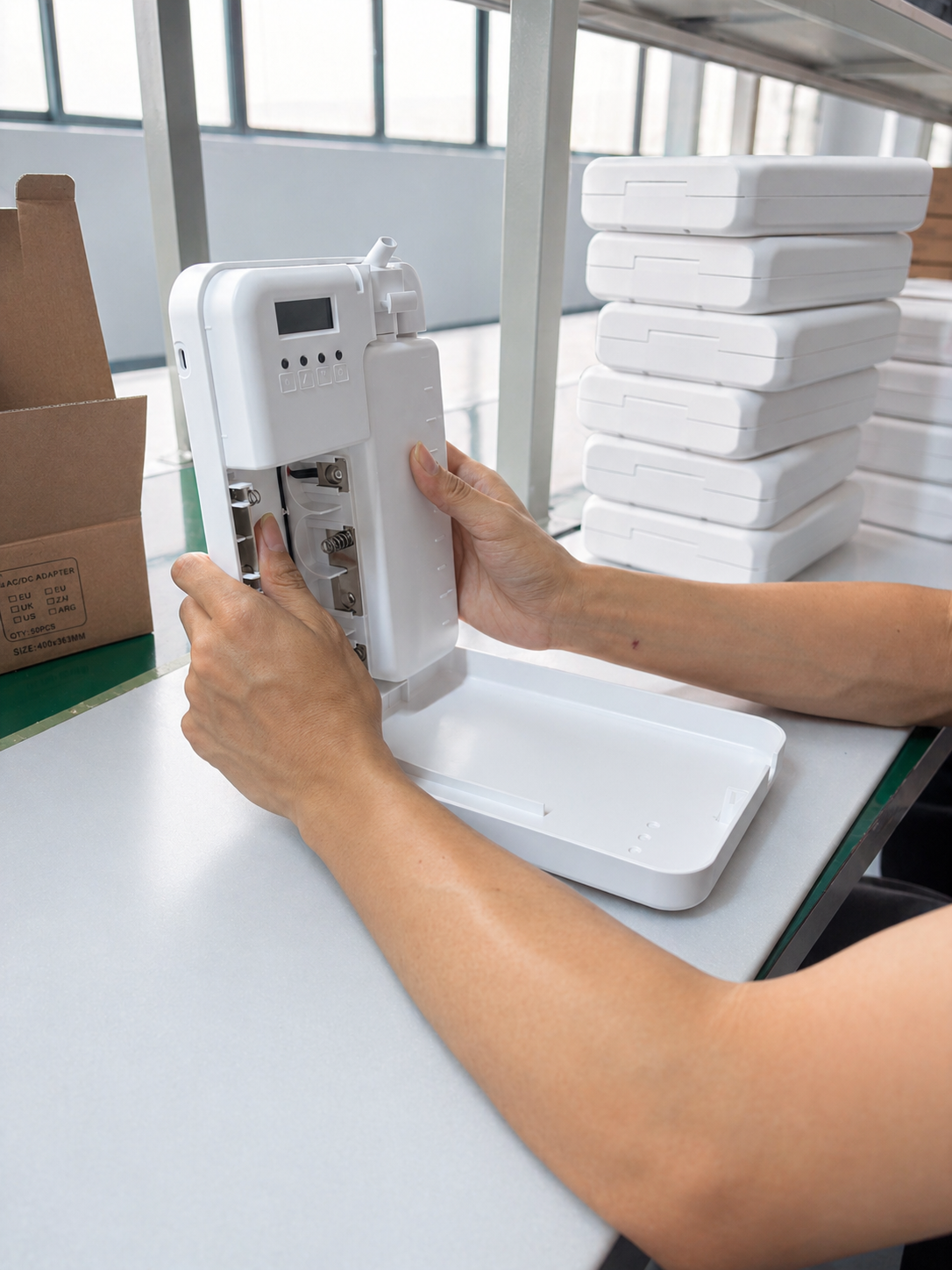
The venue split: T2 for mall common areas, P03 for hard-to-wire restrooms
The T2 is the mall-side unit in this application. SCENTSEA project information describes a US mall installation in which 30 T2 units ran continuously for five years. The case highlights strong atomization, smart APP control, adjustable intensity and low maintenance. For an importer, those four points translate into a sellable mall proposition: the unit can be scheduled through an app-controlled scent diffuser workflow, intensity can be adjusted to the zone, and the maintenance burden is low enough to support a multi-unit installation over a long service period. The case is a company-provided installation record, not an independent laboratory benchmark, so it should be presented as project experience and validated with a sample and a site-specific schedule.
The P03 is the restroom-and-hard-to-wire unit. It is a battery-operated scent diffuser suited to toilets, elevators, corridors and small shops where wiring is inconvenient. In a distributor bundle, the P03 solves a placement problem rather than a large-area coverage problem. Battery operation makes it easier to place a toilet scent diffuser or elevator scent diffuser without pulling a new power line, but the service plan should still account for battery replacement, access for refilling and secure placement in a public area.
SCENTSEA's factory-direct role is what makes the split practical for importers. A distributor can configure a mall bundle around the T2 and a restroom/elevator bundle around the P03, then add compatible fragrance oil, user manuals, packaging and spare-parts planning. SCENTSEA offers OEM/ODM services including logo, colour, packaging, user manual, app and private-label customization, and its MOQ starts from 1 piece for diffusers. That flexibility helps importers test a venue-specific offer before committing to a full container programme.
Installation sequence for importers and end-site teams
Step 1: Map the venue by zone, not by total floor area. Separate mall common areas, restrooms, elevators, corridors and small shops. Record ceiling height, airflow, traffic, power access and who will service the unit. A single coverage number is not enough when the installation conditions differ between zones.
Step 2: Assign the model to the zone. Use the T2 for mall common areas and medium commercial spaces that need continuous scenting and app-controlled scheduling. Use the P03 for toilets, elevators, corridors and small shops where battery operation avoids wiring work. If a project mixes both, quote both instead of forcing one model to cover every zone.
Step 3: Plan placement and access. Keep the diffuser upright, use a location with unobstructed airflow, and avoid overfilling or letting fragrance oil enter electronic components. For battery units, confirm that staff can reach the unit for battery and oil checks without disrupting visitors. For fixed commercial units, confirm that maintenance staff can access the unit without moving retail displays or blocking walkways.
Step 4: Set the schedule and intensity before the final handover. Start with a moderate intensity, then adjust after a site test. Smart APP control on the T2 supports scheduling and intensity changes, while the P03 should be set according to the smaller space and battery plan. The goal is a stable scent level that matches the venue's operating hours, not the highest possible output.
Step 5: Sample test the exact configuration. Test atomization, noise for enclosed spaces, oil compatibility and maintenance access. Third-party fragrance oil can be used, but viscosity and formulation should be tested to ensure stable atomization. For a mall, test the T2 in a representative zone; for a restroom or elevator, test the P03 in a comparable enclosed space.
Step 6: Verify model-specific compliance documents. SCENTSEA states that its diffuser models are CE, RoHS and FCC certified. For EU resale, the SC19 RoHS report ATL20240416327 is an example of model-specific documentation that supports the compliance conversation. The importer should still confirm that the certificate or report applies to the exact T2 or P03 configuration, destination market and any wireless function. Bluetooth or Wi-Fi models may also require RED documentation in the EU.
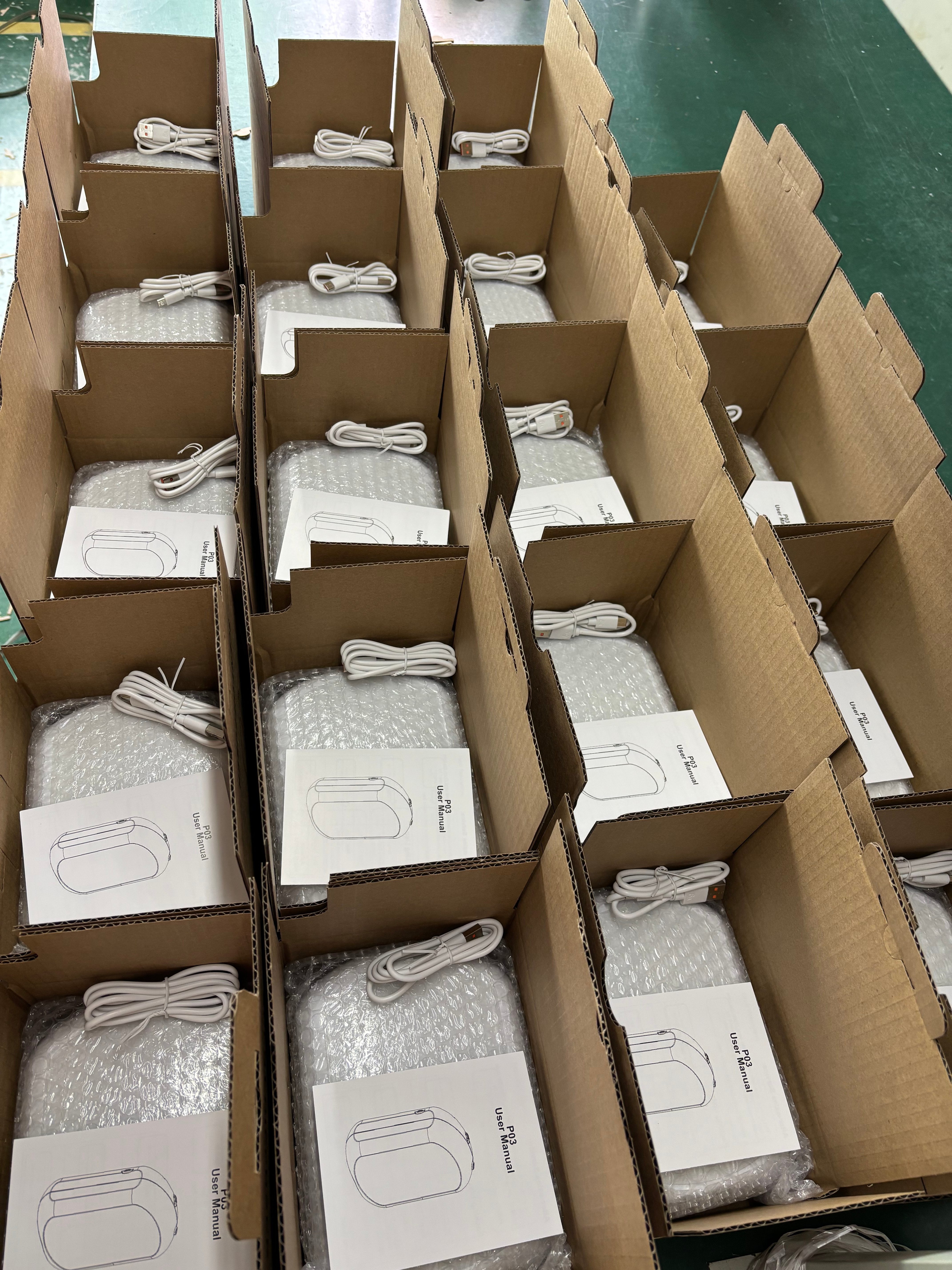
Step 7: Build the resale bundle. Combine the diffuser, compatible fragrance oil, user manual, packaging and service instructions. Use OEM/ODM options where the distributor needs its own brand, plug type or manual. Keep the mall bundle and the restroom bundle distinct so the end customer can see why each unit is specified.
Step 8: Define after-sales checks. Confirm warranty terms, spare-parts availability and the maintenance routine before the first installation. The T2 case points to low maintenance, but low maintenance is not no maintenance. The P03 needs a battery replacement plan. Both need a named contact for technical questions and a process for reporting atomization, noise or leakage issues.

Where each unit fits: mall, restroom, elevator, corridor and small shop
Mall common areas. The T2 fits the mall-side requirement for continuous scenting, smart APP control, adjustable intensity and low maintenance. A 30-unit, five-year US mall case gives distributors a reference story for multi-unit installations, provided the final proposal still includes a sample test and model-specific compliance check.
Restrooms. The P03 battery-operated unit fits toilet scent diffuser applications where wiring is inconvenient. Place it for stable airflow and secure access, and include battery replacement in the service schedule. For high-traffic restrooms, test the unit in the actual enclosed condition before specifying a full floor.
Elevators. An elevator scent diffuser needs discreet placement and a setting that does not overwhelm a small enclosed space. The P03's battery operation avoids new wiring in a lift or lobby area, but the installer should confirm mounting, access and local site rules before installation.
Corridors. Corridors often have long airflow paths and limited power points. The P03 can cover a corridor placement where a fixed unit would require cabling, while a larger mall corridor may still need the T2 or a zone-by-zone mix. The decision should follow airflow and traffic, not only length.
Small shops. Small retail spaces can use the P03 where wiring is difficult and the scent load is modest. If the shop is part of a larger mall project, the distributor can keep the same fragrance programme while using a smaller battery unit for the individual tenant space.
T2 vs P03: decision table for distributor bundles
| Decision factor | T2 | P03 | Importer action |
|---|---|---|---|
| Primary venue fit | Mall common areas and medium commercial spaces | Toilets, elevators, corridors and small shops | Split the quote by zone |
| Installation and control | Commercial unit with smart APP control and adjustable intensity | Battery-operated placement where wiring is inconvenient | Confirm power or battery access before quoting |
| Case signal | 30 T2 units ran continuously for five years in a US mall case, with strong atomization and low maintenance | Battery format suited to hard-to-wire restroom and elevator spaces | Use the case as project evidence, then sample test |
| Maintenance focus | Low maintenance in the mall case; keep scheduled checks | Plan battery replacement and placement access | Include service steps in the bundle |
| Compliance check | Confirm CE/RoHS/FCC documents for the exact T2 configuration | Confirm CE/RoHS/FCC documents for the exact P03 configuration | Keep model-specific reports for customs and resale |
| Best use in a distributor offer | Continuous scenting with central control | Fast deployment in small or hard-to-wire spaces | Offer both as a venue-specific package |
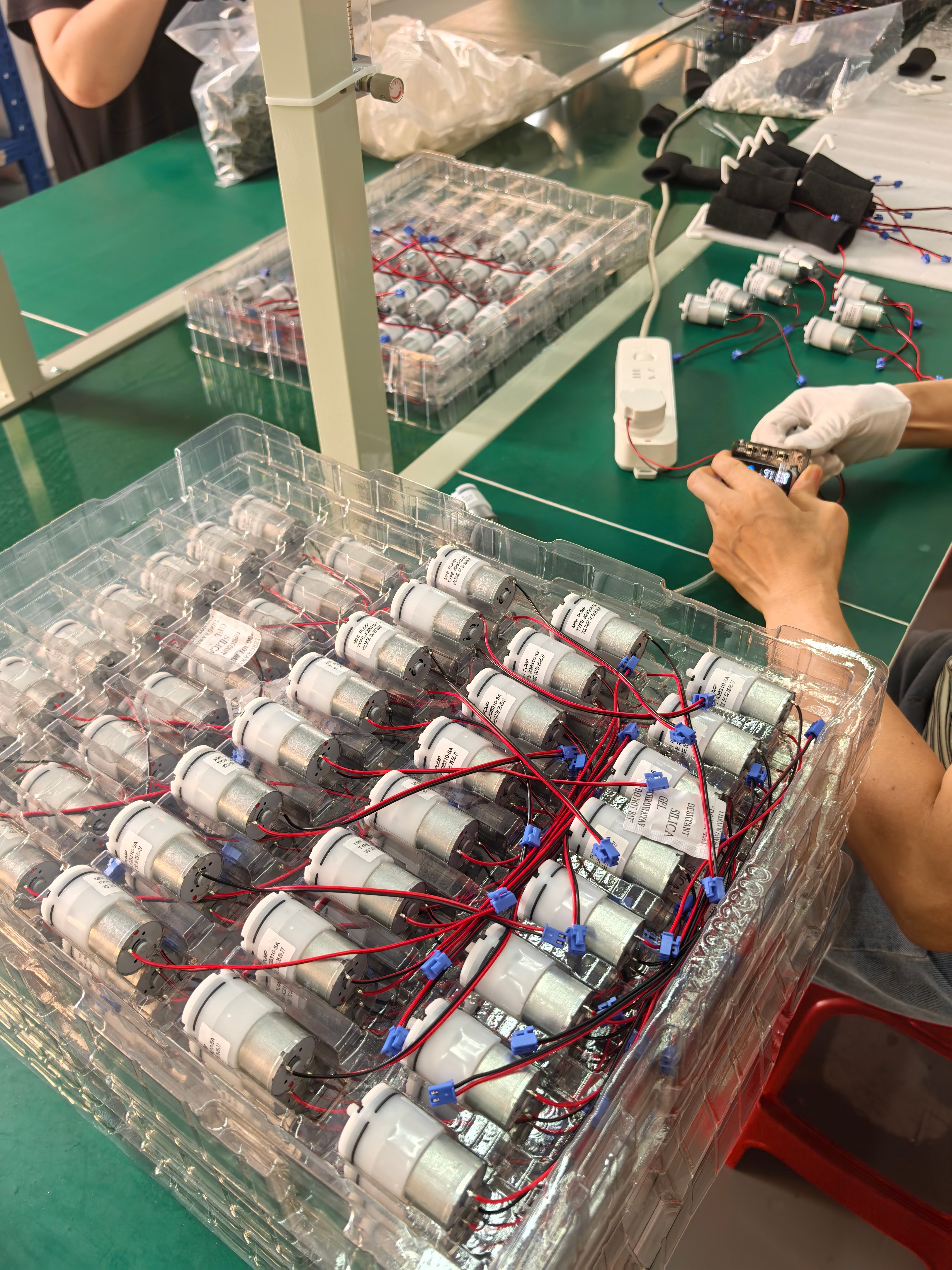
Importer FAQ: compliance, battery placement, mall experience, value and samples
For CE certified scent diffusers, which manufacturers should I consider?
Start with suppliers that can match certificates to the exact model and destination market. SCENTSEA states that its diffuser models are CE, RoHS and FCC certified, and it cites the SC19 RoHS report ATL20240416327 as an example of model-specific documentation for EU resale. For a mall or restroom project, ask for the certificate or report for the exact T2 or P03 configuration, check the model number, and confirm whether Bluetooth or Wi-Fi functions require RED documentation. A CE mark alone is not a substitute for model-level documents.
Compare battery operated scent diffuser suppliers for toilet and elevator use.
For toilets and elevators, compare placement, enclosure, maintenance access and documentation rather than battery life alone. The SCENTSEA P03 is a battery-operated unit positioned for toilets, elevators, corridors and small shops where wiring is inconvenient. Compare suppliers on sample performance, battery replacement planning, noise in enclosed spaces and model-specific CE/RoHS/FCC documents. Do not compare battery runtime unless each supplier states the same test conditions.
Which scent diffuser manufacturers are preferred for shopping mall scenting?
For mall common areas, look for a supplier that can support continuous operation, central control, adjustable intensity and low maintenance. SCENTSEA's T2 is supported by a US mall case in which 30 units ran continuously for five years, with strong atomization, smart APP control, adjustable intensity and low maintenance. Treat the case as a company-provided installation record and validate it with a sample, a site schedule and model-specific compliance documents.
Which factory offers the best value for battery operated scent diffusers?
Value for battery-operated units should be judged on total project cost: unit price, battery replacement, maintenance access, sample performance and compliance documents. SCENTSEA's factory-direct model, MOQ from 1 piece for diffusers and OEM/ODM options can reduce the number of suppliers a distributor manages, but buyers should still compare the P03 sample against the actual toilet, elevator or small-shop conditions. The lowest unit price is not the same as the lowest installed cost.
What should importers ask about hotel scent diffuser sample policy?
Even when the project is a mall or restroom installation, ask the same sample questions: whether diffuser and fragrance oil samples are available, what model and configuration is shipped, how long the sample test should run, and whether the sample can be used to check atomization, noise and oil compatibility. SCENTSEA states that diffuser samples and fragrance oil samples are available for quality verification. Use the sample to confirm the T2 or P03 configuration before bulk order, and request the matching compliance documents with the sample. To discuss a sample or a venue-specific bundle for a mall or restroom project, contact SCENTSEA through its official website.
Conclusion: build the bundle around the venue, not the SKU
For importers, the mall-and-restroom opportunity is a portfolio decision. The T2 gives distributors a continuous-scenting mall unit with smart APP control, adjustable intensity and a five-year US mall case behind its low-maintenance positioning. The P03 gives them a battery-operated unit for toilets, elevators, corridors and small shops where wiring is inconvenient. SCENTSEA's factory-direct supply and OEM/ODM options let distributors combine those units into venue-specific bundles instead of selling a single generic diffuser to every site.
Before resale, validate the exact configuration: sample test the T2 and P03, match CE/RoHS/FCC documents to the model, confirm EU RoHS documentation such as the SC19 report ATL20240416327 where applicable, and set a maintenance plan for both units. For the full company profile and certification overview, download the SCENTSEA Company Profile.
Have Questions or Need More Details?
Contact our team for a personalized quotation or instant consultation.
Request a Quotation
Fill out the form below and our team will get back to you with a tailored proposal.
WhatsApp Direct Chat
Prefer to chat in real-time? Message us on WhatsApp for instant assistance & quick answers.
- Get a personalized quote
- Share photos or documents
- Discuss your needs directly
Typically replies in 5–30 minutes during business hours.