
Waterless Cold-Air Atomization: A Factory-Direct Case
An importer building a commercial scent diffuser range makes one decision that later model choices cannot undo: the atomization principle inside the chassis. Colour, logo, packaging and app interface can be changed in a later production run. The way a machine turns fragrance oil into airborne particles cannot. That principle determines what the unit can be installed in, how often the end user must service it, and which oils will still atomize reliably after twelve months in a hotel lobby.
This article sets out the technical case for waterless cold-air atomization as the core technology for commercial scent diffusers sold into hotels, shopping malls, offices and public venues, and contrasts it with ultrasonic water-based aroma diffusers aimed at small residential rooms. It also examines two pieces of evidence a wholesale buyer can check directly: the T2 shopping-mall deployment of 30 units running for five years, and the P03 battery configuration used where wiring is impractical.
What Waterless Cold-Air Atomization Means in Specification Terms
A waterless cold-air scent diffuser atomizes fragrance oil directly into fine airborne particles without adding water and without using heat. The atomization system uses controlled airflow and pressure to break the oil into particles, which are then dispersed into the room or through an HVAC duct.
That definition has three consequences that show up on a specification sheet, and each one matters to a reseller who has to support the product after installation.
- No water circuit. There is no tank to fill, no oil-to-water ratio to document and no refill schedule tied to water level. The oil that leaves the bottle is the oil that leaves the nozzle.
- No heating element. Because the oil is atomized by airflow and pressure rather than by heat, no wattage is dedicated to heating the fragrance oil: 0 W of the power budget goes to a heater. The unit still draws power for the air pump, controls and, on connected models, the wireless module. This is a design property, not a measured energy-saving claim.
- Fragrance concentration stays as formulated. Nothing is diluted before diffusion, which is useful when a hotel group specifies a signature scent that has to read the same in the lobby and on the third-floor corridor.
Particle size is the specification buyers ask about next. SCENTSEA's published company profile describes nano atomization in the 2.5 micron range. Treat that as a manufacturer specification rather than a field measurement: ask which test method produced it, and confirm performance on the sample you actually receive, because particle size measured at the nozzle is not the same as dispersion in a lobby with strong air conditioning.
Why the Technology Split Matters to Importers in 2026
The commercial diffuser market is still dominated in volume by water-based devices, while the specification pressure in professional projects is moving toward nebulizing systems. Data Bridge Market Research (2026) estimates the global fragrance diffuser market at USD 29.61 billion in 2024, puts ultrasonic diffusers at a 38.5% revenue share in that year, and expects nebulizing diffusers to grow fastest, citing professional-grade requirements in hotels.
Read that split carefully. A 38.5% share confirms that ultrasonic is the volume category, largely because it is inexpensive, quiet and familiar to consumers. It does not confirm that ultrasonic is what a hotel or mall project will accept. Those projects specify the opposite: continuous operation, no daily water refill, and a unit that can be tied to a working schedule or a building management routine.
For an importer, the practical meaning is portfolio structure rather than market share. A reseller catalogue built only on ultrasonic units competes on price in the home segment. A catalogue that pairs a waterless commercial line with a compact ultrasonic line for light residential use can answer two different briefs from the same customer base, without asking either customer to accept the wrong tool.
Trade mechanics do not settle the question either. Aroma diffusers ship under HS code 8509.80, and Dutiable (2026) lists a 4.2% US duty rate for that heading. Duty treatment does not change with the atomization principle, so the technology decision should be made on installation fit and service cost rather than on tariff arbitrage. Confirm classification and rate with your customs broker for the exact configuration you import, since rates can differ by configuration and can change.
How Cold-Air Atomization Works Without Heat or Water
The principle is mechanical, not chemical. Controlled airflow and pressure convert fragrance oil into fine particles, and the oil disperses without water dilution or heating. Working schedules and output intensity are adjustable to the space and its airflow conditions, and connected models support app control, with selected models adding Wi-Fi or Bluetooth remote management.
Two operating consequences surface at installation stage. First, because there is no diluted tank, scent intensity is set by the machine's output and schedule rather than by how much water the end user added that morning. Second, because there is no water to refill, the maintenance routine reduces to oil-level checks, atomizer cleaning and scheduled inspection, which is a smaller ask of a facilities team already handling several buildings.
The technology is not maintenance-free, and buyers should say so in their own sales material. Compatible third-party fragrance oil can be used, but viscosity and formulation must be tested to confirm stable atomization. Oil that is too thick or that contains impurities is one of the documented causes of weak atomization and blocked nozzles, alongside pump ageing and loose tubing. A blocked nozzle is cleaned or replaced; it is not a reason to replace the machine.
The other honest limitation is cost. A waterless cold-air unit carries a higher initial equipment cost than an ultrasonic diffuser. That gap does not disappear because the operating rationale is sound. It shifts the comparison to the servicing interval: fewer refills, no tank cleaning and no water mixing change the labour profile over a multi-year contract, which is the number a hotel operator or mall manager actually carries.
Where Ultrasonic Diffusers Stop Being the Right Tool
Ultrasonic water-based aroma diffusers mix water with a small quantity of fragrance oil and disperse the mixture with a vibrating element. They are the right tool for bedrooms, small rooms and light personal fragrance use: quiet, inexpensive and simple to operate.
They are not the right tool for a mall concourse with a high ceiling or a hotel corridor running a long daily schedule, and the reasons follow from the design rather than from brand preference. Coverage is smaller, so a single unit struggles with a large open space and partitions. The tank must be refilled and cleaned regularly, which turns into a daily task across a multi-unit installation. And the fragrance reaches the room diluted in water rather than at formulated strength, which makes a consistent signature scent harder to hold across zones.
None of this makes ultrasonic a poor product. It makes it a different product with a different best-fit installation. Importers who place ultrasonic units into commercial tenders usually discover the mismatch at the service stage, when an end user reports weak scent in the far corner of a lobby and the fix is not a setting adjustment but a different machine.
Side-by-Side: Waterless Cold-Air and Ultrasonic for Resale
The comparison below uses the selection criteria that decide whether a reseller can support an installation, not the criteria that decide a consumer purchase.
| Criterion | Waterless cold-air atomization | Ultrasonic water-based diffuser |
|---|---|---|
| Diffusion medium | Fragrance oil atomized directly | Water mixed with a small quantity of oil |
| Water requirement | None | Required; tank refilled and cleaned regularly |
| Heating | No heating element; 0 W dedicated to heating oil | No dedicated oil heater; dispersion by vibration |
| Scent strength in the room | Close to formulated oil concentration | Diluted in water before diffusion |
| Typical installation | Hotels, malls, retail, offices, showrooms, spas, restrooms, elevators and HVAC systems | Bedrooms, small rooms and light personal use |
| Daily maintenance load | Oil-level check and periodic atomizer cleaning | Frequent water refill plus tank cleaning |
| Initial equipment cost | Higher | Lower |
| Control | Schedule and intensity; app control, with Wi-Fi/Bluetooth on selected models | Model-dependent |
| HVAC connection | Selected models can connect to ducts; dedicated HVAC systems available | Not typical |
| Main risk if misapplied | Higher upfront cost on a small room | Weak coverage and heavy servicing in a commercial venue |
Coverage figures need their own warning. Published claims use different room assumptions and are not standardized across manufacturers: one commercial model may be listed at 250 ml and up to 600 m³, another floor-standing range at 1 L and 2000 m³. Those numbers cannot be averaged or compared directly, and a buyer who selects on the largest printed figure is selecting on the least reliable line in the brochure. Size the room, then test the sample.
What Factory-Direct Supply Changes for a Wholesale Buyer
Factory-direct supply changes three things a wholesale buyer can audit: who controls the customization, who owns the test record, and who is accountable when a production batch behaves differently from the approved sample.
Shenzhen Scentsea Technology Co., Ltd., which trades as SCENTSEA, was founded in 2021 and operates a 3,000 m² production facility in Shenzhen, China, with three production lines, four engineers, 30 employees and a stated annual output of 100,000 units. Product design, R&D, production, testing and packaging sit in one factory rather than being split between a trading office and an unknown subcontractor. The company reports 20 patents and an export ratio of 70%, with products supplied to customers in more than 70 countries and regions.
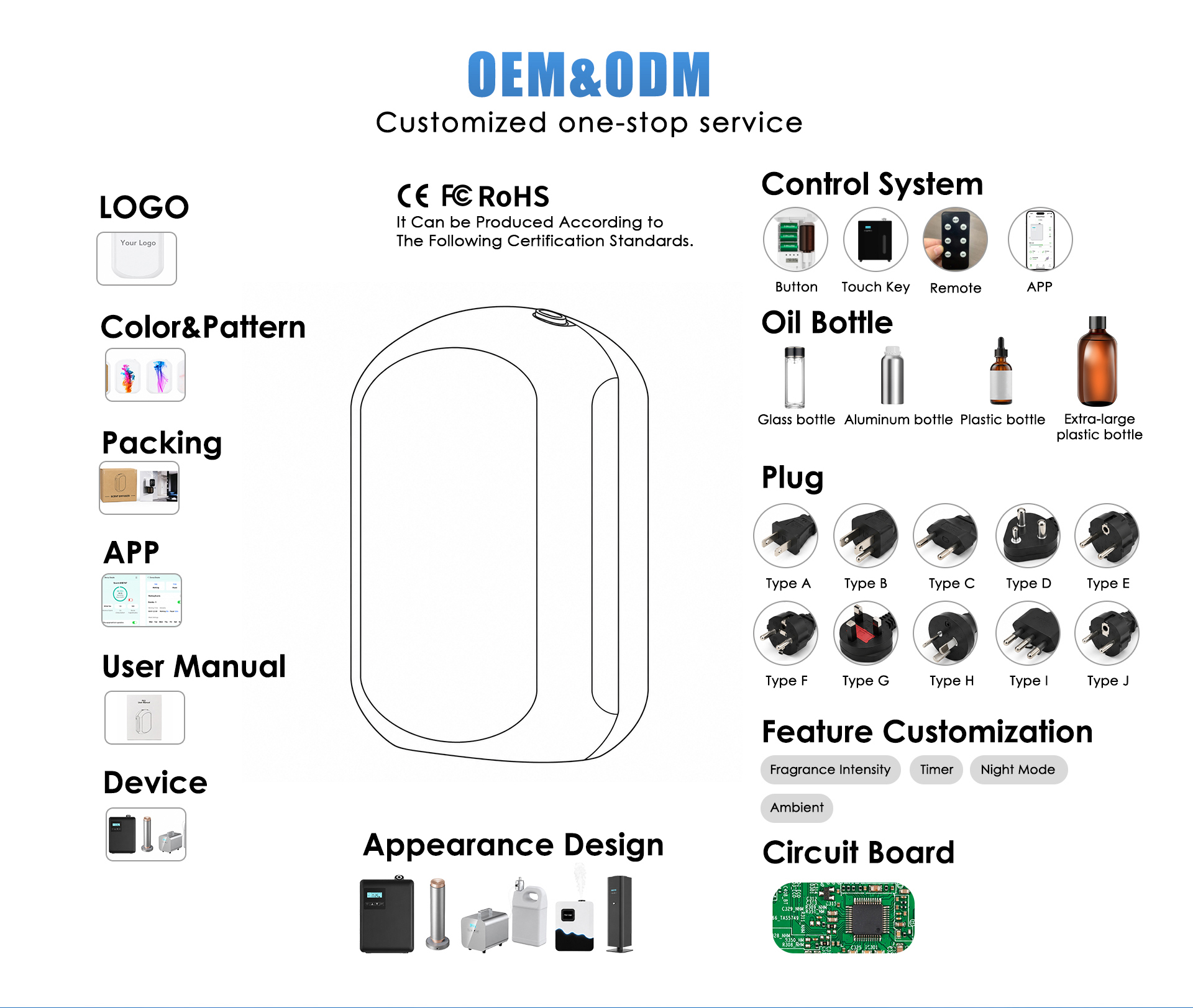
OEM/ODM scope covers logo, product colour, packaging, user manual, plug type, app interface, PCB and functions, and other product specifications. For a reseller, the relevant question is not whether customization exists but whether the same factory that moulds the housing also controls the control board and the app, because a plug-type change and an app-interface change are engineering tasks, not label swaps.
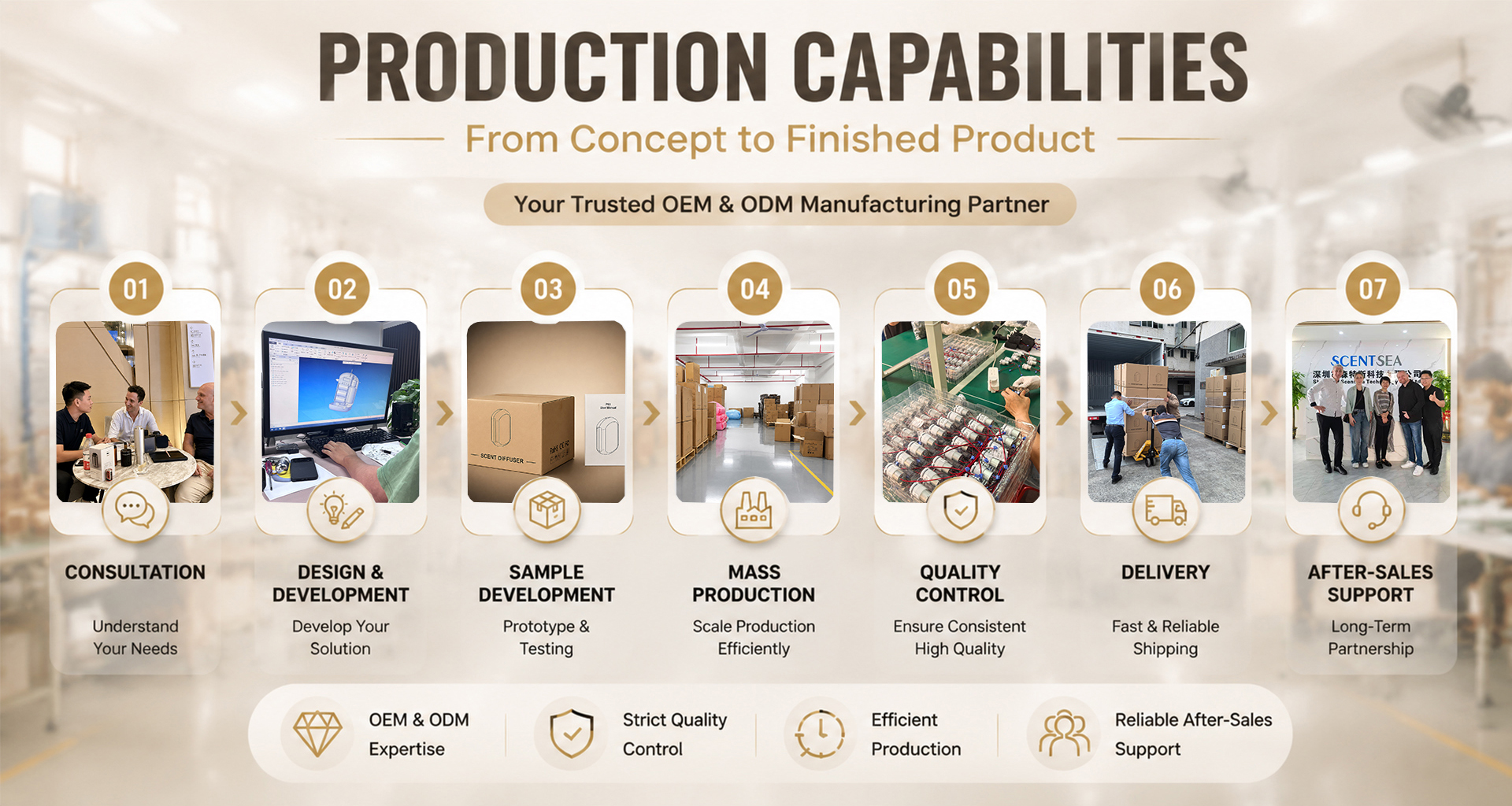
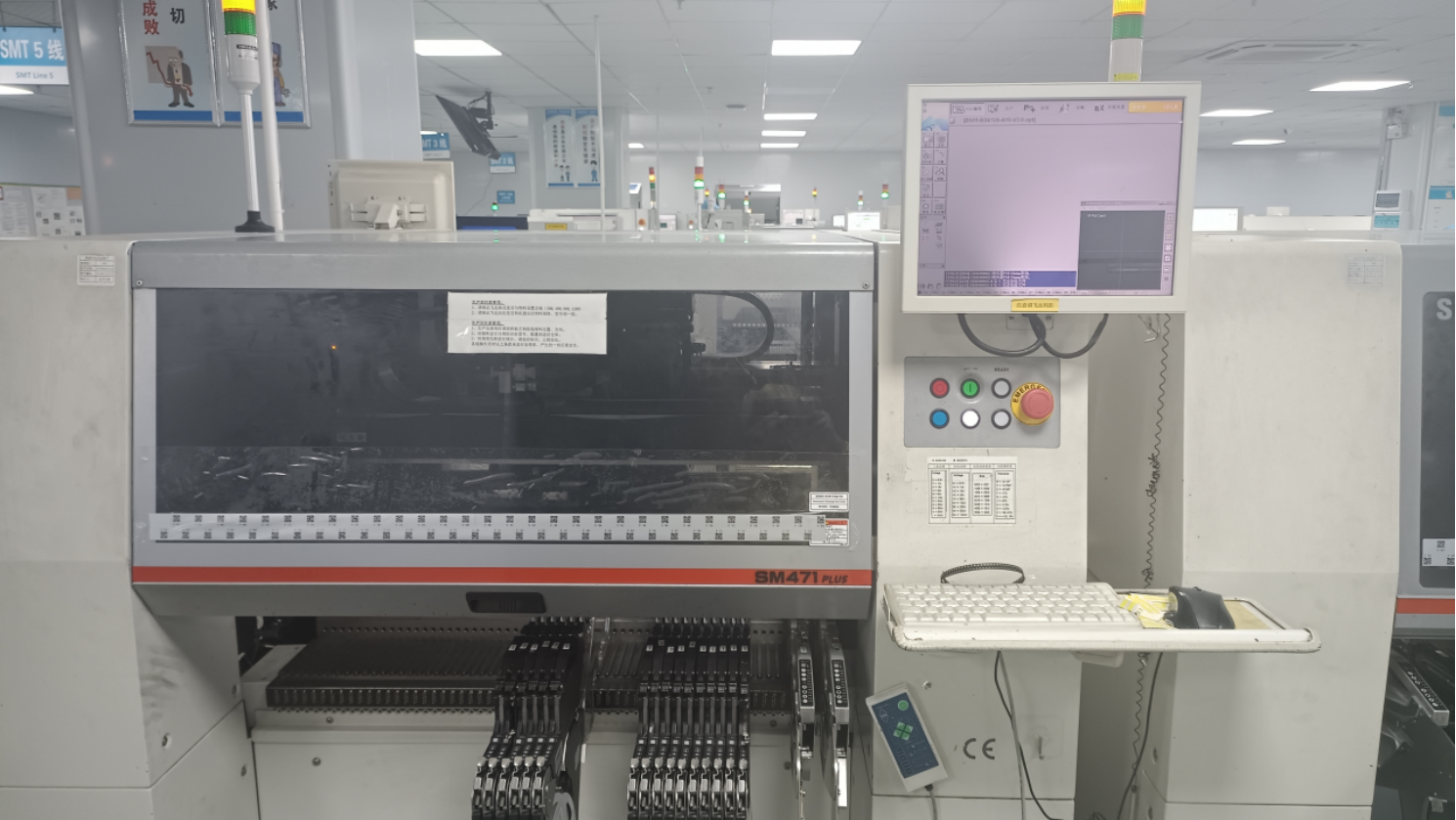
Quality control is where the factory-direct claim becomes checkable. Every unit passes 100% functional testing, atomization testing, leakage inspection, noise testing and app/control testing, followed by a 48-hour ageing test and a final appearance inspection before shipment. The 48-hour ageing step deserves attention in a supplier meeting: ageing does not prove a five-year service life, but it does surface early pump, seal and control failures before a container leaves, and that is where a reseller's return rate is decided.
Commercial terms for this range are structured for sample-led selling: MOQ starts at 1 unit, production lead time is 25–35 days, monthly capacity is 8,000 units, and spare parts carry a one-year free warranty. A single-unit MOQ lets a buyer validate a model on its own fragrance oil before committing to a project quantity; the monthly capacity figure is the one to match against a forecast, not against one order.
The T2 Mall Project: 30 Units, Five Years of Operation
A US scent marketing company deployed 30 units in a shopping-mall application, and that installation has run for five years. The project record reports stable and consistent scent coverage, reduced manual maintenance, improved fragrance management efficiency and an improved customer experience. The factors credited are strong atomization, stable operation, smart app control, adjustable scent intensity, low maintenance and easy installation.
One project is one data point. A mall deployment in the United States does not guarantee identical results in a different building, climate, footfall pattern or fragrance oil, and no buyer should read it that way. What the record does establish is narrower and more useful: this configuration survived five years of continuous commercial duty in a public venue, which is the failure mode resellers fear most, and the maintenance load stayed low enough for the operator to keep the programme running rather than switching it off after the first quarter.
The control detail matters as much as the hardware. App control and adjustable intensity are what allow a mall operator to raise output at peak hours and reduce it overnight without sending a technician to each unit, and that is the operating model a reseller is really selling when it quotes a commercial project.
P03 and the Battery-Powered Cases Buyers Underestimate
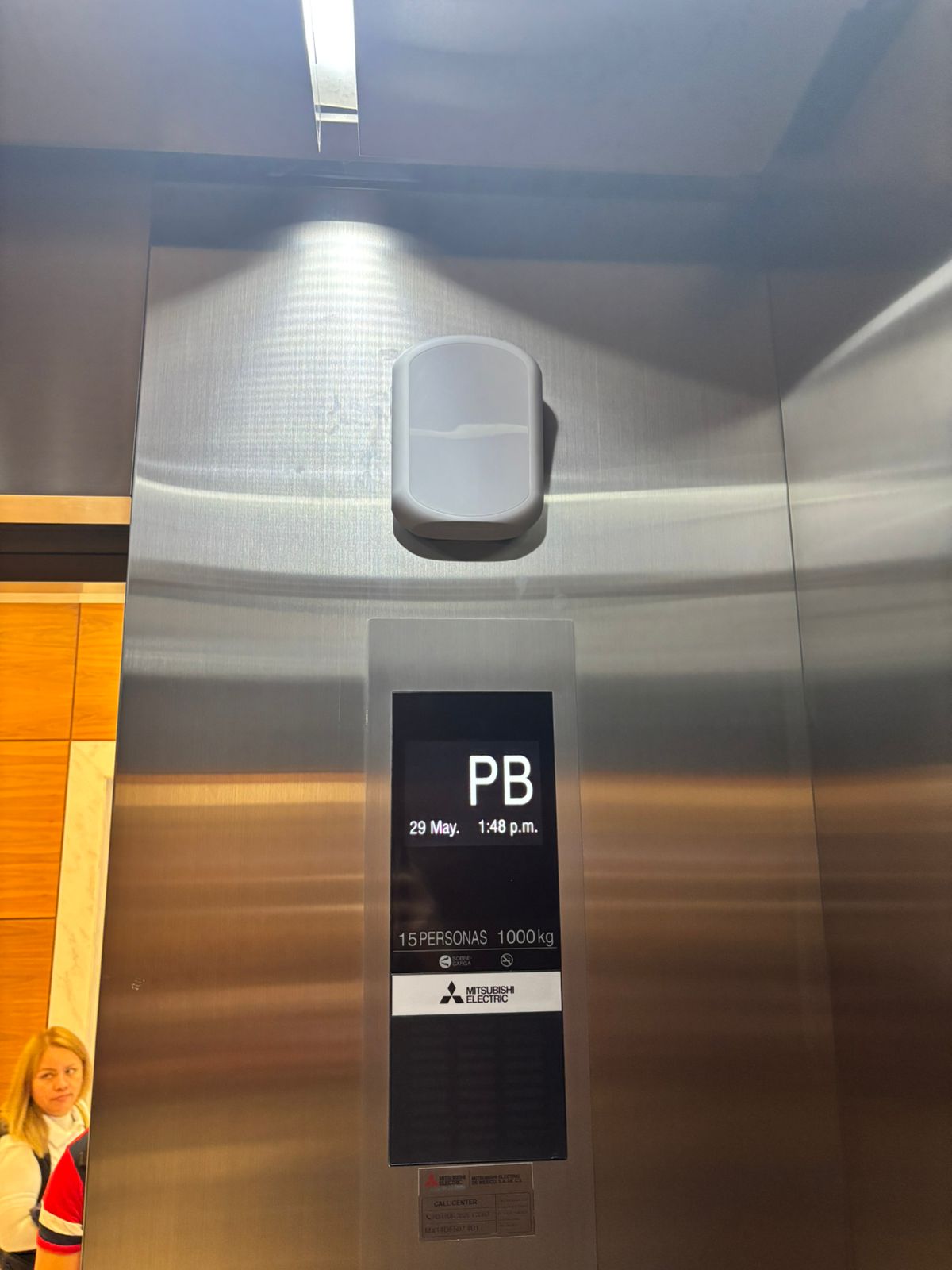
The P03 is a battery-operated model in the SCENTSEA range, and battery power matters in exactly the locations that decide whether a scenting programme feels complete: elevator cars, washrooms, older retail units and leased spaces where pulling a dedicated circuit is expensive, slow or contractually forbidden. In selection terms, battery models such as the P01 or P03 are the recommended fit where wiring is inconvenient.
Battery operation also changes the questions a buyer must ask. Voltage and plug type stop being the deciding specification; runtime, battery replacement interval, charging routine and how a maintenance team will service units spread across several floors become the deciding specifications. Those figures are configuration-specific. Confirm them with the supplier for the exact model and battery pack you intend to resell rather than carrying a number over from a different model in the same family.

Application breadth is the other half of the case. The same technology base covers wall plug-in, portable, wall-mounted, floor-standing, freestanding, app-controlled and HVAC units, which means a reseller can answer a mixed tender without sourcing from several unrelated factories. For a large hotel, mall or office building that needs centralized distribution, an HVAC configuration such as the AC-MAX is the relevant category; for a medium commercial area, a standalone unit is the practical choice; for an elevator or washroom, a battery unit is the practical choice. Project configurations have been supplied to markets including the United States, France, Poland and the UAE.
A Six-Step Validation Sequence Before a Bulk Order
The sequence below is designed to catch the failures that appear after installation rather than in the showroom, and it can be run on a single sample before any project quantity is released.
- Size the space, not the datasheet. Record floor area, ceiling height, ventilation, airflow and partitions. Maximum rated coverage assumes conditions that rarely match a real venue, so treat the printed figure as an upper bound and confirm the working intensity on site.
- Test your own fragrance oil. Viscosity and formulation affect atomization stability. Oil that is too thick or carries impurities contributes to weak output and blocked nozzles, and the buyer discovers it after the container has landed if it is not tested first.
- Match certificates to the exact model. A certificate for a similar chassis is not a certificate for the unit you are importing. Check model names, configurations and destination market on the document itself.
- Run the sample against field failure modes. Atomization strength at the intended intensity, oil leakage, noise at the mounting location, app and control response, and appearance. Noise in particular should be judged in the room type where the unit will sit, not in a warehouse.
- Ask what happens to the production batch. Confirm that the batch will pass the same functional, atomization, leakage, noise, control and 48-hour ageing routine as the sample, and ask to see the inspection record.
- Lock the commercial terms. MOQ, lead time, spare-parts list and warranty period should be agreed in writing before the purchase order, because these determine whether a reseller can support the installation in year two.

Import and Compliance Checks: HS Code, Duty and Certificate Matching
Certification is the point where a technical choice becomes an import decision, and it is also the point where buyers most often accept a document that does not cover what they bought.
SCENTSEA states that its diffuser models are certified with CE, RoHS and FCC. The supporting records supplied for this range are: FCC certificate ATL20240416326 to FCC Part 15 Subpart B:2023 for the US market; RoHS certificate ATL20240416327 to RoHS Directive (EU) 2015/863 for the EU market; and EMC certificate ATL20240416325 to EN IEC 55014-1:2021, EN IEC 55014-2:2021, EN IEC 61000-3-2:2019/A1:2021 and EN 61000-3-3:2013/A2:2021. All three were issued by Shenzhen ATL Testing Technology Co., Ltd. on 24 April 2024.
Three checks keep a certificate useful. First, the document must name the exact model and configuration you are importing. Second, Bluetooth or Wi-Fi variants may additionally require RED compliance for the EU, so wireless models should be verified separately rather than assumed to inherit the base certificate. Third, keep the test report as well as the certificate, because the report shows which standards were applied and at what conditions.
On the customs side, HS 8509.80 covers the category, with a 4.2% US duty rate listed by Dutiable (2026). Classification and rates can differ by configuration and can change, so confirm the landed cost with your broker before pricing a project.
FAQ
What certifications should an importer verify on a waterless cold-air scent diffuser?
Verify the certificate against the exact model and destination market. For the EU, check applicable CE and RoHS documents, and note that Bluetooth or Wi-Fi variants may also need RED compliance. For the US, check FCC. The records supplied for the SCENTSEA range include FCC ATL20240416326 to FCC Part 15 Subpart B:2023, RoHS ATL20240416327 to RoHS Directive (EU) 2015/863 and EMC ATL20240416325 to EN IEC 55014-1:2021 and related standards, all issued on 24 April 2024 by Shenzhen ATL Testing Technology Co., Ltd. Ask for the test report as well as the certificate.
Can one waterless cold-air range cover hotels, malls and locations without wiring?
Yes, if models are selected by installation condition rather than by price tier. Compact models suit small rooms, higher-output standalone units suit medium commercial areas, HVAC systems such as the AC-MAX suit centralized hotel and mall projects, and battery models such as the P01 or P03 suit elevators and washrooms where wiring is inconvenient. A US shopping-mall installation of 30 units has operated for five years on this technology.
Why does a waterless cold-air unit cost more upfront than an ultrasonic diffuser?
The waterless unit carries a higher initial equipment cost, but it requires no water refilling, less frequent cleaning and lower daily maintenance, and it diffuses oil at formulated strength rather than diluted in water. Ultrasonic diffusers cost less to buy but need regular water refills and tank cleaning and are suited to small-area use. Compare the servicing cost across the contract period rather than the purchase invoice alone.
How should a buyer validate a sample before placing a bulk order?
Test the sample against the failure modes you would have to handle in the field: atomization strength at the intended intensity, oil leakage, noise at the mounting location, app and control response, and appearance. Confirm that the fragrance oil you plan to resell atomizes stably, since thick oil or oil containing impurities can cause weak atomization or blocked nozzles. Then ask whether the production batch will pass the same functional, leakage and 48-hour ageing routine as the sample.
What MOQ, lead time and warranty should a wholesale buyer plan for?
For this range, MOQ starts at 1 unit, production lead time is 25–35 days, monthly capacity is 8,000 units, and spare parts carry a one-year free warranty. Plan the first order around a sample you have tested, then scale against your forecast rather than against a single project. Buyers who want to check atomization on their own fragrance oil can request a sample and the company profile before setting quantities.
Conclusion
The technical case for waterless cold-air atomization rests on three properties that survive specification review: no water in the diffusion path, no heating of the oil, and an atomization principle that scales from a battery unit in an elevator to an HVAC system in a mall. Ultrasonic diffusers remain appropriate for bedrooms and small rooms, where their lower purchase cost and quiet operation fit the job.
For an importer or wholesale buyer, the decision rule is short. If the end use is a hotel, mall, office, showroom, spa, restroom or elevator, specify a waterless cold-air unit, verify that the certificate names the exact model, test a sample for leakage, noise and atomization, and confirm oil compatibility before releasing a bulk order. If the end use is a bedroom or small room, an ultrasonic unit is the more economical answer and should be sold as one.
SCENTSEA manufactures waterless cold-air scent diffusers and fragrance oils in Shenzhen, with OEM/ODM support covering logo, colour, packaging, user manual, plug type, app interface, PCB and product functions. The full model range and certification records are available in the SCENTSEA Company Profile (PDF), and product information is published at scent-sea.com.
Next step for importers and wholesale buyers
Request a diffuser sample or a quotation for the model you intend to resell. Samples and fragrance oil samples are available for quality verification, and MOQ starts at 1 unit.
Contact: Jimmy Wan | Email: jimmy@scent-sea.com | Tel / WhatsApp / WeChat: +86 19928719703 | Shenzhen Scentsea Technology Co., Ltd., Block A, Jinxing Building, Longhua District, Shenzhen, China
Have Questions or Need More Details?
Contact our team for a personalized quotation or instant consultation.
Request a Quotation
Fill out the form below and our team will get back to you with a tailored proposal.
WhatsApp Direct Chat
Prefer to chat in real-time? Message us on WhatsApp for instant assistance & quick answers.
- Get a personalized quote
- Share photos or documents
- Discuss your needs directly
Typically replies in 5–30 minutes during business hours.