
H5000 vs P02: Commercial Scenting for Large Venues
The H5000 and the P02 are rarely in direct competition for the same square metre. The H5000 is a floor-standing commercial scent diffuser rated for 800–1,300 m²; the P02 is a wall-mounted diffuser rated for 150–350 m². For a mid-to-large venue — a hotel, shopping mall, office tower, airport or bank branch — the workable answer is usually a mixed deployment: H5000 units anchor the large open volumes, and P02 units serve the smaller zones inside and around them.
SCENTSEA (Shenzhen Scentsea Technology Co., Ltd) manufactures both models. The company was founded in 2021, runs a 3,000 m² production facility in Shenzhen, China, and supplies waterless cold-air atomizing scent diffusers and fragrance oils to customers in more than 70 countries and regions, with exports accounting for 70% of output. This comparison uses the published specifications of the two models and the operational arithmetic that follows from them: refill intervals, oil consumption per rated square metre, and how many units a given floor area actually needs.
The Real Problem: Large Venues Are Not One Room
A brief that describes a venue as “large” rarely describes one continuous space. A hotel may combine a 900 m² lobby with 200 m² of public corridor, restrooms, a restaurant and meeting rooms. A shopping mall mixes an atrium, individual retail units, restrooms and service corridors. A bank branch may place a 300 m² customer hall next to smaller consultation rooms. Airflow, ceiling height and partitioning differ in every zone, and fragrance behaves differently in each one.
Commercial scenting specifications fail in two directions. The first is undersizing: a unit placed in a tall, well-ventilated volume cannot hold a stable scent level, and the result is a weak, uneven experience across the space. The second and more expensive failure is oversizing: a unit rated far above the zone it serves releases more fragrance oil than that zone needs, which surfaces as complaints from staff and visitors, faster oil consumption, and a running cost that never appears on the purchase order.
A third factor is operational. Both the H5000 and the P02 are plug-in units that hold fragrance oil in an internal tank, and both need refilling. The person doing that refilling is normally a facilities or housekeeping team member rather than a scenting technician. Unit weight, mounting height and the number of days between refills therefore belong in the specification decision, not in the handover notes.
Industry Background: Why Hardware Choice Now Matters More
Scent marketing sits inside a market valued at approximately USD 4.1 billion in 2026, projected to reach USD 7.28 billion by 2035 at a CAGR of 6.6% (Cognitive Market Research, cited via Vertex). Research houses scope the category differently, so different growth figures circulate; treat any single CAGR as a planning assumption rather than a commitment.
The hardware behind commercial scenting projects has converged on waterless cold-air nebulizing diffusion, which atomizes fragrance oil into sub-micron particles below 2.5 μm without heat or water (SCENTA technical guide). Because no water is added, the oil is not diluted; because no heating element is used, dedicated heating power is 0 W in this design. Both models discussed here belong to that waterless cold-air category, and both draw DC 12 V power through a plug-in supply.
Demand-side arguments for ambient scenting are usually qualitative. One widely cited secondary estimate puts the increase in retail dwell time from scent marketing at an average of 15 minutes; that figure is directional rather than definitive, since it is a secondary source and not a measurement of any specific store.
Coverage requirements also scale beyond direct diffusion. In centralized buildings with ducted air handling, HVAC scenting systems such as SCENTSEA’s AC-MAX — 5 L tank, rated 2,500–3,500 m² — distribute fragrance through the air system instead of into the room. Direct-diffusion units like the H5000 and P02 remain the right choice for individual spaces inside a property, but buyers should confirm at the specification stage whether any zone in the project is meant to be served through ductwork.
The Two Units, Described Precisely
H5000: floor-standing diffuser for hotel, mall and lobby volumes
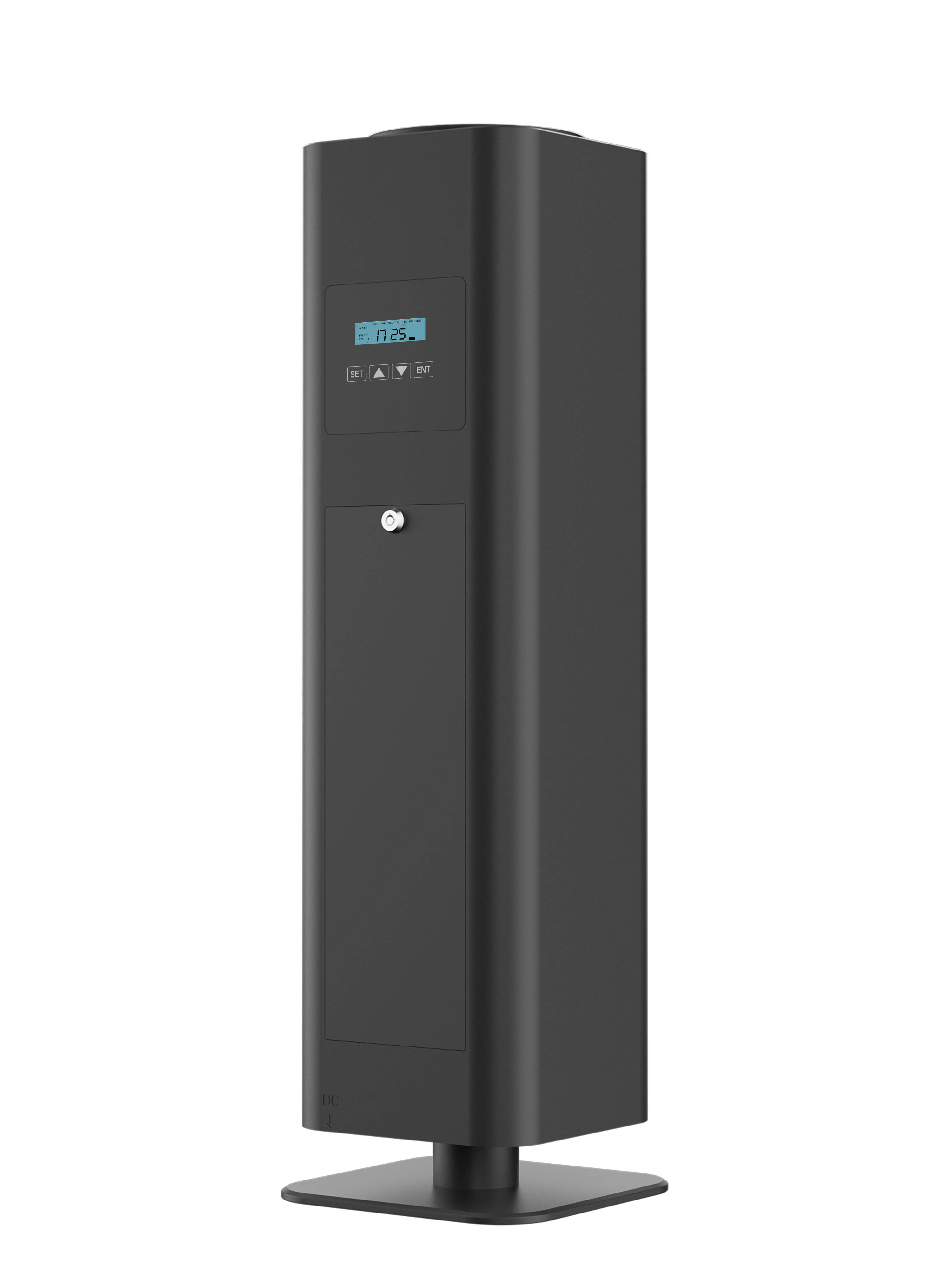
The H5000 is a floor-standing scent diffuser with an aluminum housing finished in gunmetal. Rated coverage is 800–1,300 m², 2,500–4,000 m³ or 8,600–14,000 ft². Tank capacity is 1,000 ml, power is 20 W from a DC 12 V plug-in supply, noise is below 45 dB, and oil consumption is 5.4 ±10% ml/h. The unit measures 180 × 180 × 610 mm and weighs 6.4 kg net (7.1 kg gross). SCENTSEA documents it for hotel, shopping mall and office building lobby environments.
P02: wall-mounted diffuser for rooms, corridors and shops
The P02 is a wall-mounted electric scent diffuser with a plastic housing in white or black, with color customization available. Rated coverage is 150–350 m², 500–1,000 m³ or 1,500–3,500 ft². Tank capacity is 300 ml, power is 6.5 W from a DC 12 V plug-in supply, noise is below 30 dB, and oil consumption is 2.5 ±10% ml/h. The unit measures 148 × 68 × 203.5 mm and weighs 0.8 kg net (1 kg gross). SCENTSEA documents it for restrooms, corridors and shops.
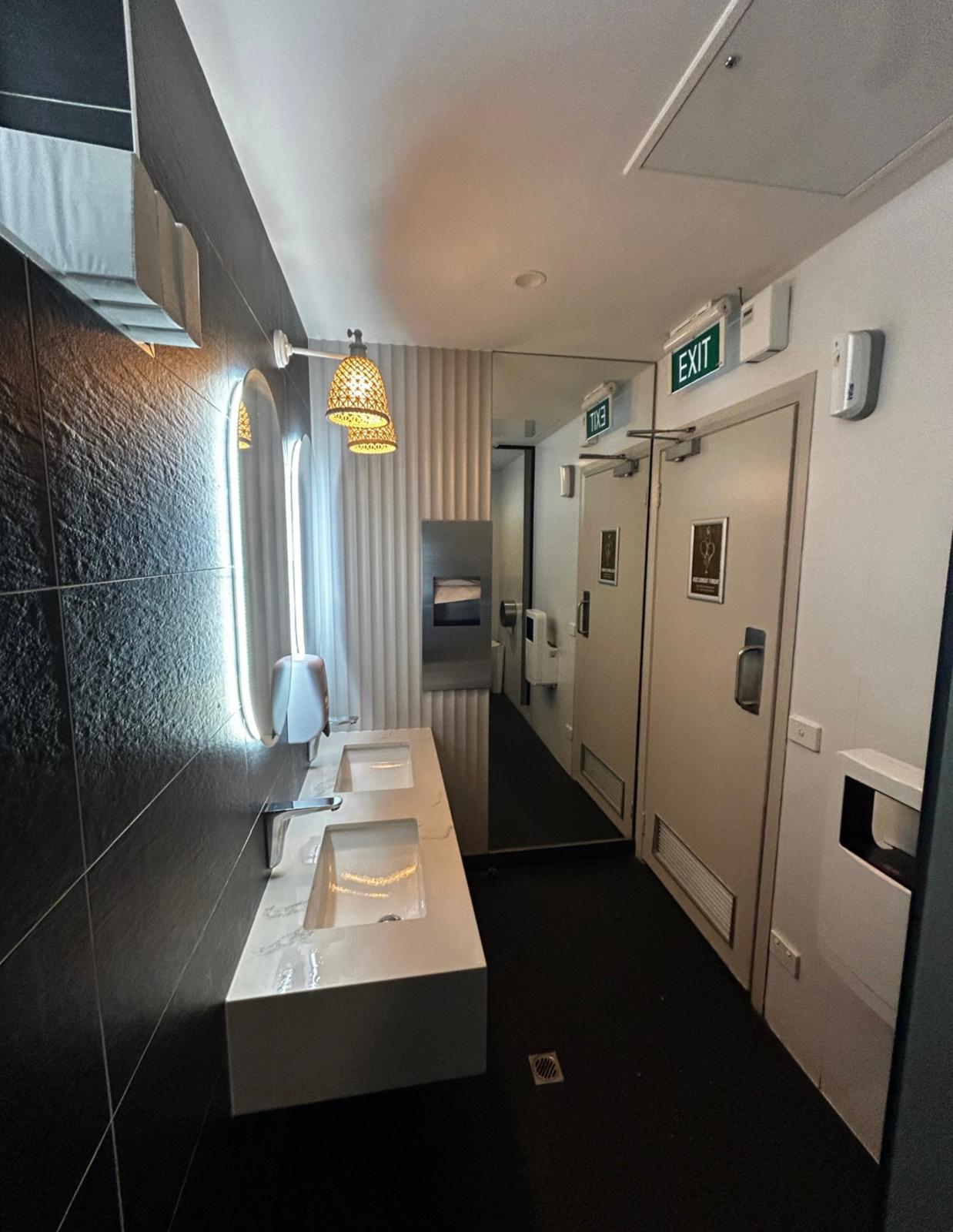
SCENTSEA’s own selection guidance places the P02 in small-to-medium commercial spaces that need stronger diffusion and smart control, and reserves the H5000 for large open spaces. The two models are adjacent steps in one range rather than substitutes for each other.
Trade-Offs That Decide the Specification
Space: floor footprint versus wall area
The H5000 occupies a 180 × 180 mm base and stands 610 mm tall at 6.4 kg. That footprint makes it stable and easy to place in a lobby — beside a column, near an entrance, in a dead corner — but it does consume floor area in prime commercial space, and in a tight retail layout that can be the deciding objection. The P02 takes no floor area at all; at 0.8 kg it mounts flat on a wall. What it does require is a suitable wall surface and a DC 12 V outlet within reach, and those two conditions are not always available where the scent is needed most.
Installation: position, access and who services the unit
Both models are plug-in, which keeps commissioning simple and avoids hard wiring. The H5000 can be repositioned by one person without tools when a lobby layout changes seasonally. The P02’s position is effectively fixed once mounted, so mounting height has to be agreed at commissioning as a compromise between diffusion and service access: high enough for the airflow to carry the fragrance, low enough for refilling without a ladder. Settle that height with the facilities team before drilling, not after.
On control: many commercial scenting models support app-based scheduling, and selected models support Wi-Fi or Bluetooth remote management. Because those functions depend on the exact configuration, confirm which control features the ordered version includes — the specification sheet and compliance documents must match the unit that is shipped.
Noise: below 45 dB versus below 30 dB
Noise ratings differ by 15 dB on paper. Where people sit or talk quietly close to the unit — reception desks, fitting rooms, consultation rooms, waiting lounges — the P02’s lower rating is the concrete reason to choose it. In a large lobby with substantial ambient sound, the difference becomes secondary to coverage. For quiet environments, request the noise test data for the exact model and output setting, since noise varies with power.
Oil change frequency: the arithmetic buyers should run
Refill intervals follow directly from tank capacity and oil consumption:
- H5000: 1,000 ml ÷ 5.4 ml/h ≈ 185 atomizing hours per full tank.
- P02: 300 ml ÷ 2.5 ml/h ≈ 120 atomizing hours per full tank.
At a 12-hour daily schedule that is roughly 15 days between refills for the H5000 and roughly 10 days for the P02. At 8 hours per day it is roughly 23 days and roughly 15 days respectively. Two operational consequences follow. First, the bigger tank does not mean fewer service visits per unit of fragrance — it means fewer units are needed to cover a given area. Second, P02 zones need a shorter and more predictable refill routine, which is usually acceptable because the person refilling is already working on that floor.
Fragrance density per rated square metre
Dividing oil consumption by rated coverage gives a quick sanity check on any proposed layout. The H5000 uses about 0.004–0.007 ml/h per rated m² across its 800–1,300 m² band. The P02 uses about 0.007–0.017 ml/h per rated m² across its 150–350 m² band. The narrower band therefore assumes denser dosing in a smaller space, which fits corridors and restrooms where air exchange is high relative to volume. Use these ratios to test whether a proposed unit count is realistic before ordering samples.
Comparison Table: H5000 vs P02
| Parameter | H5000 | P02 |
|---|---|---|
| Type | Floor standing | Wall-mounted electric |
| Material and finish | Aluminum, gunmetal | Plastic, white or black (customized) |
| Rated coverage | 800–1,300 m² / 2,500–4,000 m³ / 8,600–14,000 ft² | 150–350 m² / 500–1,000 m³ / 1,500–3,500 ft² |
| Oil capacity | 1,000 ml | 300 ml |
| Power | 20 W, DC 12 V, plug-in | 6.5 W, DC 12 V, plug-in |
| Oil consumption | 5.4 ±10% ml/h | 2.5 ±10% ml/h |
| Noise | Below 45 dB | Below 30 dB |
| Atomizing hours per full tank | ≈ 185 hours | ≈ 120 hours |
| Refill interval at 12 h/day | ≈ 15 days | ≈ 10 days |
| Dimensions (L × W × H) | 180 × 180 × 610 mm | 148 × 68 × 203.5 mm |
| Net / gross weight | 6.4 kg / 7.1 kg | 0.8 kg / 1 kg |
| Documented applications | Hotel, shopping mall, office building lobby | Restroom, corridor, shop |
| Units to serve a 1,000 m² open floor | 1 | 3–7, depending on position within the rated band |
Step-by-Step: Specifying a Mixed Fleet
- Survey by zone, not by building. List every space separately with its area, ceiling height, air movement and partitioning. A property-level total is not a usable input for diffuser selection.
- Derate the published coverage. Ratings assume favourable conditions. A tall atrium or a heavily ventilated entrance hall behaves like a larger space than its floor area suggests, and a partitioned floor behaves like several smaller ones.
- Assign each zone to a model. Open volumes of 800–1,300 m² go to the H5000; zones of 150–350 m² go to the P02. For the 350–800 m² gap, use either two P02 units or a mid-band model such as the A300 or T2, both rated 500–800 m².
- Fix installation points. For the H5000, choose a floor position with air movement and a plug point. For the P02, choose a wall surface and a DC 12 V outlet at a height that balances diffusion against refill access.
- Calculate the fragrance budget. Multiply units by consumption and by scheduled hours to get the monthly oil volume, then convert it into bottle sizes and labelling requirements.
- Convert hours into calendar days. Turn atomizing hours into refill dates per zone, assign an owner, and keep a simple tank log so consumption trends become visible.
- Test with samples before the full order. Run both models in the actual rooms on the intended schedule. Sample performance in a real lobby is more informative than any rating table.
- Document and hand over. Zone-to-model map, schedules, refill log, warranty terms and the agreed spare parts list should all exist before the first refill is due.
Use Cases: Where Each Unit Earns Its Place
Hotel lobbies and public areas
A 900 m² lobby falls inside the H5000’s band and typically needs one unit positioned for airflow rather than symmetry. The adjacent 200 m² of corridor, restroom and lounge sits inside the P02 band, where a 300 ml tank and below-30 dB noise fit the environment better than a second floor-standing machine. This is the classic hotel scenting split: anchor plus fill.
Shopping malls
An atrium is a large open volume and behaves like one; individual retail units of 150–350 m² do not. Putting one oversized unit in a mall and expecting it to cover both is the usual mistake in retail scenting projects. The P02 per shop, plus a floor-standing unit in the atrium and in service corridors, keeps consumption aligned with each zone’s actual size.
Office buildings and bank branches
Office lobbies match the H5000’s documented application, while lift lobbies, corridors and washrooms sit in P02 territory. In bank branches, a 300 m² customer hall is a P02 zone; larger banking halls with high ceilings behave like lobby volumes and suit the floor-standing unit.
Airports, restaurants and brand spaces
Large circulation areas in airports call for floor-standing units, while gate lounges and smaller retail units fit the P02 band. In restaurants and hospitality venues, a 150–350 m² dining room is a P02 case, and a banquet foyer or hotel entrance hall is an H5000 case. The same logic applies to commercial scent branding programmes across multiple sites: one scent identity, two hardware tiers, matched to each room.
Long-Term Considerations: Manufacturer, Consumables and Support
For a multi-year deployment, the equipment choice is only the first cost line. What determines whether the programme holds together is oil supply, spare parts, quality consistency and the supplier’s ability to repeat the same build later.
- One fragrance programme across two models. Both units are filled from the same fragrance oil supply, so a property can keep one scent identity while running different hardware. Compatible third-party oils can be used, but viscosity and formulation should be tested to confirm stable atomization.
- Quality control before shipment. SCENTSEA’s process includes 100% functional testing, atomization testing, leakage inspection, noise testing, app and control testing, a 48-hour aging test and final appearance inspection before shipment. For a fleet order, agree that the pre-shipment test record is the acceptance criterion.
- Spare parts and warranty. The manufacturer provides a 1-year free warranty on spare parts. For a multi-unit site, agree up front which spares — pump, nozzle, tubing — stay on site so a single failure does not take a zone offline for weeks.
- Capacity and lead time. Monthly production capacity is 8,000 units, with a typical lead time of 25–35 days and a minimum order quantity of 1 unit for diffusers. Delivery terms are EXW, FOB or CIF; payment is 50% T/T in advance with the balance before shipment.
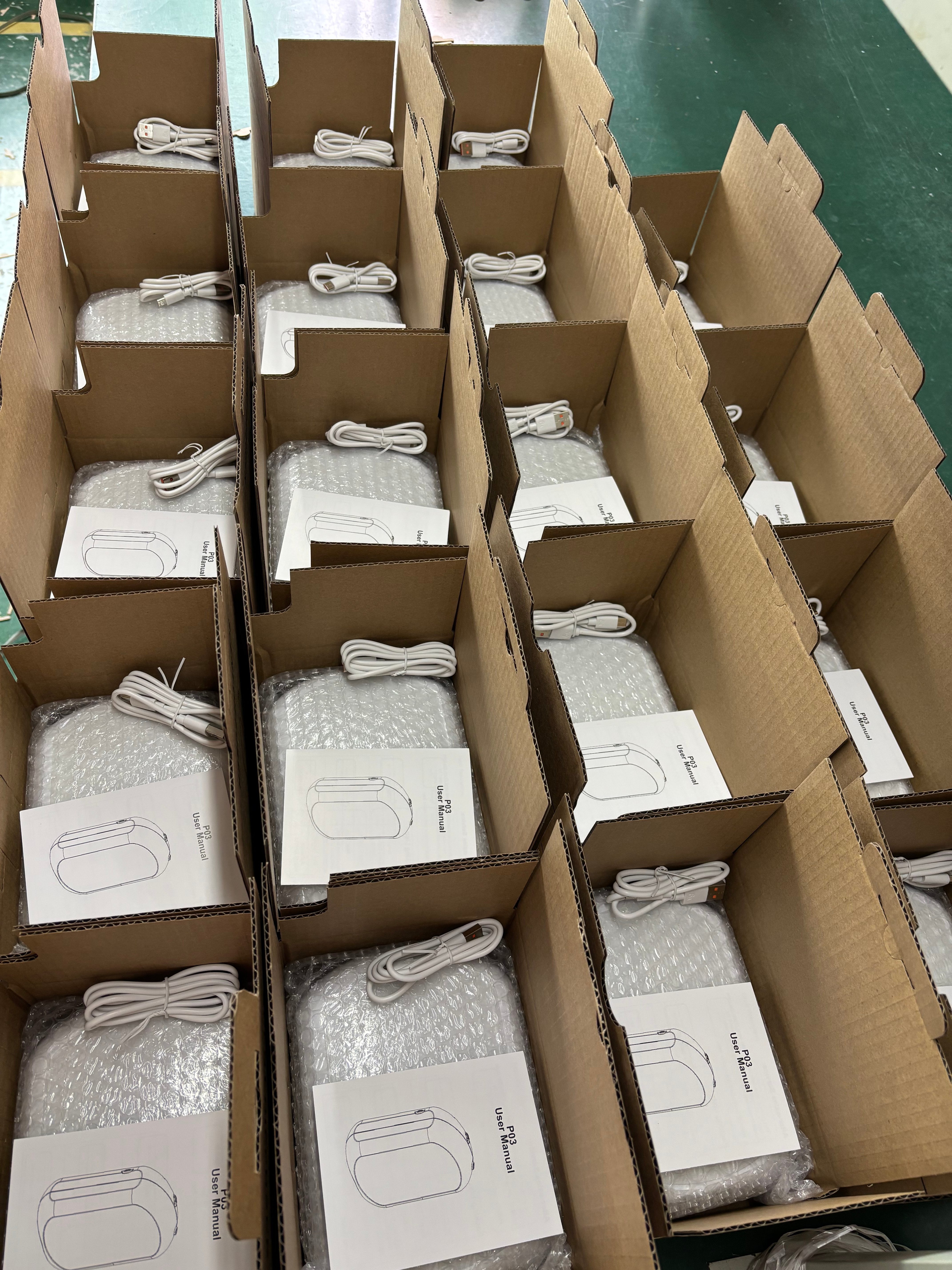
- Customization for channel partners. OEM and ODM work covers logo, color, packaging, user manual, plug type and app interface, depending on model and quantity — relevant for distributors building a private-label commercial scenting line.
- Compliance per market. All diffuser models are certified CE, RoHS and FCC. Wireless configurations may additionally require RED for the European market. Certificates must match the exact production model, not the model family.
- Distributor stocking logic. A partner stocking both models can serve a property from 150 m² to 1,300 m² without a special order: the H5000 covers anchor spaces, the P02 covers the tail, and mid-band demand is met by the A300 or T2.
Selecting a long-term commercial scenting system manufacturer for hotel projects
Hotel groups usually need a manufacturer who can support a portfolio rather than a single property. The practical checks are: does the range cover both large volumes and small rooms; can fragrance oil be supplied and private-labelled; are warranty terms and spare parts written into the agreement; are capacity and lead time credible against the rollout plan; are certifications valid for each destination market; and can the same model be re-ordered in three years with the same finish and control configuration. A supplier who covers only one coverage band forces a second vendor into the project, which fragments refill logistics and undermines scent consistency across the portfolio.

FAQ
Which certifications should I verify before ordering the H5000 or the P02?
Certification requirements depend on the destination market, the model and whether it has wireless functions. For the European market, buyers should normally check applicable CE and RoHS compliance documents, and Bluetooth or Wi-Fi models may also need to meet RED requirements. For the US market, applicable FCC compliance should be verified. Certificates and test reports must apply to the exact production model and configuration being purchased, not to a related model in the same range.
Can one manufacturer supply both the floor-standing and the wall-mounted units for one property?
Yes. The H5000 floor-standing diffuser and the P02 wall-mounted diffuser are part of the same SCENTSEA range, alongside mid-band models and HVAC systems, so a mixed deployment can be sourced from one supplier. OEM and ODM services cover logo, color, packaging, user manual, plug type and app interface depending on model and quantity, and monthly production capacity is 8,000 units with a typical lead time of 25–35 days.
Which model costs less to run per hour of operation?
Per atomizing hour, the P02 uses less oil: 2.5 ±10% ml/h against 5.4 ±10% ml/h for the H5000. But the P02 covers 150–350 m² while the H5000 covers 800–1,300 m², so cost per square metre depends on how many units each zone needs. A 1,000 m² open hall can be served by one H5000 or by three to seven P02 units, which changes both oil consumption and refill labor. Compare quotes for both configurations rather than the hourly figure alone.
Can I test both models before committing to a fleet order?
Diffuser samples and fragrance oil samples are available for quality verification, and the minimum order quantity starts from 1 unit for diffusers. That means both models can be ordered and run on site in the actual rooms on the intended schedule, which is the most reliable way to judge coverage, noise and scent intensity before a larger commitment.
What lead time and after-sales support should a project order expect?
With monthly production capacity of 8,000 units, typical lead time is 25–35 days, and orders can start from a minimum order quantity of 1 unit. Delivery terms are EXW, FOB or CIF, payment is 50% T/T in advance with the balance before shipment, and acceptance is based on pre-shipment testing. The manufacturer provides a 1-year free warranty on spare parts. The full model list and specifications are in the SCENTSEA catalog, and configuration questions can go to jimmy@scent-sea.com or +86 19928719703.
Conclusion
The H5000 versus P02 question resolves into a coverage rule rather than a product preference. Open volumes of roughly 800–1,300 m² — hotel lobbies, mall atriums, office building lobbies — belong to the floor-standing H5000, whose 1,000 ml tank, 20 W output and 5.4 ±10% ml/h consumption support continuous diffusion in large air volumes. Zones of 150–350 m² — corridors, restrooms, shops, lounges, consultation rooms — belong to the wall-mounted P02, whose 300 ml tank, 6.5 W draw and below-30 dB noise suit smaller, quieter spaces.
The 350–800 m² band is served by two P02 units or a mid-range model. Refill planning follows the same rule: about 185 atomizing hours per H5000 tank and about 120 per P02 tank, which at a 12-hour daily schedule means roughly 15 days and roughly 10 days between refills. Buyers who run these numbers before ordering avoid both the weak-scent undersizing error and the costly oversizing error.
For long-term deployments, the deciding factors move from specifications to supply: one oil programme across both models, documented pre-shipment testing, a 1-year free warranty on spare parts, credible capacity and lead time, and certifications that match the exact unit shipped. Those are the conditions that let a hotel or mall portfolio keep one scent identity across a decade of hardware replacement.
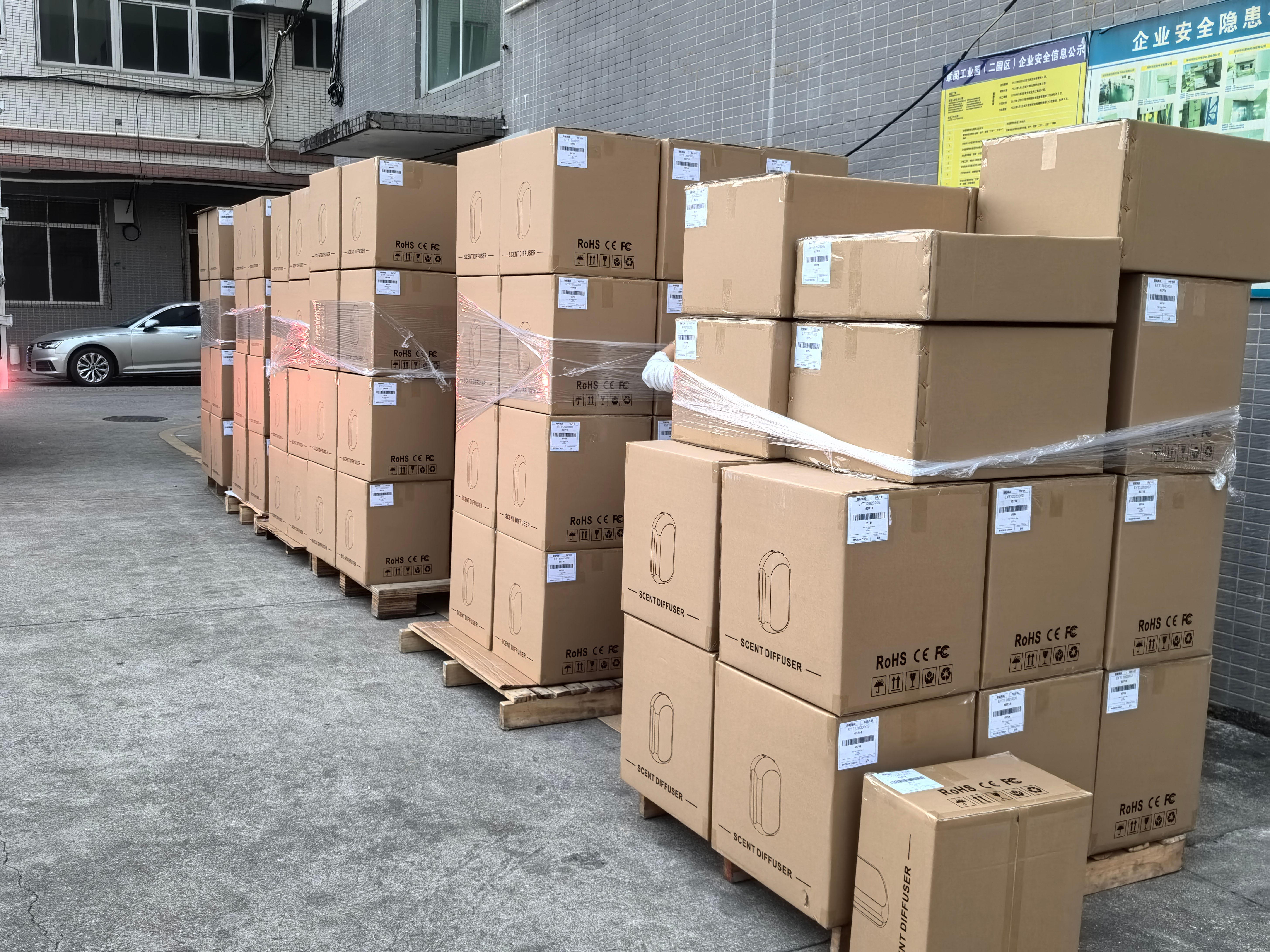
Request samples of the H5000 and the P02, or ask for a quote covering a mixed configuration for your floor plan. The SCENTSEA catalog lists the full range, and the team can be reached at jimmy@scent-sea.com or +86 19928719703. Company details: scent-sea.com.
Specifications in this article refer to the H5000 and P02 as published by SCENTSEA. Refill intervals and per-square-metre consumption figures are calculations derived from published tank capacity and oil consumption, and vary with schedule, airflow and fragrance oil.
Catalog and quotation requests: SCENTSEA CATALOG (PDF)
Have Questions or Need More Details?
Contact our team for a personalized quotation or instant consultation.
Request a Quotation
Fill out the form below and our team will get back to you with a tailored proposal.
WhatsApp Direct Chat
Prefer to chat in real-time? Message us on WhatsApp for instant assistance & quick answers.
- Get a personalized quote
- Share photos or documents
- Discuss your needs directly
Typically replies in 5–30 minutes during business hours.