
Scent Diffuser Units by Space: Capacity, Config & OEM Options for Commercial Projects
How Many Scent Diffuser Units Does a Commercial Space Need?
A hotel lobby, shopping mall, restroom, elevator, and open-plan office each require a different scent diffuser configuration. The answer is not a single number: it depends on coverage area, mounting type, power supply, atomization technology, and the level of scent intensity a project requires. This guide explains how to translate square meters and space types into a practical unit count, and which SCENTSEA models support each installation scenario.
The Real Question Behind "How Many Units?"
Buyers evaluating a commercial scent diffuser usually ask about quantity before defining the operating conditions. A more useful approach is to define the space type, coverage requirement, installation point, and runtime expectations first. The number of diffusers follows from those variables, not the other way around.
For procurement teams moving from evaluation to execution, the practical workflow is: map each zone to a coverage tier, select a product family that fits the physical environment, then adjust for scent intensity and redundancy.
SCENTSEA, officially Shenzhen Scentsea Technology Co., Ltd., is a scent diffuser manufacturer based in Shenzhen, China. The company specializes in scent machines and fragrance oils, with products installed in more than 70 countries and a 3,000 m² factory that supports annual production of 100,000 units.
Problem Definition: Why Commercial Spaces Misjudge Unit Counts
Two common mistakes appear in commercial scenting projects: under-specifying coverage and over-installing diffusers in spaces that need a different delivery method. Both mistakes increase cost and reduce scent consistency.
A single wall mounted scent diffuser cannot cover a shopping mall atrium the same way a floor standing scent diffuser or HVAC-integrated unit can. Similarly, a battery operated scent diffuser is not a substitute for a plumbed-in commercial unit in a high-traffic corridor. The source of the problem is usually a mismatch between the diffuser's rated coverage and the actual space geometry, ceiling height, and airflow.
Coverage ratings are useful for initial screening, not for final installation density. A scent diffuser rated for 800 m² assumes open space, normal ceiling height, and reasonable air circulation. Real projects include partitions, doors, elevator shafts, and HVAC airflow, all of which change how far a scent can travel.
Industry Background: From Single Room to Whole-Building Scenting
Scent delivery has moved beyond single-room plug-in devices. Commercial buyers now choose among electric scent diffuser, battery operated scent diffuser, wall mounted scent diffuser, floor standing scent diffuser, HVAC scent diffuser, and smart scent diffuser systems, depending on the scale and control requirements of the project.
The global HVAC scent diffuser market was valued at USD 1.01 billion in 2024 and is expected to grow at a CAGR of 4.5% through 2034, according to Intel Market Research. This reflects a broader shift toward integrating scenting into building infrastructure rather than relying on standalone consumer devices.
For a manufacturer like SCENTSEA, the practical consequence is a product portfolio that covers each installation point: plug-in units for small rooms, battery-operated units for toilets and elevators, freestanding commercial units for lobbies, and HVAC split units for large zones.
How to Calculate the Number of Scent Diffuser Units
The basic formula is straightforward: divide the total target area by the rated coverage of the selected model, then round up. In practice, add one extra unit for spaces with obstructions, high ceilings, or strong air exchange.
Step 1: Classify the Space
List each zone that needs scenting: lobby, corridor, restroom, elevator, retail floor, meeting room, or open office. Each zone has a different coverage range and usually requires a different product type.
Step 2: Select a Product Family by Installation Point
- Toilet and elevator: battery operated scent diffuser models are suitable because they avoid the need for nearby power outlets.
- Small rooms and home spaces: a wall plug-in scent diffuser or compact tabletop unit keeps the installation unobtrusive.
- Hotel lobbies and office building lobbies: a floor standing scent diffuser such as the H5000 delivers higher coverage from a single point.
- Large open areas and HVAC-integrated projects: an HVAC scent diffuser such as the AC-MAX distributes scent through the existing air handling system.
Step 3: Match Rated Coverage to the Zone
Use the model's coverage range as the baseline. For example, SCENTSEA's P02 electric scent diffuser covers 150–350 m², making it a reasonable choice for a corridor or shop. The A300 commercial scent diffuser covers 500–800 m², which fits a hotel floor or mid-size retail space. The T3 covers 1000–1600 m² and is designed for shopping malls, hotels, and airport zones.
Step 4: Add a Safety Margin
For spaces with high ceilings, open staircases, or strong ventilation, add 15–25% more units than the coverage calculation suggests. Scent intensity is subjective; testing on site before full deployment is the most reliable way to calibrate the final count.
Step 5: Plan for Maintenance and Replacement
Consider whether the project needs spare units for rotation during maintenance. A service provider managing multiple sites may standardize on one or two models to simplify spare parts inventory and staff training.
SCENTSEA Product Families and Coverage Comparison
The table below summarizes key commercial models from SCENTSEA and the space types they are designed to cover. All figures come from the manufacturer's product specifications.
| Model | Type | Coverage | Power Supply | Material | Typical Use |
|---|---|---|---|---|---|
| S01 | Wall plug-in scent diffuser | 30–100 m² | 110–240V AC | Plastic | Home, toilet, store |
| S02 | Tower scent diffuser | 30–100 m² | DC 5V | Aluminum alloy | Home, office, store, beauty salon |
| P01 | Battery operated scent diffuser | 100–150 m² | 4×D batteries or Type-C | Plastic | Toilet, elevator |
| P02 | Electric scent diffuser | 150–350 m² | DC 12V plug-in | Plastic | Toilet, corridor, shop |
| P03 | Battery operated scent diffuser | 100–150 m² | 3×D batteries or Type-C | Plastic | Toilet, elevator |
| A300 | Commercial scent diffuser | 500–800 m² | DC 12V | Steel | Hotel, shopping mall, retail store |
| T2 | Commercial scent diffuser | 500–800 m² | DC 12V 2A | Acrylic panel + steel casing | Hotel, shopping mall, cinema |
| T3 | Commercial scent diffuser | 1000–1600 m² | DC 12V 2A | Acrylic panel + steel casing | Shopping mall, hotel, airport |
| H5000 | Floor standing scent diffuser | 800–1300 m² | DC 12V plug-in | Aluminum | Hotel, shopping mall, office building lobby |
| AC-MAX | HVAC scent diffuser | 2500–3500 m² | DC 12V | Aluminum body + plastic bottle | Shopping mall, bank, airport |
| SC19 | Advertising scent machine | 150–250 m² | 110–240V AC | Aluminum + steel | Shopping mall, hotel, bank |
These coverage figures assume normal ceiling height and open-floor conditions. An experienced supplier should be able to help buyers adjust the count based on the actual floor plan.
Space-by-Space Unit Guidance
Hotel: Lobby, Corridor, and Guest Floors
A hotel lobby with a high ceiling and open front desk area typically needs a floor standing scent diffuser such as the H5000, which covers 800–1300 m². Guest floor corridors are better served by multiple compact units or a series of wall-mounted units, depending on corridor length and fire-rated door separation.
For a hotel project, the practical count often starts with one H5000 for the lobby and one P02 or S02 per corridor segment. The final number depends on the number of floors and whether the scenting system is centralized or decentralized.
Shopping Mall: Atrium, Retail Zones, and Common Areas
A shopping mall is rarely scented by a single diffuser type. A large atrium can be covered by an HVAC scent diffuser like the AC-MAX, which covers 2500–3500 m² and uses a 5L oil bottle. Individual retail stores may prefer standalone commercial units, while public restrooms and elevators are better handled by battery-operated or compact electric models.
In a mall project, the calculation should separate “background scenting” from “feature scenting.” Background scenting covers common areas and uses large-format units; feature scenting targets specific zones such as a perfume retail area and may require more units per square meter.
Toilet and Elevator: Small Spaces, High Frequency
Toilets and elevators are the most common applications for a battery operated scent diffuser. The P01 covers 100–150 m², operates on 4 D batteries or Type-C power, and uses 2.5W. The P03 is a smaller version with 150ml capacity, three D batteries or Type-C power, and the same coverage range.
Because these spaces are small, the typical installation is one unit per restroom or one unit per elevator car. In high-traffic public buildings, the limiting factor is battery life and maintenance access, not coverage.
Office Building: Lobby, Meeting Rooms, and Open Floors
An office lobby can use a floor-standing or commercial unit such as the A300, which covers 500–800 m². Meeting rooms and small offices are better matched with a tower diffuser like the S02, which covers 30–100 m², uses only 1.5W, and produces noise below 30dB.
One advantage of using a lower-noise electric scent diffuser in offices is that it can run continuously during working hours without distracting employees.
OEM and ODM Options for Project Buyers
For buyers who need the hardware to match a brand identity or a specific project requirement, SCENTSEA provides OEM and ODM services. Customization options include logo printing, packaging, user manual, and app design.
This is particularly relevant for scenting service providers, distributors, and hotel chains that want consistent branding across multiple locations. A custom color, logo, or mobile application can be specified during the production cycle.
SCENTSEA's production support includes a minimum order quantity of 1 unit, typical production lead time of 25–35 days, and monthly production capacity of 8,000 units. The company also reports annual production capacity of 100,000 units across its 3,000 m² factory.
Quality Control and Certification Considerations
When evaluating a supplier for a commercial project, the relevant question is not only how many units are needed, but whether the units can be delivered with consistent quality.
SCENTSEA states that all products have CE, RoHS, FCC, and SGS certifications. Specific test reports include FCC (FCC Part 15 Subpart B:2023), RoHS (Directive EU 2015/863), and EMC (EN IEC 55014-1:2021; EN IEC 55014-2:2021; EN IEC 61000-3-2:2019/A1:2021; EN 61000-3-3:2013/A2:2021), all issued by Shenzhen ATL Testing Technology Co., Ltd. on 2024-04-24.
The manufacturer also applies 100% pre-shipment testing on all units and provides a 1-year free warranty on spare parts. These conditions matter because commercial scent diffusers run for many hours per day; a low-cost unit that fails after a few months creates hidden labor and replacement costs.
Case Reference: AC-MAX in a US Shopping Mall
A scenting service provider in the United States installed 30 units of the AC-MAX model in a shopping mall for scenting services. The project has been running for 5 years, achieving a 40% reduction in labor costs and a 30% reduction in essential oil usage. The key highlights reported by the client are long lifespan, low maintenance, and stronger atomization.
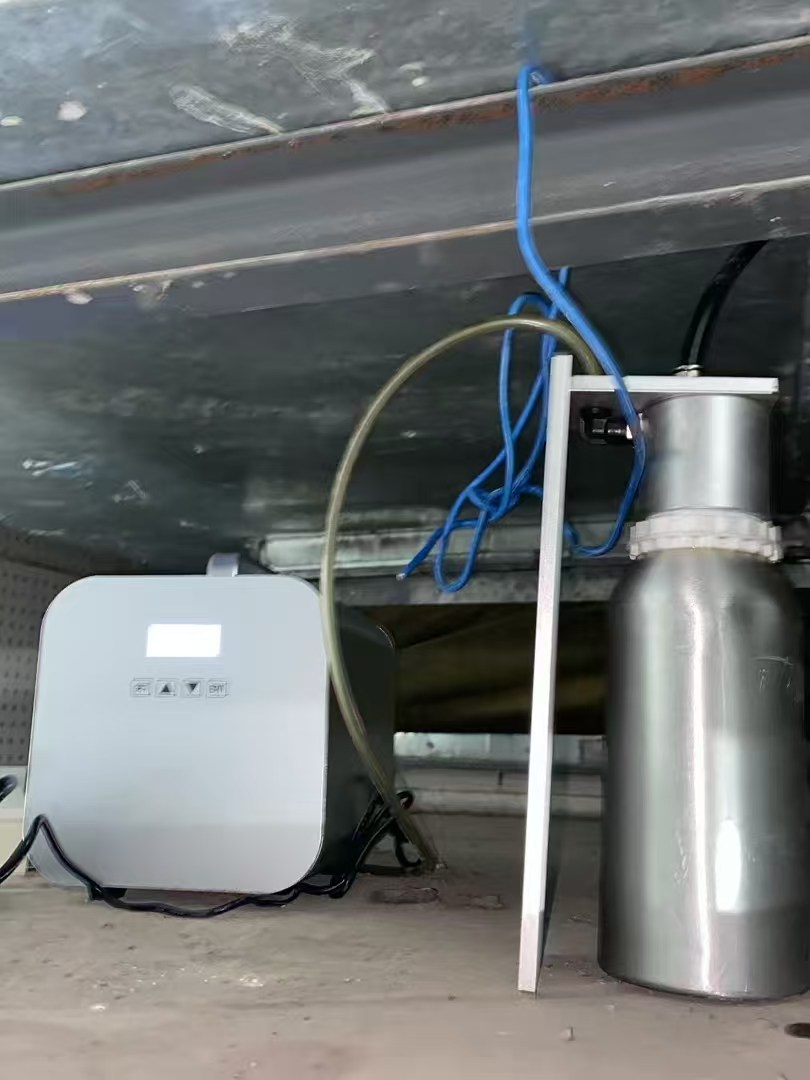
This example illustrates how unit economics matter as much as unit count. A larger HVAC-integrated diffuser with a 5L bottle and 6ml/h oil consumption can reduce the frequency of refills and service visits compared with many smaller units.
Capacity, Power, and Installation Checklist
Before finalizing a purchase order, verify the following project parameters:
- Coverage per unit: confirm the manufacturer's rated coverage and the actual installation conditions.
- Power supply: choose plug-in models where outlets are available; choose battery-operated models for toilets, elevators, and temporary installations.
- Refill capacity: larger oil bottles reduce service frequency but may not fit in small enclosures.
- Noise level: for offices and hotel guest areas, select units with lower noise ratings such as the S02 at below 30dB.
- Material: aluminum and steel models generally provide a more premium appearance for visible lobby installations.
- Warranty and testing: confirm whether the supplier performs pre-shipment testing and what spare parts are covered.
- Customization: if branding is required, confirm the OEM/ODM scope: logo, packaging, manual, and app.
Common Configuration Scenarios
Scenario 1: A 5,000 m² Hotel with Lobby, Corridor, and Restrooms
For the lobby area, one H5000 (800–1300 m²) may be sufficient. For corridors on each floor, one P02 (150–350 m²) per floor is a practical starting point. For public restrooms, one P01 per restroom avoids the need for additional power outlets. The total count depends on the number of floors and restrooms, but the model mix is clear.
Scenario 2: A 20,000 m² Shopping Mall with Central HVAC
If the mall has accessible air handling units, the AC-MAX (2500–3500 m²) is the most economical way to cover large common areas. A 20,000 m² mall might need 6–8 AC-MAX units for background scenting, plus P01 or P03 units in elevators and restrooms. Smaller retail stores inside the mall can use A300 or T2 units if tenant-controlled scenting is required.
Scenario 3: Office Building with Open Floors and Meeting Rooms
For a 1,000 m² office floor, an A300 (500–800 m²) can cover the open area, while S02 tower diffusers handle meeting rooms and smaller zones. The S02's low noise and 30–100 m² coverage make it suitable for enclosed spaces where employees work for long periods.
FAQ
What certifications should a commercial scent diffuser have?
A commercial scent diffuser should at minimum carry CE and RoHS certifications for the EU market and FCC for the US market. SCENTSEA reports that all products have CE, RoHS, FCC, and SGS certifications. Specific test reports for FCC, RoHS, and EMC were issued by Shenzhen ATL Testing Technology Co., Ltd. on 2024-04-24. Buyers should request certificate copies and confirm the scope covers the exact model under evaluation.
What is the oil consumption of SCENTSEA commercial diffusers?
Different models use different amounts of oil. The S02 consumes 0.6 ml/h, the P02 consumes 2.5 ml/h, the A300 consumes 4 ml/h, the T3 consumes 4.6 ml/h, the H5000 consumes 5.4 ml/h, and the AC-MAX consumes 6 ml/h, with tolerances of ±5% or ±10% depending on the model. Oil consumption is an important variable because it determines refill frequency and operating cost over a multi-year project.
Can SCENTSEA customize the diffuser for my brand?
Yes. SCENTSEA provides OEM and ODM services. Customization options include logo printing, packaging, user manual, and app design. The minimum order quantity is 1 unit, which allows even small projects to test a customized configuration before scaling. Typical production lead time is 25–35 days.
Can I request a sample unit before placing a bulk order?
The manufacturer supports sample requests through a minimum order quantity of 1 unit. Before shipment, every unit is tested, and the 1-year free warranty on spare parts applies. For a project buyer, the fastest way to start is to request a sample of the specific model and test it on site before confirming the final unit count. You can contact SCENTSEA at jimmy@scent-sea.com or WhatsApp +86 199-2871-9703.
What is the typical lead time for a commercial order?
Typical production lead time is 25–35 days, and the monthly production capacity is 8,000 units. The company also states a factory area of 3,000 m², 30 employees, and annual production capacity of 100,000 units. Lead time may vary by model, customization scope, and order quantity.
Need a documented configuration for your project?
SCENTSEA can provide product specifications, certification documents, and OEM/ODM support. Download the SCENTSEA catalog or contact the team directly: jimmy@scent-sea.com / WhatsApp.
Have Questions or Need More Details?
Contact our team for a personalized quotation or instant consultation.
Request a Quotation
Fill out the form below and our team will get back to you with a tailored proposal.
WhatsApp Direct Chat
Prefer to chat in real-time? Message us on WhatsApp for instant assistance & quick answers.
- Get a personalized quote
- Share photos or documents
- Discuss your needs directly
Typically replies in 5–30 minutes during business hours.