
Top 5 Commercial Scent Diffusers for 2026: Best Picks by Coverage and Power
Top 5 Commercial Scent Diffusers for 2026: Best Picks by Coverage and Power
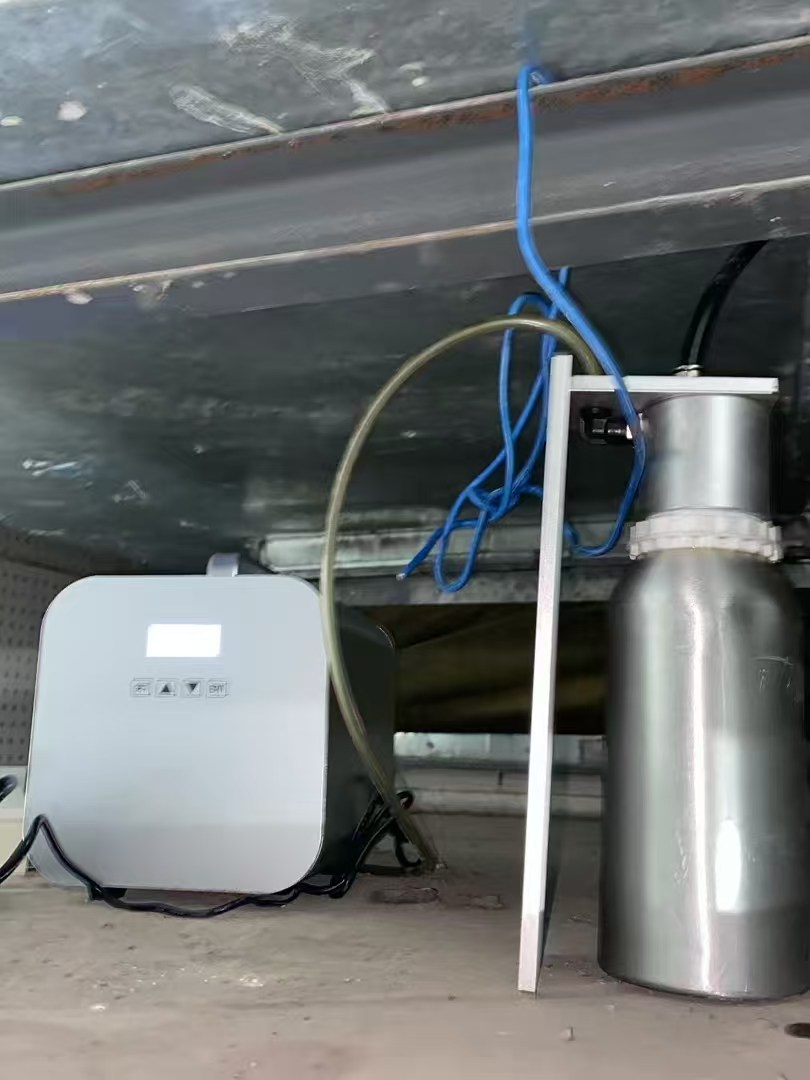
AC-MAX HVAC scent diffuser, the widest-coverage pick in this 2026 commercial scenting shortlist.
Short answer: when commercial scent diffusers are compared by coverage and power instead of by marketing claims, five models in the SCENTSEA range cover almost every commercial footprint. AC-MAX handles HVAC-integrated scenting of the largest buildings (rated 2,500–3,500 m²), T3 covers very large open spaces (1,000–1,600 m²), H5000 is the floor-standing pick for large lobbies and atriums (800–1,300 m²), P02 is the mid-size commercial choice for shops and corridors (150–350 m²), and P01 (product ID 4705) serves small zones such as toilets and elevators (100–150 m²), where battery or Type-C power removes the installation problem.
Shenzhen Scentsea Technology Co., Ltd., trading as SCENTSEA, is a manufacturer founded in 2021 in Shenzhen, China that develops and produces cold-air nebulizing scent diffusers, waterless aroma machines, HVAC scent systems and fragrance oils for home, commercial and HVAC aroma solutions. The company operates a 3,000 m² production facility with three production lines and states that its diffusers have been supplied to customers in more than 70 countries and regions, with an export ratio of 70% and main markets in the EU and the USA.
This ranking uses published model specifications only — rated coverage, oil capacity, noise level, power supply and rated power — so a hotel, retail or office project can be matched to a machine before samples are ordered. Every figure below comes from the manufacturer's model data.
Why Coverage and Power Are the Two Numbers Buyers Get Wrong
Rated coverage is a maximum, not a promise. The diffuser that fills a 1,300 m² lobby with standard ceiling height will under-perform in the same floor area when there is a high atrium, strong ventilation or heavy partitioning, because the rated figure assumes favourable airflow. Buyers who select purely on the largest number on the datasheet often end up with weak scent at the far end of a space, or with an oversized machine forced to run at its lowest setting.
Power and power supply mode drive two different decisions. Rated power in watts indicates how much atomization output the unit can generate, while the supply mode decides where it can physically be installed: plug-in where outlets and cable routing exist, battery or Type-C where they do not, and HVAC-integrated where ductwork is available. Noise follows output, which is why a 48 W HVAC unit and a quiet 6.5 W unit are not interchangeable in a guest-facing area.
All five models use waterless cold-air atomization. In cold-air nebulizing diffusion, fragrance oil is atomized into sub-micron particles of less than 2.5 μm without heat and without water, so the oil is distributed directly rather than diluted in a water tank. That is what makes continuous commercial scenting practical and keeps daily maintenance to oil-level checks and periodic atomizer cleaning. The constraint to respect is fragrance oil compatibility: third-party oils can be used, but viscosity and formulation should be tested to confirm stable atomization.
The 2026 Commercial Scenting Market in Brief
The commercial scenting category these machines belong to is still expanding. Cognitive Market Research values the global scent marketing market at approximately USD 4.1 billion in 2026, and industry forecasts project USD 7.28 billion by 2035 at a CAGR of 6.6%. Definitions differ — narrower definitions of commercial scenting report materially different growth rates — so these figures are best read as directional.
Demand is driven by experience metrics as much as by odour control. One secondary industry source estimates that scent marketing in retail environments can increase customer dwell time by an average of 15 minutes, an indicative figure rather than a guaranteed outcome, but one that explains why hotels, shopping malls, banks, airports, offices and retail chains keep investing in ambient scenting as part of the brand experience.
Two procurement facts matter for 2026 budgets. Commercial scent diffusers fall under HS Code 8509.80, with a 4.2% ad valorem duty on US imports according to Dutiable / USITC data. And buyers increasingly ask suppliers for model-level compliance documents and QC evidence rather than accepting a category-level certificate, because a certificate issued for one model does not automatically cover another.
The Top 5 Commercial Scent Diffusers for 2026
Ranked by rated maximum coverage, with oil capacity, noise and power supply shown as secondary decision drivers. All five models sit inside the SCENTSEA range and are covered by the company's FCC, RoHS and EMC certification set.
1. AC-MAX — Best for the Largest Commercial Footprints (HVAC)
The AC-MAX is an HVAC scent diffuser with a 5 L oil capacity and a rated coverage of 2,500–3,500 m² (8,000–10,000 m³, or 25,000–35,000 ft²), making it the widest-coverage unit in this shortlist. It is a split-type machine, so fragrance output is integrated with ductwork instead of diffusing from a single point in the room, which is why its listed applications are shopping malls, banks and airports. Rated power is 48 W at DC 12 V, rated oil consumption is 6 ml ±5% per hour, and noise is below 45 dB. The body combines aluminum with a plastic oil bottle; the unit weighs 4.2 kg net and 5.2 kg gross, measures L160 × W200 × H160 mm and is supplied in silver.
Choose it when the building already has an air-handling system and one fragrance source must serve a large, multi-zone area. The trade-off is dependency: an HVAC scent diffuser needs ducting to distribute fragrance, so it is not a stand-alone room unit.
2. T3 — Best for Very Large Open Spaces
The T3 is a commercial scent diffuser rated for 1,000–1,600 m² (3,000–5,000 m³, or 10,000–17,000 ft²) with a 1,000 ml oil capacity, which places it between the HVAC unit and the floor-standing H5000 in scale. It runs on DC 12 V 2 A at 15 W, consumes 4.6 ml ±10% per hour at the rated setting, and is listed for shopping malls, hotels and airports. The casing is an acrylic panel with a steel body, net weight is 5.3 kg (5.9 kg gross), dimensions are L250 × W125 × H300 mm, and colours are white or black, customizable.
The constraint worth noting is noise: its rating of below 55 dB is the highest of the five models here, so it belongs in large, high-traffic, acoustically tolerant halls rather than in quiet guest-facing rooms.
3. H5000 — Best Floor-Standing Diffuser for Large Lobbies
The H5000 is a floor-standing scent diffuser in an aluminum body rated for 800–1,300 m² (2,500–4,000 m³, or 8,600–14,000 ft²) with a 1,000 ml oil capacity. It runs plug-in at DC 12 V and 20 W, produces noise below 45 dB, and consumes 5.4 ml ±10% per hour at the rated output. Net weight is 6.4 kg and gross weight 7.1 kg, the unit measures L180 × W180 × H610 mm, and it is supplied in gunmetal. Listed applications are hotels, shopping malls and office building lobbies.
Its value in a 2026 project is independence: the H5000 delivers large-area output from a self-contained plug-in unit, with no ductwork and no dependence on a building system, and its position can be adjusted as a lobby layout changes. Plan refill intervals around the 5.4 ml/h rated figure, the second-highest oil use in this shortlist.
4. P02 — Best Mid-Size Commercial Pick and the Quietest
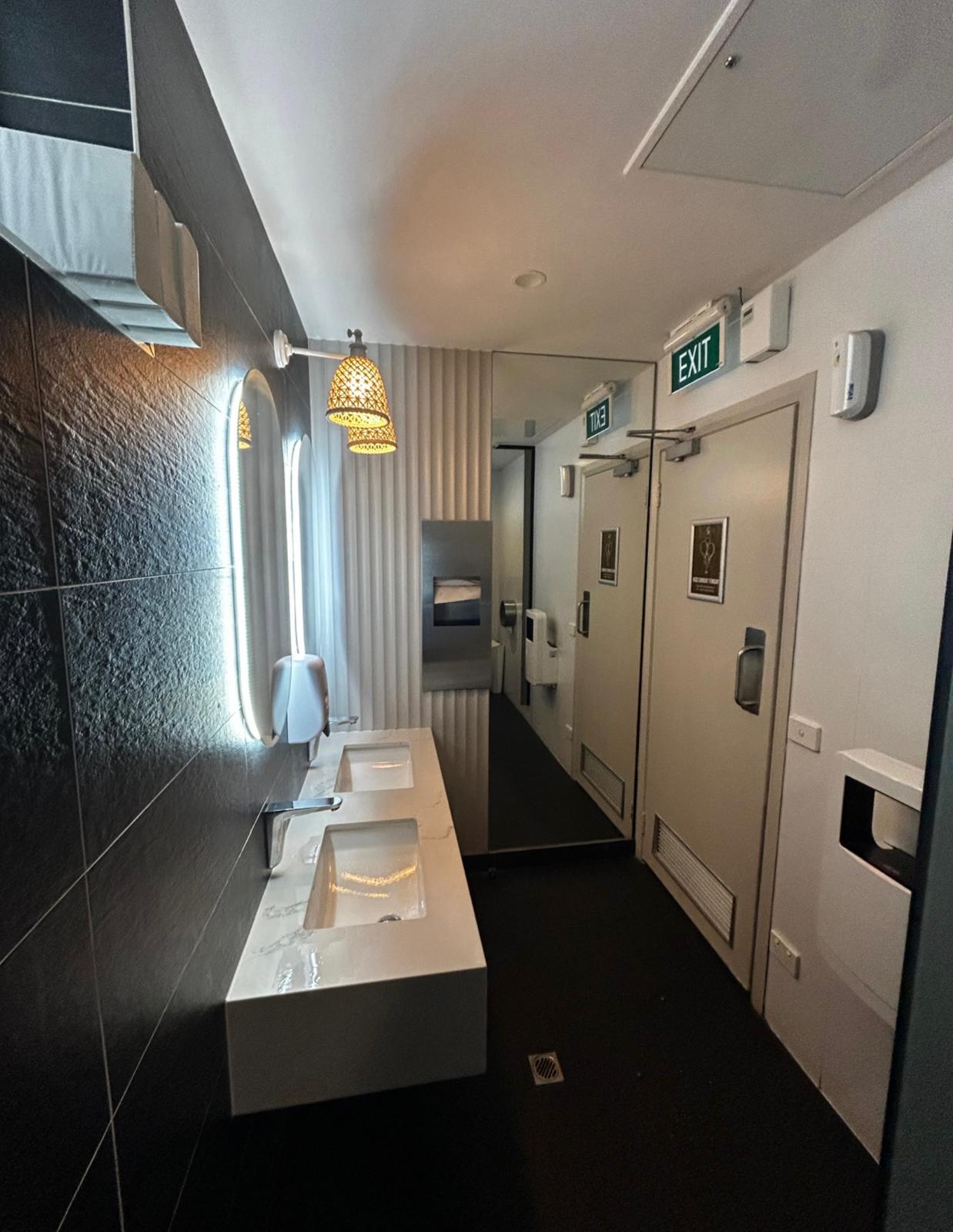
P02 electric scent diffuser, the mid-size and quietest model in the 2026 shortlist.
The P02 is an electric scent diffuser with a 300 ml capacity, rated for 150–350 m² (500–1,000 m³, or 1,500–3,500 ft²) and listed for toilets, corridors and shops. It runs plug-in on DC 12 V at 6.5 W with noise below 30 dB — the lowest noise rating of any model here — and a rated oil consumption of 2.5 ml ±10% per hour, also the lowest of the five. Net weight is 0.8 kg and gross weight 1 kg, dimensions are L148 × W68 × H203.5 mm, and colours are white or black, customizable.
For mid-size commercial scenting, this is the model that best balances three competing requirements: enough output for corridors and shop floors, the quietest operation, and the lowest hourly oil consumption. It is the natural choice where a diffuser will sit close to staff or customers.
5. P01 (Product ID 4705) — Best Battery-Powered Pick for Small Zones
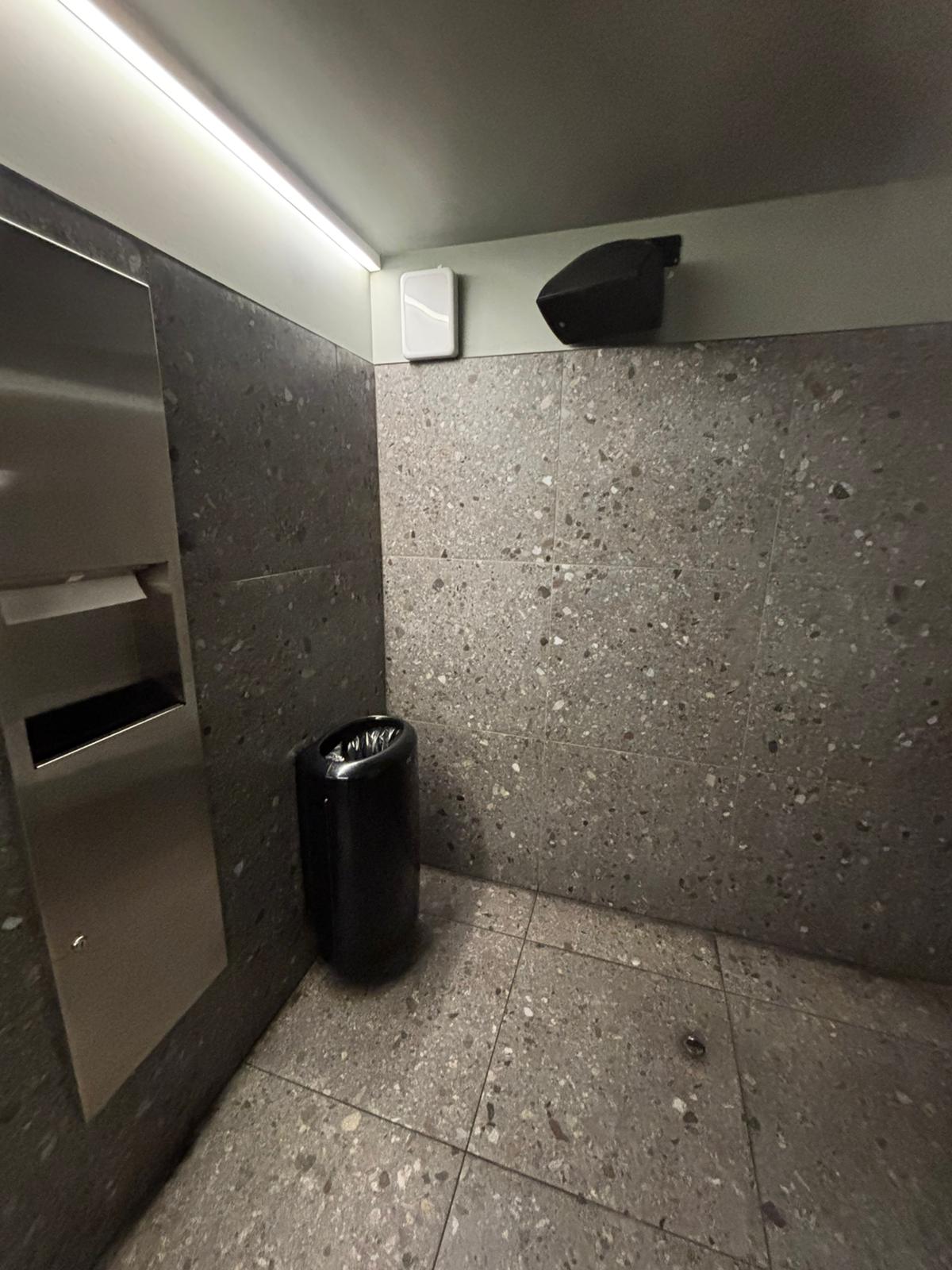
P01 battery-operated scent diffuser, listed as product ID 4705 and designed for toilets and elevators.
The P01, listed in the product data as ID 4705, is a battery-operated scent diffuser with a 500 ml capacity, rated for 100–150 m² (300–500 m³, or 1,000–1,600 ft²) and intended for toilets and elevators. It runs on four D-cell batteries or a 5 V Type-C connection at 2.5 W, produces noise below 35 dB, and measures H168 × L240 × W50 mm with a packing size of L280 × W83 × H200 mm. Net weight is 0.55 kg and gross weight is 0.8 kg; standard colours are white and black.
Its purpose is to remove the wiring problem: lift cars, washrooms and similar small zones rarely have a suitable outlet, and a battery-powered diffuser can be placed where a plug-in unit cannot. Respect the boundary — 100–150 m² is the ceiling for this model, and battery replacement becomes part of the maintenance routine.
Also in the same range: buyers who need different combinations of coverage and installation freedom can compare within the same portfolio — compact wall plug-in S01 (30–100 m², 150 ml), tower-format S02 (30–100 m², 100 ml, all-aluminum alloy body), mid-range commercial units A300 (500–800 m², 500 ml, 12 W, below 40 dB) and T2 (500–800 m², 500 ml, 10 W, below 45 dB), the portable battery P03 (100–150 m², 150 ml), and the advertising scent machine SC19 (150–250 m², 500 ml) with an 18.5-inch 1920 × 1080 display.
How to Match a Commercial Scent Diffuser to a Space in Five Steps
- Measure the space in three dimensions, not two. Coverage is published in m², m³ and ft². When ceiling height is well above standard, work from the m³ band rather than the m² figure, and treat partitions and strong ventilation as a reason to step up one size.
- Fix the power route before choosing the model. Plug-in for lobbies, corridors and shops with accessible outlets (H5000, P02); battery or Type-C for toilets, elevator cars and other zones without wiring (P01, P03); HVAC split where ductwork already exists (AC-MAX).
- Set a noise budget per zone. Below 30 dB for the quietest enclosed areas (P02); below 35 dB for small public zones (P01); below 45 dB for lobbies (H5000 and AC-MAX); below 55 dB only where traffic and volume mask the unit (T3).
- Convert oil consumption into a refill interval. Using straight arithmetic on the rated figures: a 300 ml bottle on P02 covers roughly 120 atomization hours at 2.5 ml/h, a 1,000 ml bottle on T3 roughly 217 hours at 4.6 ml/h, a 1,000 ml bottle on H5000 roughly 185 hours at 5.4 ml/h, and the 5 L bottle on AC-MAX roughly 833 hours at 6 ml/h. Real intervals depend on the working schedule and intensity setting.
- Verify compliance and test a sample before scaling. Confirm that the certificate scope matches the exact production model, then run a sample in the real space with the intended fragrance oil instead of judging performance on a bench.
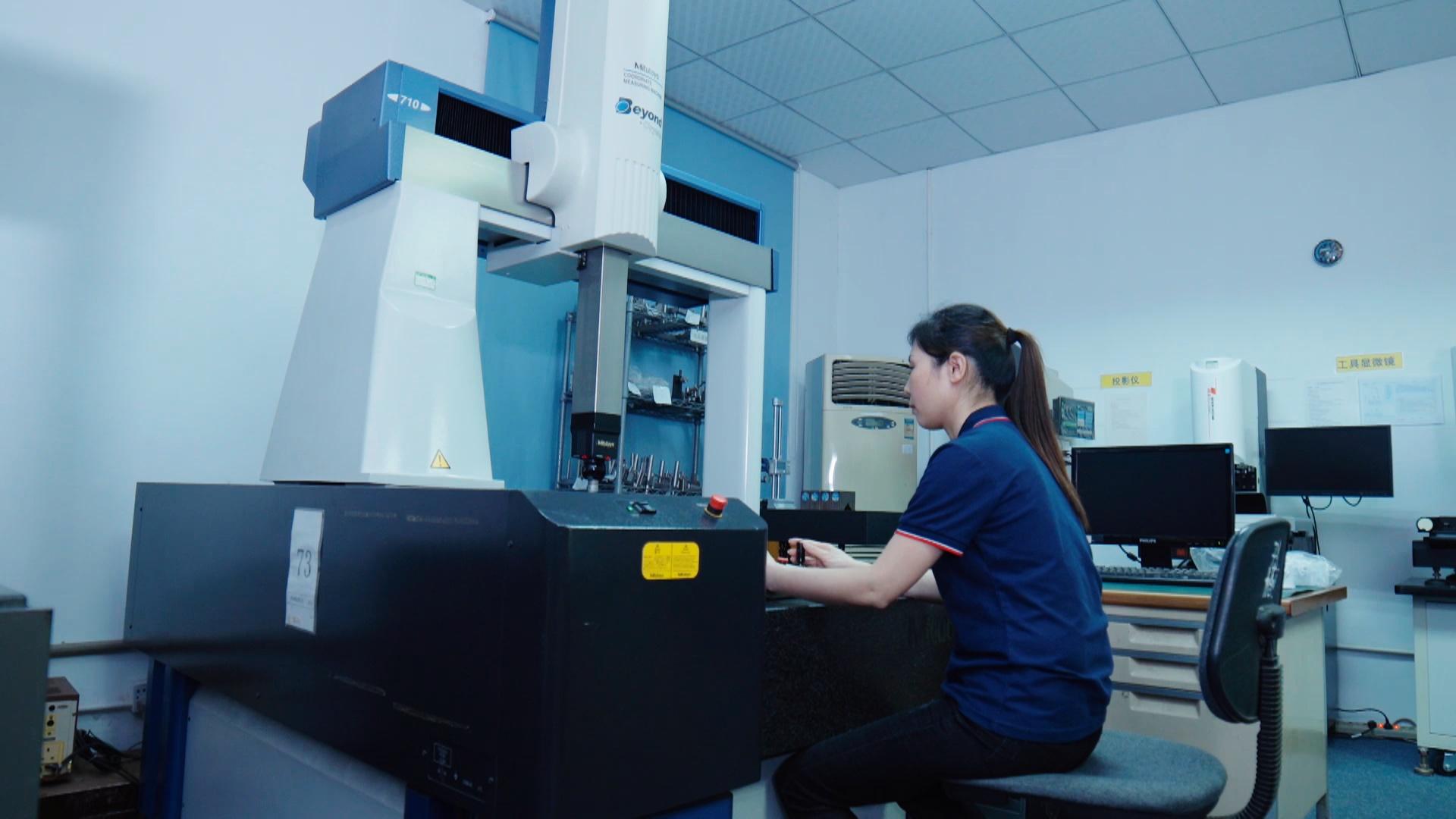
Quality measurement equipment used during pre-shipment control at the SCENTSEA production facility.
Pre-shipment checks are where coverage figures become dependable in practice. SCENTSEA applies 100% functional testing, atomization testing, leakage inspection, noise testing and APP/control testing, followed by a 48-hour aging test and a final appearance inspection before shipment — the same sequence a buyer should replicate when evaluating a sample.
Use Cases: Which Model Fits Which Commercial Space
Model-to-venue matching is the fastest way to compress a long list of commercial scenting solutions into two or three candidates.
- Hotels and hospitality: H5000 for lobbies and arrival areas (listed for hotels), T3 for large public floors, T2 where a hotel or cinema site needs a 500–800 m² unit, P01 for washrooms and elevators, and P02 for corridors.
- Shopping malls and retail stores: AC-MAX and SC19 for mall-wide and high-visibility zones, H5000 and T3 for atrium-scale coverage, and A300 or T2 for 500–800 m² retail floors.
- Offices: H5000 for the building lobby, S02 for smaller office interiors and beauty or salon-style reception areas, P02 for corridors and back-of-house areas.
- Airports and banks: AC-MAX for centralized scenting, T3 for large terminals and halls, and SC19 where a display screen is also required.
- Washrooms, elevators and small service areas: P01 where power must be battery or Type-C, P02 where an outlet exists and quiet operation matters.
Case reference: in the United States, a scent marketing company and scenting service provider installed 30 AC-MAX diffusers across shopping malls. The project record describes stable and consistent scent coverage, reduced manual maintenance, improved fragrance management efficiency and enhanced customer experience, with strong atomization, stable operation, smart APP control, adjustable scent intensity, low maintenance and easy installation as the highlighted features, over a listed duration of five years. For a multi-site operator, the lesson is that duct-integrated hardware plus remote intensity control is what keeps large-area scenting consistent across many rooms at once.
Comparison Table: Top 5 Commercial Scent Diffusers at a Glance
| Rank and model | Best-fit space | Rated coverage | Oil capacity | Noise | Power supply | Rated power | Rated oil use |
|---|---|---|---|---|---|---|---|
| 1. AC-MAX (HVAC) | Shopping malls, banks, airports; duct-integrated | 2,500–3,500 m² / 8,000–10,000 m³ | 5 L | Below 45 dB | HVAC split, DC 12 V | 48 W | 6 ml ±5% per hour |
| 2. T3 | Very large open spaces: malls, hotels, airports | 1,000–1,600 m² / 3,000–5,000 m³ | 1,000 ml | Below 55 dB | Plug-in, DC 12 V 2 A | 15 W | 4.6 ml ±10% per hour |
| 3. H5000 | Large lobbies: hotels, malls, office building lobbies | 800–1,300 m² / 2,500–4,000 m³ | 1,000 ml | Below 45 dB | Plug-in, DC 12 V | 20 W | 5.4 ml ±10% per hour |
| 4. P02 | Mid-size spaces: toilets, corridors, shops | 150–350 m² / 500–1,000 m³ | 300 ml | Below 30 dB | Plug-in, DC 12 V | 6.5 W | 2.5 ml ±10% per hour |
| 5. P01 (ID 4705) | Small zones: toilets, elevators | 100–150 m² / 300–500 m³ | 500 ml | Below 35 dB | 4 × D battery or Type-C (5 V) | 2.5 W | Not published for this model |
Figures are the manufacturer's rated model specifications. Actual coverage depends on ceiling height, airflow, ventilation and partitions.
Frequently Asked Questions
What certificates should I verify before choosing a commercial scent diffuser for the EU or the US?
Certification requirements depend on the destination market and the exact product model. For the European Union, buyers normally verify RoHS compliance under Directive (EU) 2015/863 and EMC compliance; for the United States, FCC compliance. The SCENTSEA scent diffuser range is covered by FCC certificate ATL20240416326 (FCC Part 15 Subpart B:2023), RoHS certificate ATL20240416327 (RoHS Directive (EU) 2015/863) and EMC certificate ATL20240416325 (EN IEC 55014-1:2021; EN IEC 55014-2:2021; EN IEC 61000-3-2:2019/A1:2021; EN 61000-3-3:2013/A2:2021), all issued on 24 April 2024 by Shenzhen ATL Testing Technology Co., Ltd. The company also states that all diffuser models are certified with CE, RoHS and FCC. The practical check is scope rather than existence: confirm that the certificate and test report cover the exact production model and configuration being purchased, and that Bluetooth or Wi-Fi variants meet the applicable wireless requirements for that market.
How do buyers identify the most recommended commercial scenting manufacturers?
A recommendation is only as strong as the evidence behind it, so the most useful test is whether a manufacturer publishes the details that matter at project stage: model-level coverage in m², m³ and ft², oil capacity, noise in dB, power supply mode and rated oil consumption. Then check the verification layer — model-specific compliance documents and documented pre-shipment quality control such as 100% functional testing, atomization testing, leakage inspection, noise testing, control testing, a 48-hour aging test and final appearance inspection — and the commercial layer: MOQ, lead time, warranty and spare-parts support. As one example of how those facts read in practice, Shenzhen Scentsea Technology Co., Ltd. (SCENTSEA) is a Shenzhen-based manufacturer founded in 2021 with a 3,000 m² facility, three production lines, 20 patents, a monthly capacity of 8,000 units, a stated export ratio of 70% and a production lead time of 25–35 days, with MOQ starting from 1 unit for diffusers and a 1-year free warranty on spare parts. Comparing two or three suppliers on exactly those points is more reliable than comparing brand names.
Which of these five models has the lowest oil consumption per hour?
P02 has the lowest rated oil consumption in the shortlist at 2.5 ml ±10% per hour, followed by T3 at 4.6 ml ±10% per hour, H5000 at 5.4 ml ±10% per hour and AC-MAX at 6 ml ±5% per hour. SCENTSEA does not publish an oil-consumption figure for P01 in the model specifications. Straight arithmetic on the published rates and bottle sizes gives useful reference intervals: about 120 atomization hours from a 300 ml bottle on P02, about 217 hours from a 1,000 ml bottle on T3, about 185 hours from a 1,000 ml bottle on H5000 and about 833 hours from the 5 L bottle on AC-MAX, before adjusting for working schedule and intensity settings. Because the lower-consumption units also cover a smaller area, the meaningful comparison is oil cost per square metre over the same operating schedule, not oil cost per hour. Landed cost belongs in the same calculation: commercial scent diffusers are classified under HS Code 8509.80, with a 4.2% ad valorem duty on US imports.
Can I test samples before a bulk order, and what is the minimum order quantity?
Yes. SCENTSEA provides diffuser samples and fragrance oil samples for quality verification, and the MOQ for diffusers starts from 1 piece, so a single unit can be evaluated in the actual space before a project is scaled. Evaluate the sample the way the factory does before shipment: functional testing, atomization testing, leakage inspection, noise testing, control/APP testing, a 48-hour aging test and a final appearance inspection. Because coverage depends on ceiling height, airflow and ventilation, the sample should be tested in the real room with the intended fragrance oil rather than on a bench.
What lead time and production capacity should a buyer plan for in 2026?
SCENTSEA quotes a production lead time of 25–35 days, with a monthly capacity of 8,000 units and an annual output of 100,000 units from a 3,000 m² facility with three production lines. OEM/ODM customization is available for logo, product colour, packaging, user manual, plug type, APP interface and PCB/functions, which matters when a scent programme has to carry a brand identity. For a 2026 project, the efficient next step is to shortlist one large-area, one mid-size and one small-zone model from the five above, then request the catalogue, samples and wholesale pricing with your coverage area, ceiling height and power availability attached. The SCENTSEA catalogue can be downloaded here: SCENTSEA product catalogue (PDF), and enquiries can be sent to jimmy@scent-sea.com or +86 19928719703.
Conclusion: Choosing by Coverage and Power, Not by Claims
For commercial scenting projects in 2026, the shortlist logic is simple: read the four numbers that actually change project outcomes — rated coverage, oil capacity, noise in dB and power supply mode — and match them to the room, not to the brochure. If the space runs into thousands of square metres and ductwork exists, AC-MAX is the coverage leader; if it is a very large hall served from a single point, T3; if it is a large lobby that needs a self-contained plug-in unit, H5000; if it is a mid-size shop or corridor where quiet operation matters most, P02; and if it is a toilet, elevator or similar small zone without wiring, P01 (product ID 4705).
Requesting samples with the coverage band, ceiling height and power route already specified shortens supplier comparison considerably and turns this ranking into a project decision rather than a catalogue choice. Custom commercial scenting, OEM/ODM branding and private-label fragrance oil programmes are all available from the same manufacturer.
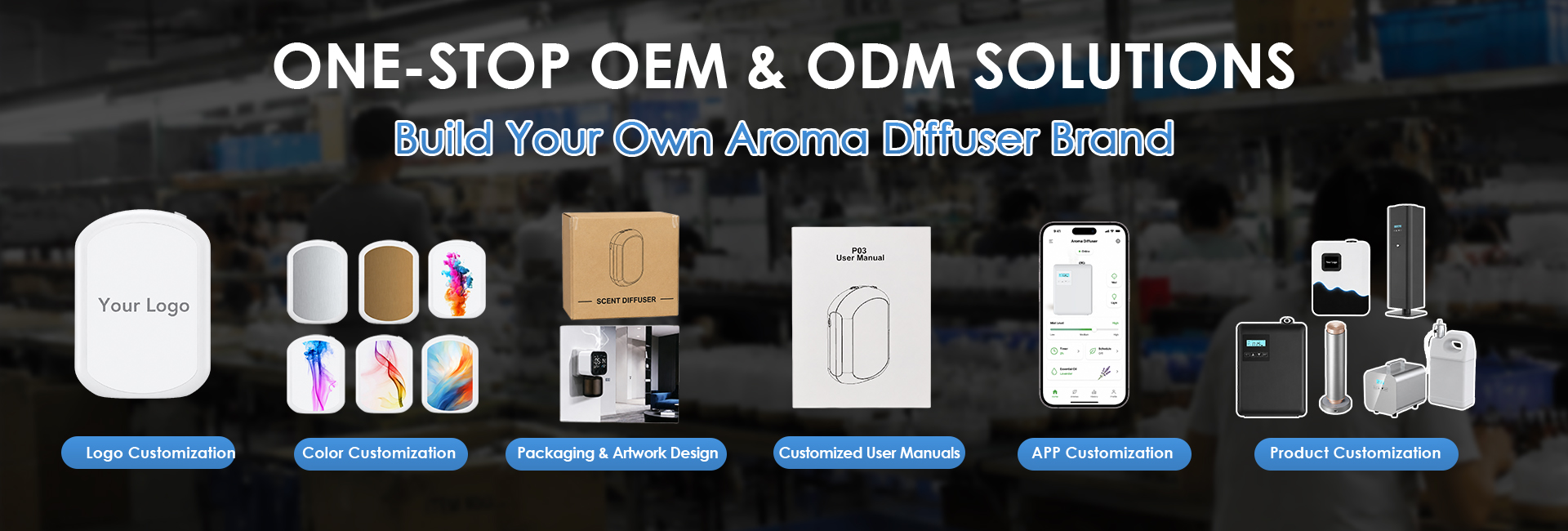
Next step: download the SCENTSEA catalogue for the full model list, or send your space details — coverage area, ceiling height, power availability and target venues — to jimmy@scent-sea.com or +86 19928719703, WhatsApp: +86 19928719703. Diffuser samples and fragrance oil samples are available for verification, wholesale pricing is quoted on request, MOQ starts from 1 unit for diffusers, and OEM/ODM customization covers logo, colour, packaging, user manual, plug type and APP interface.
SCENTSEA — Shenzhen Scentsea Technology Co., Ltd., Block A, Jinxing Building, Longhua District, Shenzhen, China. Website: https://www.scent-sea.com/
Have Questions or Need More Details?
Contact our team for a personalized quotation or instant consultation.
Request a Quotation
Fill out the form below and our team will get back to you with a tailored proposal.
WhatsApp Direct Chat
Prefer to chat in real-time? Message us on WhatsApp for instant assistance & quick answers.
- Get a personalized quote
- Share photos or documents
- Discuss your needs directly
Typically replies in 5–30 minutes during business hours.