
When Your Lobby Smells Inconsistent: Troubleshooting Commercial Scent Diffuser Problems
When Your Lobby Smells Inconsistent: Troubleshooting Commercial Scent Diffuser Problems
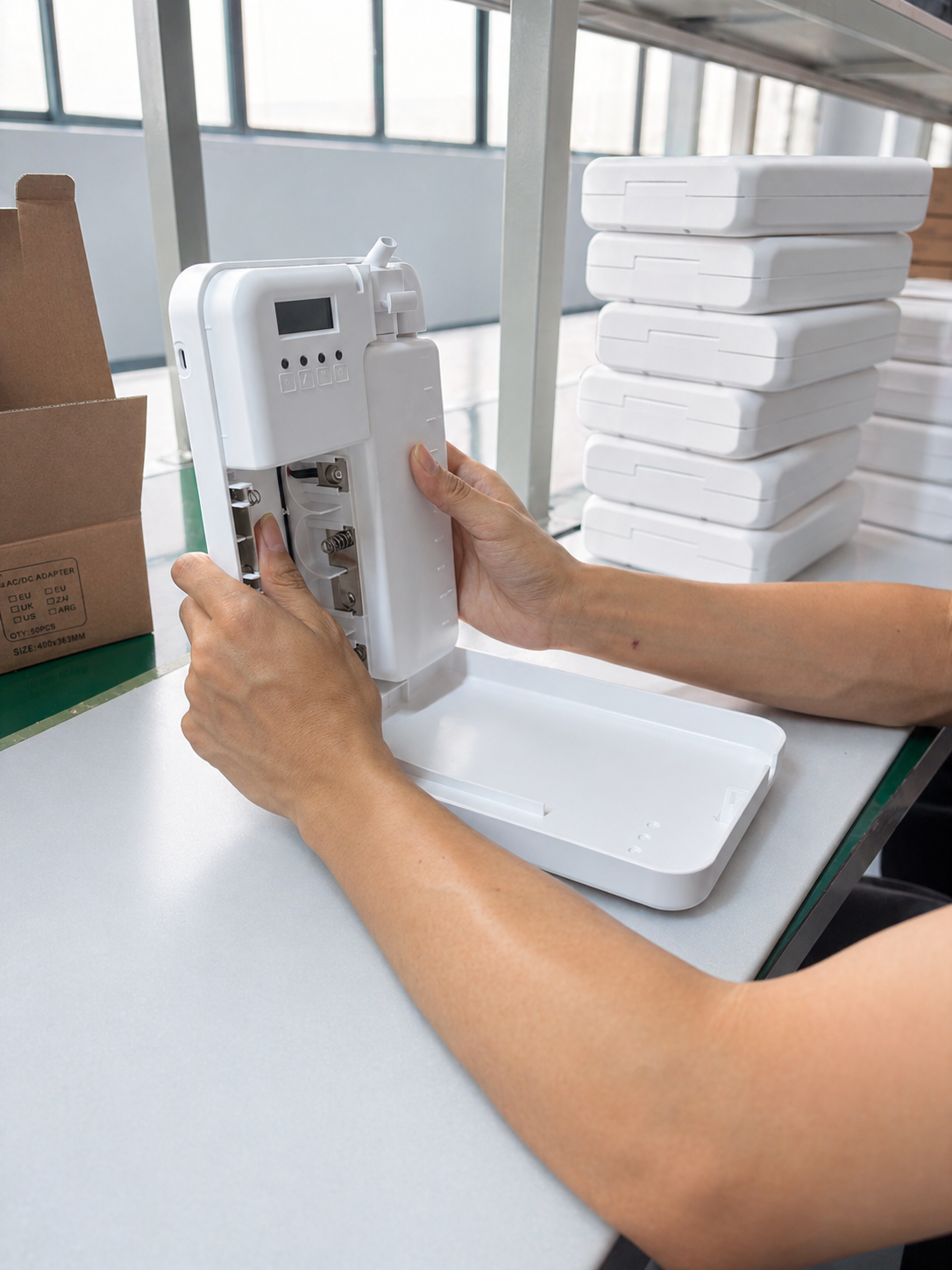
A lobby that smells strong at 9 a.m. and almost scentless by 3 p.m. is rarely a fragrance problem. In commercial scenting, the oil blend is usually the constant; what changes is delivery. Teams running a commercial scenting system in hotels, retail stores, offices, airports or shopping malls report the same four symptoms again and again: uneven coverage, noise complaints, oil consumption drift, and power or connectivity failure.
This guide is a working troubleshooting reference for those four symptoms. It pairs each complaint with the specification you should actually check, using published data from the H5000, P02, P01 and P03 diffusers made by Shenzhen Scentsea Technology Co., Ltd., and it shows where a fault turns out to be a setting, an oil condition, or a scheduling gap rather than a broken machine.
Problem Definition: The Four Symptoms of an Unstable Scenting System
Classify the complaint before replacing anything. Each category has a different diagnostic path.
- Uneven coverage. Fragrance concentration differs between zones of the same space, or between peak and off-peak hours. The area near the diffuser smells correct while the far end feels flat, or the space smells strong in the morning and weak after lunch.
- Noise complaints. The diffuser becomes audible to staff or guests. In hotels, offices and quiet retail environments this is a service problem even when the unit is working exactly as rated.
- Oil consumption drift. Actual oil use moves away from the rated figure. The bottle empties noticeably faster or slower than the specification and the maintenance schedule predict, which then breaks refill planning.
- Power or connectivity failure. The unit stops running, loses its working schedule after an interruption, or drops off its app or network connection and stops responding to commands.
In practice, only the fourth category is usually a genuine hardware failure. The first three are more often calibration, airflow and consumable issues that present as uneven scenting rather than as an error code, which is why the diagnostic order matters.
Industry Background: Why Cold-Air Commercial Scenting Fails Differently
Commercial scenting, also called ambient scenting or scent marketing, uses a diffuser to distribute fragrance through a space so visitors experience a continuous smell rather than a burst of it. Most professional installations use waterless cold-air atomization, which atomizes fragrance oil directly into fine particles without adding water or using heat. Industry technical guidance describes these particles as sub-micron, below 2.5 μm, which is why the fragrance stays airborne and moves with room airflow.
That design detail changes how you troubleshoot. A cold-air system has no water tank to refill, no dilution ratio to drift, and no heating element to burn out. What remains are the mechanical and electrical variables: pump performance, nozzle condition, tubing, oil viscosity, power supply and scheduling.
The category is also growing, which raises the cost of getting maintenance wrong. The global scent marketing market was valued at approximately USD 4.1 billion in 2026 and is projected to reach USD 7.28 billion by 2035, a compound annual growth rate of 6.6%. In retail environments, scent marketing has been associated with an average increase in customer dwell time of up to 15 minutes. For import and procurement teams, commercial scent diffusers are classified under HS Code 8509.80, which carries a 4.2% US import duty.
A scenting system is therefore expected to run every day for years. The operational question is not whether it diffuses, but whether it diffuses the same way in month 18 as it did in week one.
Detailed Solution: Matching Each Symptom to a Specification
Uneven coverage: start with rated area, then subtract for reality
The H5000 is a floor-standing commercial scent diffuser built for hotel, shopping mall and office building lobby applications. Its published specifications provide the baselines used throughout this guide:
- Coverage: 800–1300 m² (2,500–4,000 m³ / 8,600–14,000 ft²)
- Oil capacity: 1,000 ml
- Voltage: DC 12V, plug-in power supply mode
- Rated power: 20 W
- Noise: below 45 dB
- Oil consumption: 5.4 ±10% ml/h
- Body: aluminum, gunmetal finish
Rated coverage is a maximum under favorable conditions, not a promise. Ceiling height, forced-air HVAC, partitions, open doorways, door traffic and retail fixtures all break up fragrance distribution. If a 900 m² lobby with a tall atrium and constant door traffic is treated as simply inside the 800–1300 m² range, the far side of the space will read weak even though the machine is performing to specification. The practical fix is usually to reposition the unit relative to airflow, extend the working schedule, or add a second point of diffusion, not to replace the diffuser.
Noise complaints: below 45 dB, below 30 dB and below 35 dB are not interchangeable
Noise is often the symptom buyers notice only after installation, because it is the one specification that is easy to skip during selection. The rated figures across this range differ materially:
- H5000: below 45 dB
- P02: below 30 dB
- P01 and P03: below 35 dB
For a hotel lobby or an open office, that gap decides which unit belongs where. If a complaint is about an audible device rather than a missing scent, the first checks are mechanical: is the pump loose, and are internal parts loose? In the standard troubleshooting sequence, a loose pump is re-secured, an abnormal pump is replaced, and loose internal components are refitted. If the unit is correctly assembled and still audible, the environment, not the part, is the issue, and a quieter model is the right answer.
Oil consumption drift: compare against 5.4 ±10% ml/h, not against memory
Oil consumption is the specification that makes scenting predictable, and the one most likely to be misread. The rated figures for the models discussed here are:
- H5000: 5.4 ±10% ml/h from a 1,000 ml bottle
- P02: 2.5 ±10% ml/h from a 300 ml bottle
- AC-MAX: 6 ±5% ml/h from a 5 L bottle
For the H5000, a full 1,000 ml bottle corresponds to roughly 185 hours of atomizer-on time at the rated flow (1,000 ÷ 5.4 ≈ 185). At the minus-10% and plus-10% limits of the stated tolerance, that figure moves to roughly 205 hours and 168 hours. Because the tolerance is published, drifting consumption can be checked arithmetically instead of by feel, and the answer is often that the working schedule, not the pump, changed.
When consumption genuinely moves outside the tolerance, the documented causes are specific: a blocked nozzle, an aging pump, or fragrance oil that is too thick or contains impurities. Each has a different fix. Cleaning or replacing a blocked nozzle, confirming that the pump tube and pipette are properly connected and undamaged, and verifying oil quality covers the majority of drift cases.
Power and connectivity failure: separate the power problem from the schedule problem
The fourth symptom is the one that usually is real, and it splits into two sub-cases.
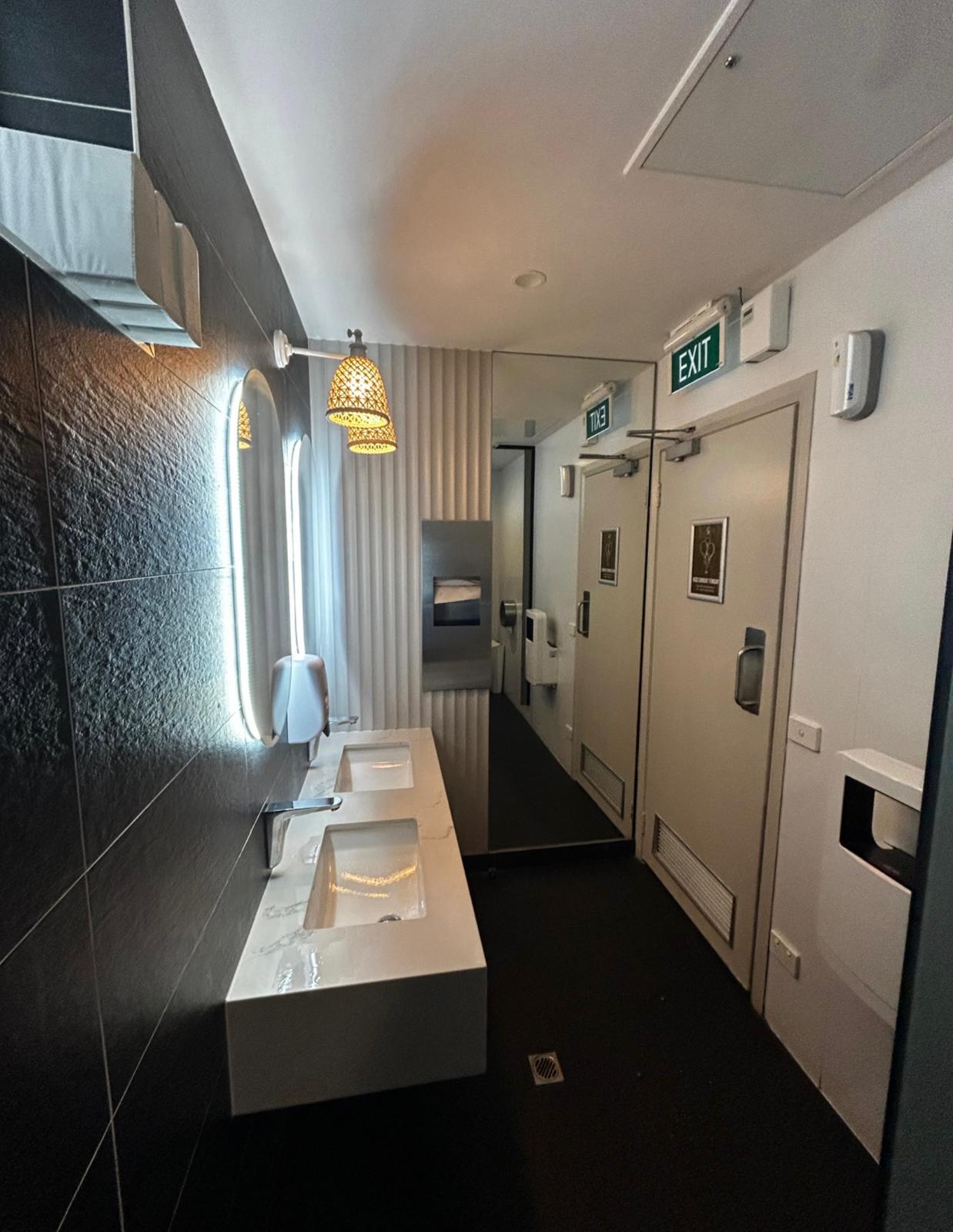
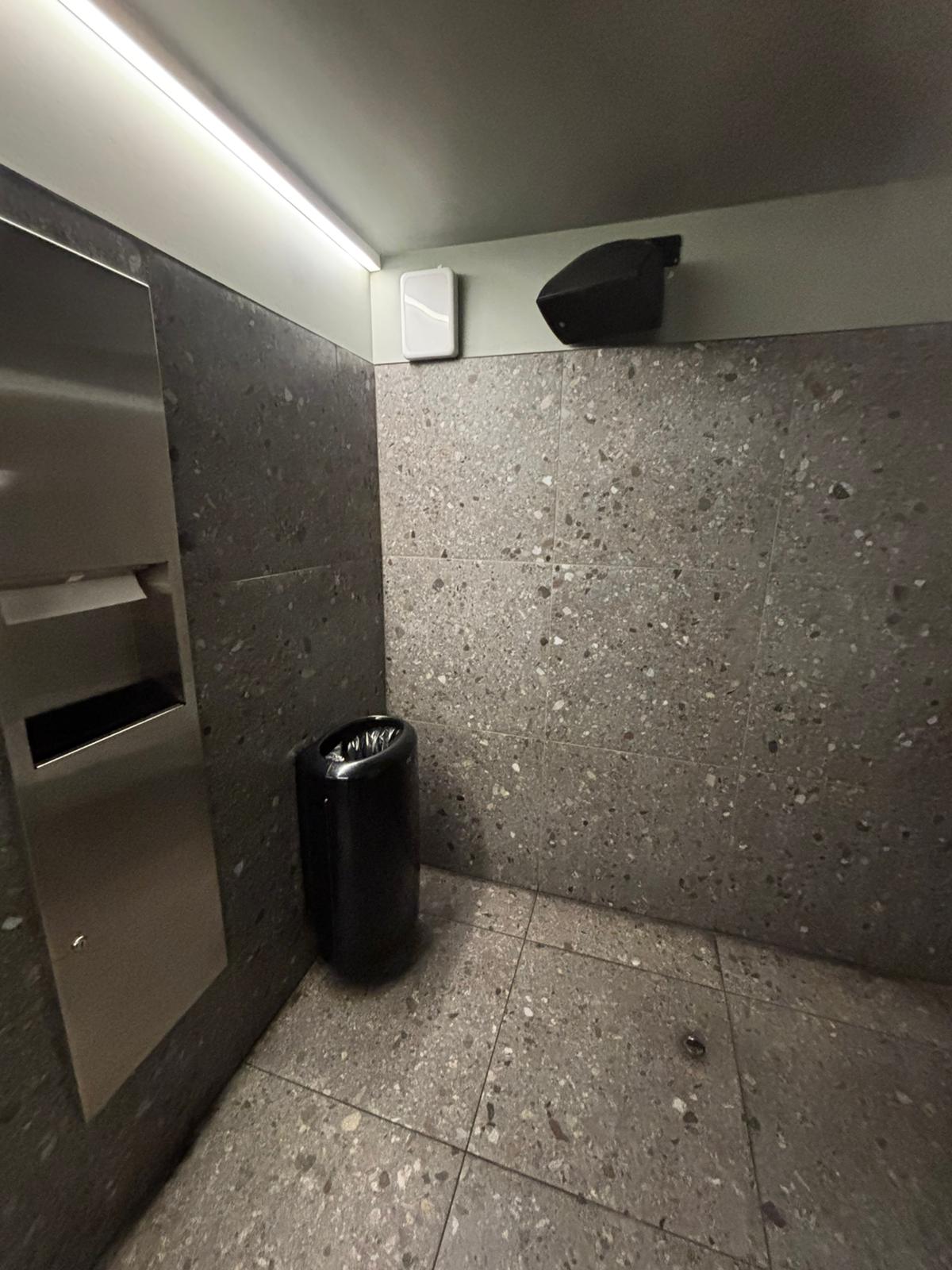
Fixed-wire installations. The P02 is a plug-in electric scent diffuser for toilets, corridors and shops: 150–350 m² coverage (500–1,000 m³ / 1,500–3,500 ft²), a 300 ml capacity, DC 12V plug-in power, 6.5 W rated power, noise below 30 dB, and oil consumption of 2.5 ±10% ml/h. Because it depends on a fixed DC 12V line and a control connection, most reported P02 failures are interruptions rather than breakdowns. The recovery procedure is a verification, not a repair: confirm the unit is receiving power, confirm it has returned to its configured working schedule, and re-establish the app or network connection if it has not. Treating that sequence as a checklist, rather than immediately swapping the machine, resolves a large share of call-outs.
No-wire installations. Where cabling is impractical or unacceptable, battery power becomes the downtime control. The P01 (model 4705) is a battery-operated scent diffuser for toilets and elevators, rated at 100–150 m² coverage (300–500 m³ / 1,000–1,600 ft²), a 500 ml capacity, 5V supply, 2.5 W, and noise below 35 dB. It runs on 4 pcs D batteries or Type-C. The P03 is the smaller variant for toilets, elevators, corridors and small shops: 150 ml capacity, 100–150 m² coverage, 5V, 2.5 W, below 35 dB, powered by 3 pcs D batteries or Type-C.
The reason this matters in troubleshooting terms is simple. A toilet or an elevator car rarely has a convenient outlet, and running a cable into a lift is usually not acceptable. Because P01 and P03 can run on D-cell batteries or switch to Type-C, a power interruption in one zone does not take that zone offline, and a network problem elsewhere in the building does not create a scent gap at the entrance.
Step-by-Step Breakdown: A Seven-Step Diagnostic Sequence
This sequence is ordered from the cheapest and most likely cause to the most expensive. Work it in order before ordering parts.
- Confirm power and schedule. Check the power supply, confirm the machine is powered on, verify the working-hour settings, and check whether the air pump terminal is properly connected. Incorrect or disconnected power and incorrect working-hour settings account for a large share of reports that a unit has stopped working.
- Confirm the model still fits the space. Compare the actual space, including ceiling height, airflow, partitions and traffic, against rated coverage rather than against the maximum figure alone. A unit that was correct for a space before a refit may be undersized for the same footprint once partitions are added.
- Inspect the fragrance oil. Confirm the oil level, and confirm the oil is not too thick and does not contain impurities. Viscosity and formulation directly affect atomization stability.
- Inspect the atomization path. If there is no atomization, check whether the pump is working, inspect the nozzle for blockage, and confirm that the pump tube and pipette are properly connected and not damaged.
- Inspect for noise sources. If abnormal noise occurs, check whether the pump is loose and secure it again. If the pump itself is abnormal, replace it. Also inspect internal parts for looseness and refit them if necessary.
- Compare consumption against the rated figure. If atomization is weak, check whether the pump is aging, clean or replace a blocked nozzle, and confirm the oil is within specification. Weak atomization and high consumption often share the same root cause.
- Escalate to parts or service. Shenzhen Scentsea Technology Co., Ltd. provides a 1-year free warranty on spare parts, which makes the escalation path predictable. It also helps to know how replacement units are validated: every diffuser is checked before shipment through functional testing, aging test and leakage inspection, and the wider quality-control routine includes 100% functional testing, atomization testing, leakage inspection, noise testing, app and control testing, a 48-hour aging test, and final appearance inspection.
Use Cases: Which Model Solves Which Troubleshooting Scenario
Hotel lobby and shopping mall atrium: H5000. Coverage of 800–1300 m², a 1,000 ml bottle, DC 12V plug-in power and below 45 dB make it suitable for hotel, shopping mall and office building lobby applications where a single floor-standing unit must serve a large open volume.
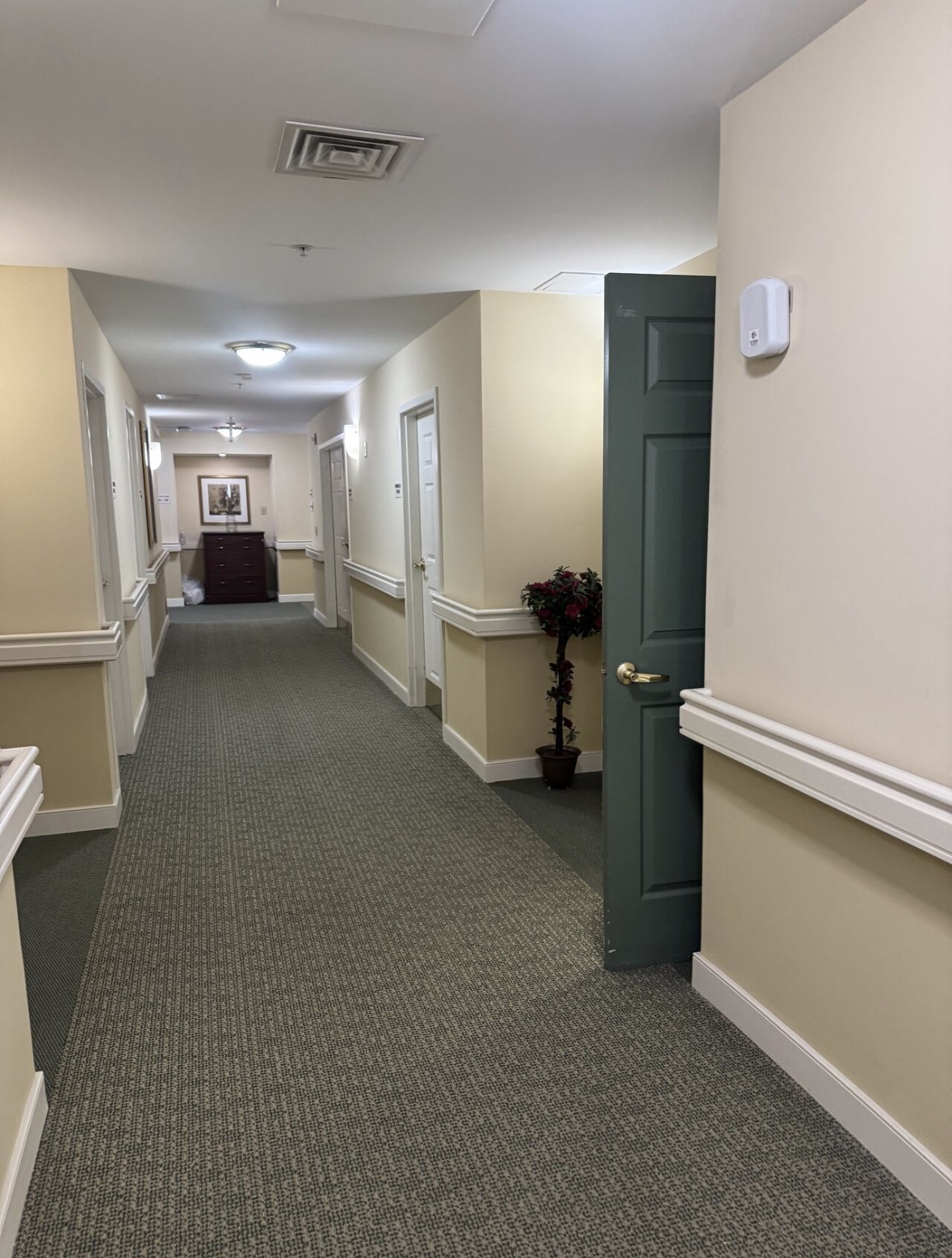
Corridor, washroom approach and shop: P02. At below 30 dB it is the quietest option in this group, and its 150–350 m² coverage and 300 ml capacity fit secondary circulation spaces where a large unit would be excessive.
Toilets and elevators: P01 (model 4705). Battery or Type-C power removes the wiring problem entirely, and the 500 ml capacity reduces refill frequency in spaces that are hard to service.
Small corridors and small shops: P03. The 150 ml capacity and 100–150 m² coverage match smaller footprints where a compact body and battery power are the priority.
Large centralized projects: AC-MAX. This is an HVAC scent diffuser with 2,500–3,500 m² coverage (8,000–10,000 m³ / 25,000–35,000 ft²), a 5 L capacity, DC 12V, 48 W, oil consumption of 6 ±5% ml/h and noise below 45 dB, in a silver aluminum body. A US-based scent marketing company and scenting service provider deployed 30 AC-MAX units across shopping malls; over a five-year period the installation delivered stable and consistent scent coverage, reduced manual maintenance, improved fragrance management efficiency and an enhanced customer experience.
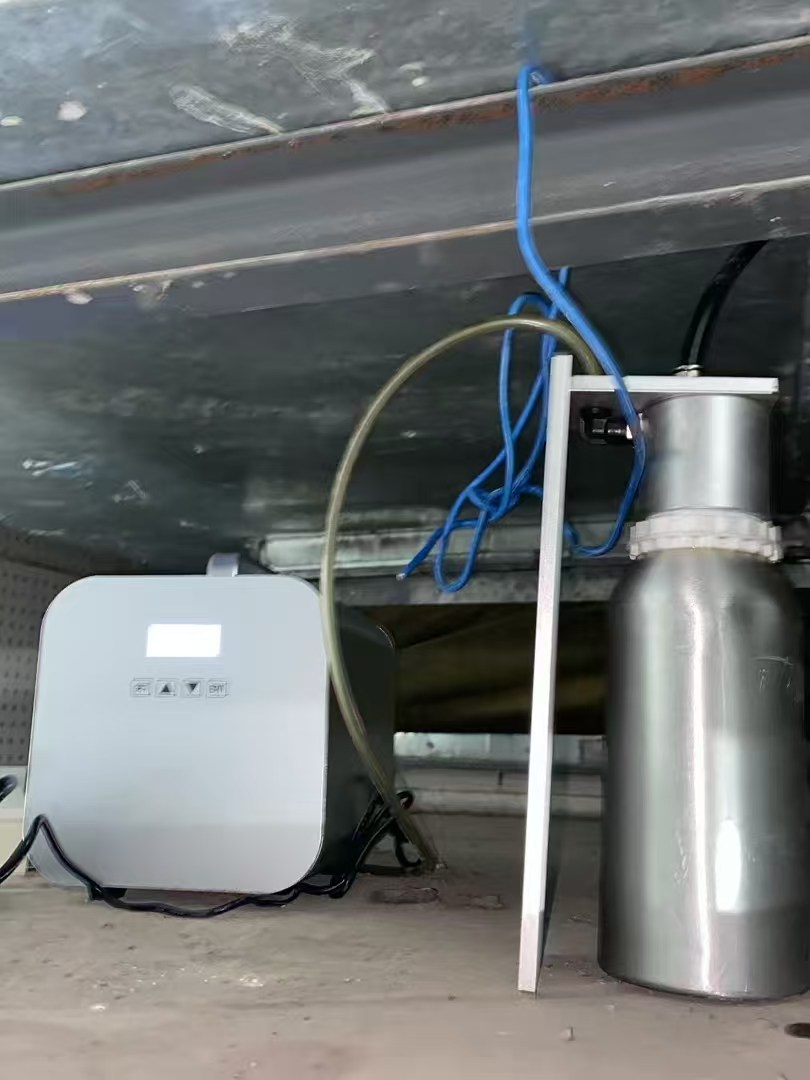
Comparison Table: Commercial Scent Diffuser Specifications
| Model | Type | Rated coverage | Capacity | Power supply | Rated power | Noise | Oil consumption | Typical application |
|---|---|---|---|---|---|---|---|---|
| H5000 | Floor standing | 800–1300 m² (2,500–4,000 m³) | 1,000 ml | DC 12V, plug-in | 20 W | <45 dB | 5.4 ±10% ml/h | Hotel, shopping mall, office building lobby |
| P02 | Electric, plug-in | 150–350 m² (500–1,000 m³) | 300 ml | DC 12V, plug-in | 6.5 W | <30 dB | 2.5 ±10% ml/h | Toilet, corridor, shop |
| P01 (4705) | Battery operated | 100–150 m² (300–500 m³) | 500 ml | 5V; 4 pcs D batteries or Type-C | 2.5 W | <35 dB | Not published | Toilet, elevator |
| P03 | Battery operated | 100–150 m² (300–500 m³) | 150 ml | 5V; 3 pcs D batteries or Type-C | 2.5 W | <35 dB | Not published | Toilet, elevator, corridor, small shops |
| A300 | Commercial | 500–800 m² (1,500–2,500 m³) | 500 ml | DC 12V | 12 W | <40 dB | 4 ±10% ml/h | Hotel, shopping mall, retail store |
| T2 | Commercial | 500–800 m² (1,500–2,500 m³) | 500 ml | DC 12V 2A | 10 W | <45 dB | 3 ±10% ml/h | Hotel, shopping mall, cinema |
| T3 | Commercial | 1,000–1,600 m² (3,000–5,000 m³) | 1,000 ml | DC 12V 2A | 15 W | <55 dB | 4.6 ±10% ml/h | Shopping mall, hotel, airport |
| AC-MAX | HVAC, split | 2,500–3,500 m² (8,000–10,000 m³) | 5 L | DC 12V | 48 W | <45 dB | 6 ±5% ml/h | Shopping mall, bank, airport |
Two notes on reading this table. First, oil consumption is not published for every model, so those cells are marked Not published rather than estimated. Second, coverage figures are rated maxima; effective coverage in a real building depends on ceiling height, airflow, partitions and traffic.
FAQ
What certifications should buyers verify on a commercial scenting system?
Shenzhen Scentsea Technology Co., Ltd. states that all diffuser models are certified with CE, RoHS and FCC, and the documentation available for the range includes FCC, RoHS and EMC certificates. The FCC certificate for scent diffusers is ATL20240416326, tested to FCC Part 15 Subpart B:2023 by Shenzhen ATL Testing Technology Co., Ltd. for the USA market. The RoHS certificate is ATL20240416327, issued against RoHS Directive (EU) 2015/863 for the EU market. The EMC certificate is ATL20240416325, covering EN IEC 55014-1:2021, EN IEC 55014-2:2021, EN IEC 61000-3-2:2019/A1:2021 and EN 61000-3-3:2013/A2:2021. Buyers should confirm that the certificate or test report applies to the exact model and configuration being purchased, and that Bluetooth or Wi-Fi models meet the applicable radio requirements for the destination market.
How do I evaluate an OEM commercial scenting system manufacturer?
Start with the scope of customization the factory can actually deliver, then verify production capacity and quality control. Shenzhen Scentsea Technology Co., Ltd., founded in 2021, is an OEM and ODM manufacturer offering customization of logo, product color, packaging, user manual, plug type, app interface, PCB and functions, and other product specifications. The supporting capability data is concrete: a 3,000 m² production facility with 3 production lines, monthly capacity of 8,000 units, a lead time of 25–35 days, 20 patents and an R&D team of 4 engineers, with 70% export ratio and main markets in the EU and USA. Quality control covers 100% functional testing, atomization testing, leakage inspection, noise testing, app and control testing, a 48-hour aging test, and final appearance inspection before shipment, alongside a 1-year free warranty on spare parts. Checking these items, rather than a brochure claim, is what separates an OEM partner from a trading intermediary.
What drives oil consumption and running cost on a commercial scent diffuser?
Rated oil consumption is the main cost variable, and it is published per model: 5.4 ±10% ml/h for the H5000, 2.5 ±10% ml/h for the P02 and 6 ±5% ml/h for the AC-MAX. Running cost follows consumption multiplied by atomizer-on hours, so the working schedule matters as much as the model. Consumption that rises above the published tolerance is a diagnostic signal rather than normal wear: the documented causes are a blocked nozzle, an aging pump, or fragrance oil that is too thick or contains impurities. Because the tolerance is stated openly, a buyer can compare actual use against the rated band before assuming a fault.
Can buyers request a sample before placing a bulk order?
Yes. Diffuser samples and fragrance oil samples are available for quality verification, and the minimum order quantity starts from 1 unit, so a single unit can be tested in the actual space before any bulk commitment. Sample validation before mass production is the recommended step, because coverage, noise and scent intensity behave differently in a real room than on a specification sheet.
What are the MOQ, lead time and payment terms for OEM commercial scenting orders?
The MOQ is 1 unit, production lead time is 25–35 days, and monthly capacity is 8,000 units. Delivery terms are EXW, FOB or CIF, acceptance is by pre-shipment test, and payment terms are 50% T/T in advance with the balance before shipment. To move from troubleshooting to a concrete plan, request the catalog, order a sample, or send your space dimensions and airflow details for a model recommendation.
Conclusion
An inconsistent lobby scent is usually a delivery problem, not a fragrance problem, and the fix is normally found in the first four diagnostic steps rather than in a parts order. The numbers that make this manageable are published: 5.4 ±10% ml/h oil consumption, below 45 dB noise, 800–1300 m² coverage, DC 12V power and a 1,000 ml capacity on the H5000; below 30 dB and 2.5 ±10% ml/h on the P02; and 4 pcs D batteries or Type-C on the P01 for toilets and elevators where wiring is not an option.
Work the seven-step sequence in order, compare every reading against the rated band, and treat schedule and oil conditions as prime suspects before replacing hardware. When a part genuinely fails, the escalation path is defined: a 1-year free warranty on spare parts, with every unit validated by functional testing, aging test and leakage inspection before shipment.
From diagnosis to a working system
Send us your space dimensions, ceiling height and airflow notes and we will recommend the right model. Diffuser samples and fragrance oil samples are available for verification, and the MOQ starts from 1 unit.
Download the SCENTSEA catalog (PDF) | www.scent-sea.com
Email: jimmy@scent-sea.com | Tel / WhatsApp: +86 19928719703
Shenzhen Scentsea Technology Co., Ltd., Block A, Jinxing Building, Longhua District, Shenzhen, China

Have Questions or Need More Details?
Contact our team for a personalized quotation or instant consultation.
Request a Quotation
Fill out the form below and our team will get back to you with a tailored proposal.
WhatsApp Direct Chat
Prefer to chat in real-time? Message us on WhatsApp for instant assistance & quick answers.
- Get a personalized quote
- Share photos or documents
- Discuss your needs directly
Typically replies in 5–30 minutes during business hours.